Umm El Qa'ab
Virtual asset linked to this landmark
- Virtual owner
- The platform
- Times sold
- 0
- Fame on Wikipedia
- 20,371 article reads in 12 months
- Searches (30 days)
- 0
- Watching
- 0
Virtual ownership only. It gives no legal, financial or physical right in the real landmark. Prices are set by the market and may fall.
About Umm El Qa'ab and its history
The burial ground of the kings of the First and Second Dynasties at Abydos, its name meaning 'mother of pots' after its many potsherds.
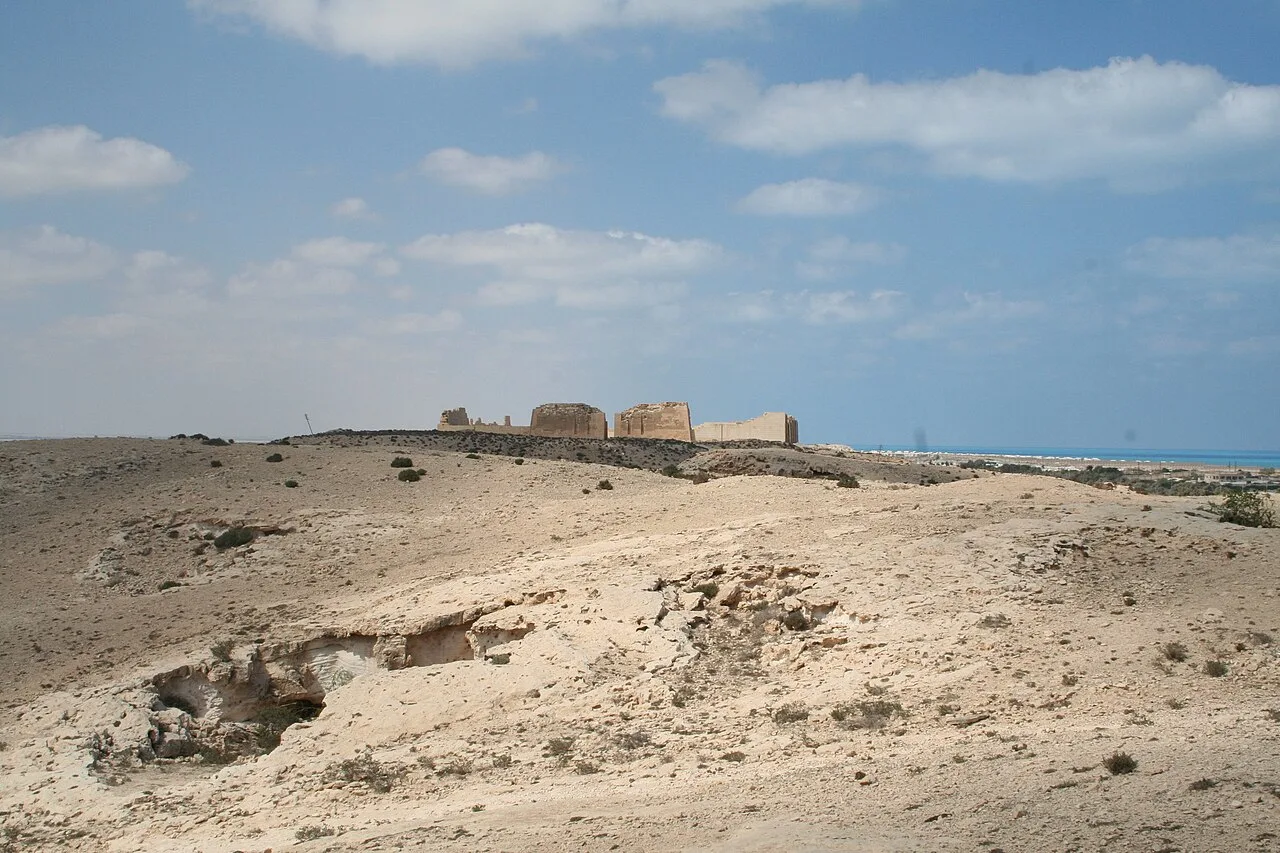
Umm El Qaʻāb (also Umm el-Qaab, Umm al-Qaab, or Umm El Gaʻab; Arabic: أم القعاب) is an archaeological site located at Abydos, Egypt. Its modern name, meaning "Mother of Pots", refers to the mound made of millions of broken pieces of pots which defines the landscape. Umm el Qa'ab contains evidence that the site is the cemetery for Egypt's predynastic proto-kings along with rulers of the 1st and 2nd dynasties. In addition to early royal tombs, evidence also suggests a link between the site, the cult of Osiris, and Osiris' annual festival. It is located 1,5 kilometers to the west of Temple of Seti I at Abydos. The main temple to the god Khenti-Amentiu lies one mile to the south.
The cemetery was likely founded during the Naqada I period (4,000 BCE) as evident from the tomb structures, pottery, and seal impressions excavated from the site. The location continued as a royal cemetery through the First Dynasty (2,950-2,775 BCE) and ended with the burial of only the last two kings of the Second Dynasty, Peribsen and Khasekhemy (2,650 BCE).
Development of Umm el-Qaab necropolis occurred in three stages, moving from north to south:
Cemetery U – Pre-Dynastic
Cemetery B – royal tombs of Dynasty 0 and early Dynasty I
Tomb complexes – six kings and one queen of Dynasty I, and two kings of Dynasty II
The Pre and Early dynastic royal cemetery at Umm el-Qa'ab became a site of veneration and cultic practice beginning in the Middle Kingdom (1,938 BCE) and stayed in use for 1,500 years until the Ptolemaic Dynasty (305-30 BCE).
Archaeology
The tombs of this area were first excavated by Émile Amélineau between 1895 and 1898.
The site was then excavated by Flinders Petrie in 1900 and 1901 under the auspices of the Egypt Exploration Society. His work was continued on a small scale by T. Eric Peet and Édouard Naville between 1908 and 1912.
In 1977 a German Archaeological Institute team led by W. Kaiser and G. Dreyer resumed work at the site.
In 1990s 16 wood samples (from wooden roofs, coffins, and mattings) were radiocarbon dated. The relative chronology of the radiocarbon dates was in line with the standard view of period and ruler order, but the absolute date was more than 100 years older than the currently held historical chronology. Example results were Naqada IId – middle 35th century BC, Naqada IIIa2 – middle 34th century BC, and 2920-2910 BC for Qa'a, the last ruler of the 1st Dynasty.
Source: Wikipedia · text available under CC BY-SA 4.0
- Location
- Sohag, Egypt
- Coordinates
- 26.1756, 31.9086
- Category
- Ancient Sites
Source: Wikipedia · Factual information about the real landmark; unrelated to virtual ownership.
Price & ownership history
Landmarks near Umm El Qa'ab
Map → Available
 Available
 Available