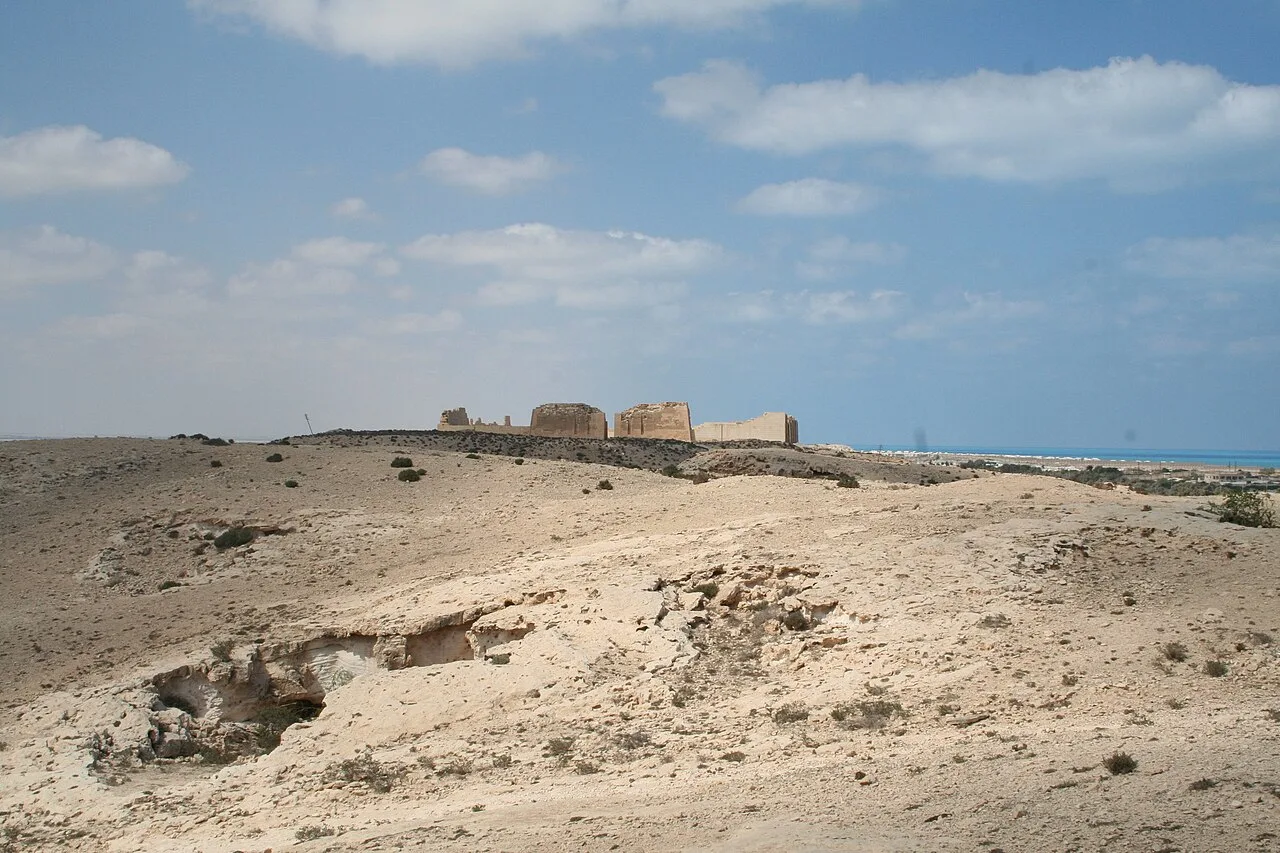
Shunet El Zebib
Virtual asset linked to this landmark
- Virtual owner
- The platform
- Times sold
- 0
- Fame on Wikipedia
- 8,551 article reads in 12 months
- Searches (30 days)
- 0
- Watching
- 0
Virtual ownership only. It gives no legal, financial or physical right in the real landmark. Prices are set by the market and may fall.
About Shunet El Zebib and its history
A massive mudbrick funerary enclosure built at Abydos by the Second Dynasty king Khasekhemwy around 2700 BC.
Shunet El Zebib (Arabic:شونة الزبيب lit. "raisin barn" or "storage of the raisins"), alternatively named Shuneh and Middle Fort, is a large mudbrick structure located at Abydos in Upper Egypt. The edifice dates to the Second Dynasty, and was built by the ancient Egyptian king Khasekhemwy.
Description
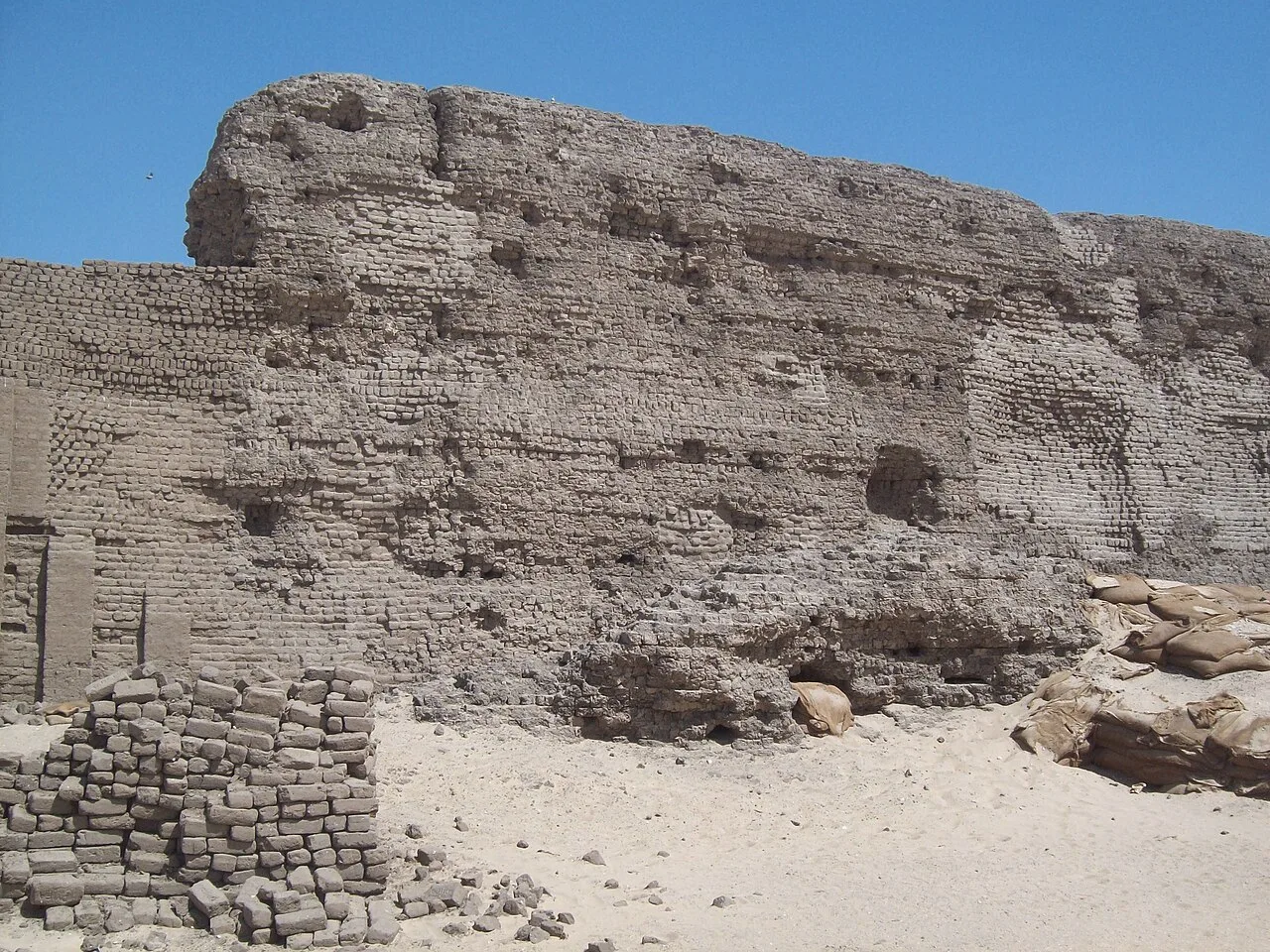
Shunet El Zebib is made of hardened mudbricks. It consists of two rectangular surrounding walls, interlaced like a shoe box. The outer wall measures 137 × 77 m and is c. 5 m thick and 12 m high. The inner wall (perimeter wall) measures 123 × 56 m and is c. 3 m thick and 8 m high. The facade of the outer wall was niched, imitating a royal palace facade. The enclosure provides two entrances, one at the eastern corner, one at the northern corner. These entrances once consisted of massive, stone-made door jambs, the material of the door wings is unknown.
The inner area consists of a largely empty court; it is unknown if there were some substructures and/or larger buildings (such as a shrine or temple). In 1988, Australian Egyptologist David O'Connor discovered a square, flat mount made of fine limestone rubble, covered with mudbricks and forming four flat steps. It is located at the very midst of the court, its true purpose is still unknown. The only cultic building that can be archaeologically attested is a small chapel close to the south-eastern corner. Its ruins are also made of hardened mud bricks.
History
Shunet El Zebib was founded around 2700 BC by the ancient Egyptian king Khasekhemwy, the last ruler of the 2nd Dynasty. The Shunet was built as a so-called funerary enclosure, a place where the deceased king was worshipped and memorized. Such a place was named "house of the Ka" or "Ka-house" by the Egyptians and it was some kind of forerunner to the later mortuary temples known from the Old Kingdom period. As usual for the Early Kingdom, abydene rulers had their own mastaba tomb with a separated funerary enclosure close by. Because Khasekhemwy and his predecessor Seth-Peribsen were buried at Abydos and had their funerary enclosures at the same location, some Egyptologists believe that both kings belonged to a royal dynasty line named Thinite Dynasty. This could indeed explain Peribsen's and Khasekhemwy's choice of place. However, it is unknown how long the mortuary enclosure of Khasekhemwy was in use, neither its Ancient Egyptian name is known. Because of its thick and interlaced walls, it was long time thought that Shunet El Zebib was a military fortress, which led to its alternative designation as "Middle Fort". But archaeological findings provide only cultic and religious activities and a location so close to cemeteries speaks rather against any military use. Khasekhemwy's enclosure domain is now evaluated as the most advanced and most massive version of a Ka-house.
Source: Wikipedia · text available under CC BY-SA 4.0
- Location
- Sohag, Egypt
- Coordinates
- 26.1908, 31.9072
- Category
- Ancient Sites
Source: Wikipedia · Factual information about the real landmark; unrelated to virtual ownership.
Price & ownership history
Landmarks near Shunet El Zebib
Map → Available
 Available
 Available