Karnak Temple Complex
Virtual asset linked to this landmark
- Virtual owner
- The platform
- Times sold
- 0
- Fame on Wikipedia
- 177,492 article reads in 12 months
- Searches (30 days)
- 0
- Watching
- 0
Virtual ownership only. It gives no legal, financial or physical right in the real landmark. Prices are set by the market and may fall.
About Karnak Temple Complex and its history
A vast temple complex at Luxor that successive rulers enlarged over many centuries.
The Karnak Temple Complex, commonly known as Karnak (), comprises a vast mix of temples, pylons, chapels, and other buildings near Luxor, Egypt. Construction at the complex began during the reign of Senusret I (reigned 1971–1926 BCE) in the Middle Kingdom (c. 2000–1700 BC) and continued into the Ptolemaic Kingdom (305–30 BCE), although most of the extant buildings date from the New Kingdom. The area around Karnak was the ancient Egyptian Ipet-isut ("The Most Selected of Places") and the main place of worship of the 18th Dynastic Theban Triad, with the god Amun as its head.
It is part of the monumental city of Thebes, and in 1979 it was added to the UNESCO World Heritage List along with the rest of the city. Karnak gets its name from the nearby, and partly surrounded, modern village of El-Karnak, 2.5 kilometres (1.6 miles) north of Luxor.
Name
The original name of the temple was Ipet-isut, meaning "The Most Select of Places". The complex's modern name "Karnak" comes from the nearby village of el-Karnak, which means "fortified village".
Overview
The complex is a vast open site and includes the Karnak Open Air Museum. It is believed to be the second-most-visited historical site in Egypt; only the Giza pyramid complex near Cairo receives more visits. It consists of four main parts, of which only the largest is currently open to the public. The term Karnak often is understood as being the Precinct of Amun-Re only, because this is the only part most visitors see. The three other parts, the Precinct of Mut, the Precinct of Montu, and the dismantled Temple of Amenhotep IV, are closed to the public. There also are a few smaller temples and sanctuaries connecting the Precinct of Mut, the Precinct of Amun-Re, and the Luxor Temple. The Precinct of Mut is very ancient, being dedicated to an Earth and creation deity, but not yet restored. The original temple was destroyed and partially restored by Hatshepsut, although another pharaoh built around it in order to change the focus or orientation of the sacred area. Many portions of it may have been carried away for use in other buildings.
The key difference between Karnak and most of the other temples and sites in Egypt is the length of time over which it was developed and used. Construction of temples started in the Middle Kingdom and continued into Ptolemaic times. Approximately thirty pharaohs contributed to the buildings, enabling it to reach a size, complexity, and diversity not seen elsewhere. Few of the individual features of Karnak are unique, but the size and number of features are vast. The deities represented range from some of the earliest worshipped to those worshipped much later in the history of the Ancient Egyptian culture. Although destroyed, it also contained an early temple built by Amenhotep IV (Akhenaten), the pharaoh who later would celebrate a nearly monotheistic religion he established that prompted him to move his court and religious center away from Thebes.
Source: Wikipedia · text available under CC BY-SA 4.0
- Built / established
- Begun in the Middle Kingdom and extended into the Ptolemaic period
- Location
- Luxor, Egypt
- Coordinates
- 25.7188, 32.6573
- Category
- Ancient Sites
Key facts
- Its Great Hypostyle Hall contains 134 columns.
- Part of "Ancient Thebes with its Necropolis", a UNESCO World Heritage Site since 1979.
Source: Wikipedia · Factual information about the real landmark; unrelated to virtual ownership.
Price & ownership history
Landmarks near Karnak Temple Complex
Map →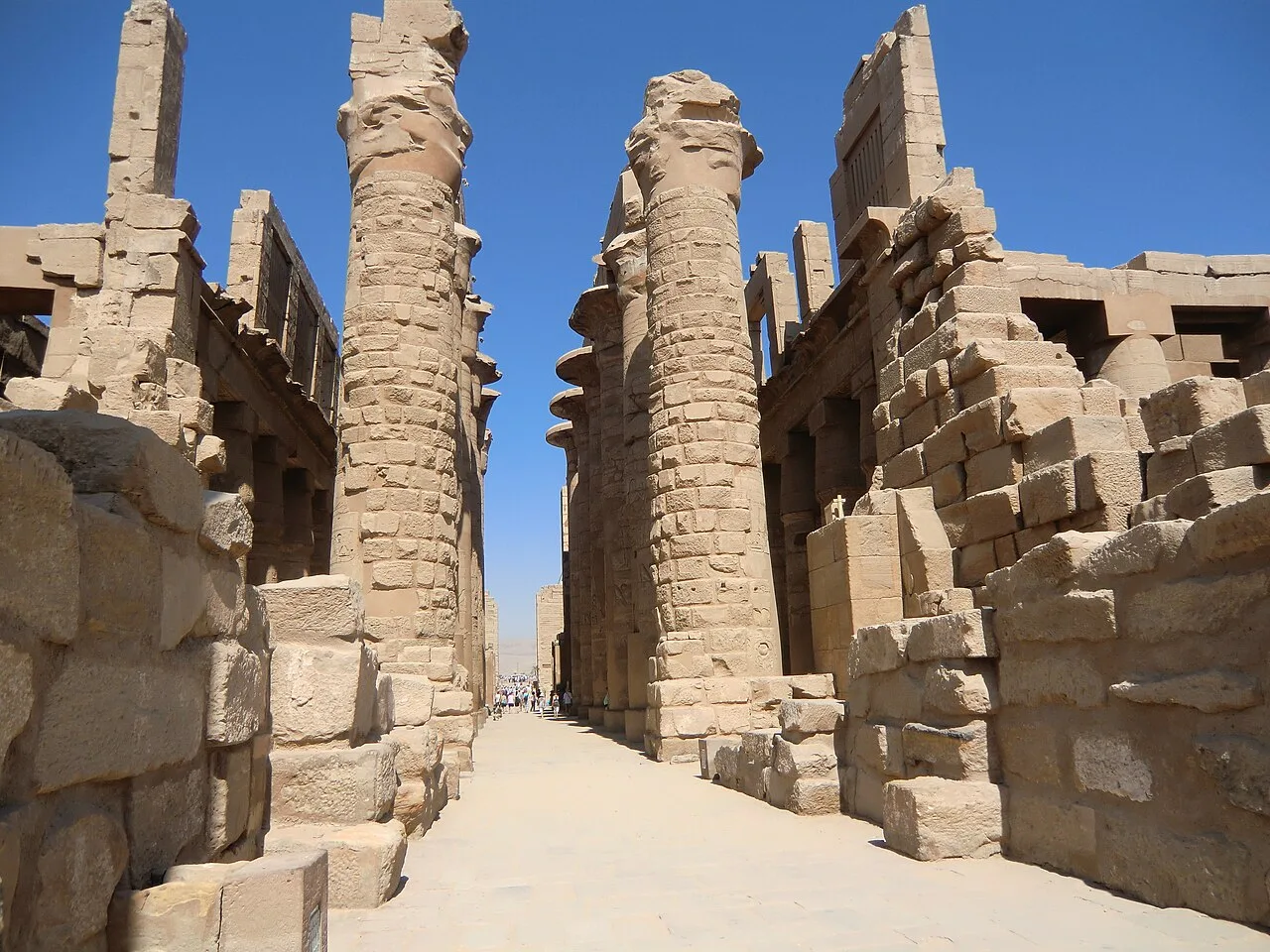 Available
 Available
 Available
 Available