Bubastis (Tell Basta)
Virtual asset linked to this landmark
- Virtual owner
- The platform
- Times sold
- 0
- Fame on Wikipedia
- 33,635 article reads in 12 months
- Searches (30 days)
- 0
- Watching
- 0
Virtual ownership only. It gives no legal, financial or physical right in the real landmark. Prices are set by the market and may fall.
About Bubastis (Tell Basta) and its history
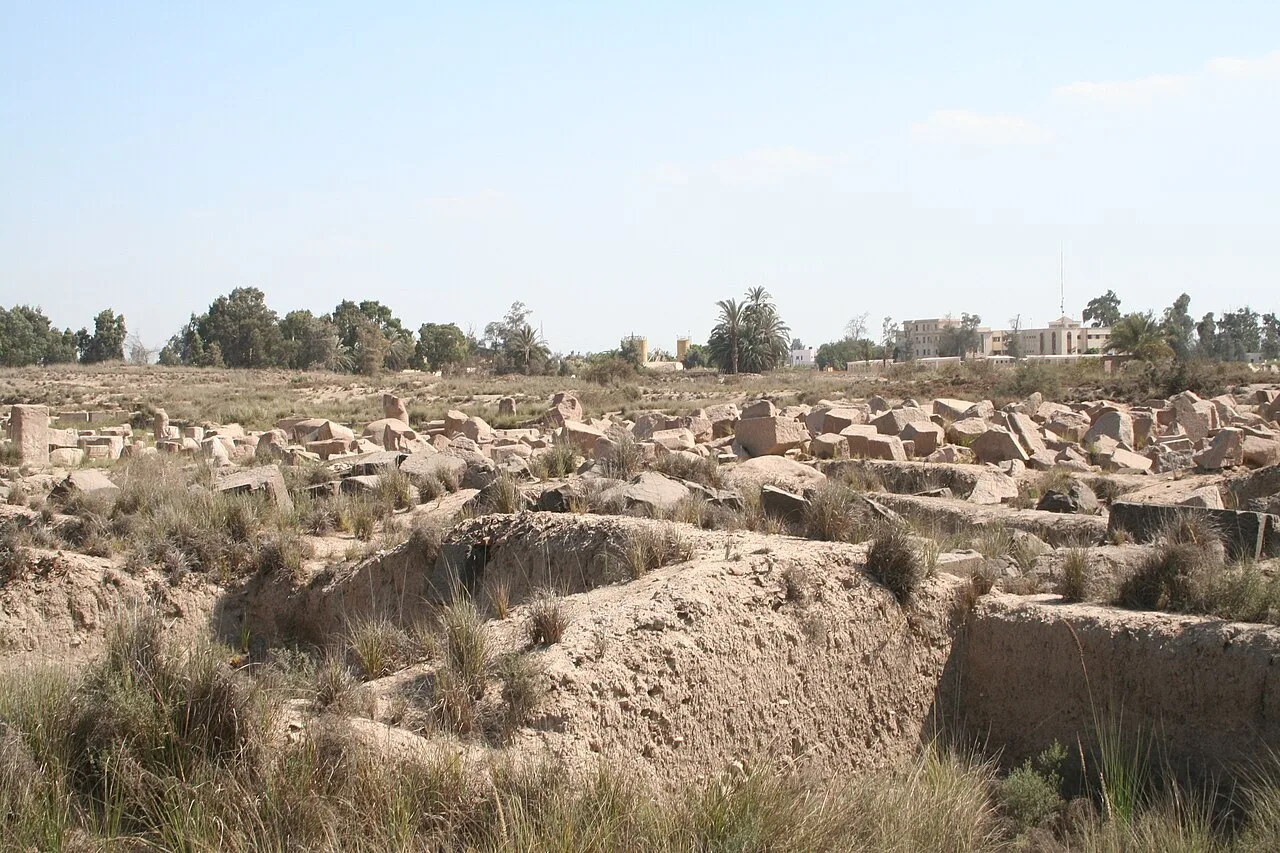
Ruins of an ancient city near Zagazig that was the cult centre of the cat goddess Bastet, with the remains of her temple.
Bubastis (Bohairic Coptic: Ⲡⲟⲩⲃⲁⲥϯ Poubasti; Greek: Βούβαστις Boubastis or Βούβαστος Boubastos), also known in Arabic as Tell-Basta or in Egyptian as Per-Bast, was an ancient Egyptian city. Bubastis is often identified with the biblical Pi-Beseth (Hebrew: פי-בסת py-bst, Ezekiel 30:17). It was the capital of its own nome, located along the River Nile in the Delta region of Lower Egypt, and notable as a center of worship for the feline goddess Bastet, and therefore the principal depository in Egypt of mummies of cats.
Its ruins are located in the suburbs of the modern city of Zagazig.
Etymology
The name of Bubastis in Egyptian is Pr-Bȝst.t, conventionally pronounced Per-Bast but its Earlier Egyptian pronunciation can be reconstructed as /ˈpaɾu-buˈʀistit/. It is a compound of Egyptian pr (“house") and the name of the goddess Bastet; thus the phrase means "House of Bast". In later forms of Egyptian, sound shifts had altered the pronunciation. In Bohairic Coptic, the name is rendered Ⲡⲟⲩⲃⲁⲥϯ, Ⲡⲟⲩⲁⲥϯ or Ⲃⲟⲩⲁⲥϯ.
Cult of Bastet
Bubastis was centered on the Temple of Bastet (Pr-Bast; House of Bastet).
The Cult of Bastet worshipping the feline goddess Bastet developed and the city was sometimes called Bubastis after the city, who the Greeks identified with Artemis. Prior to the 1st millennium BCE, Bastet was always depicted as a lioness (cf. lioness goddesses such as Sekhmet and Shesmetet), later she became associated with the cat. The cat was the sacred and peculiar animal of Bast, who is represented with the head of a cat or a lioness and frequently accompanies the deity Ptah in monumental inscriptions. The tombs at Bubastis were accordingly the principal depository in Egypt of the mummies of the cat.
The most distinguished features of the city and nome of Bubastis were its oracle of Bast, the splendid temple of that goddess and the annual procession in honor of her. The oracle gained in popularity and importance after the influx of Greek settlers into the Delta, since the identification of Bast with Artemis attracted to her shrine both native Egyptians and foreigners.
The festival of Bubastis was considered the most joyous and gorgeous of all in the Egyptian calendar as described by Herodotus:
Barges and river craft of every description, filled with men and women, floated leisurely down the Nile. The men played on pipes of lotus. the women on cymbals and tambourines, and such as had no instruments accompanied the music with clapping of hands and dances, and other joyous gestures. Thus did they while on the river: but when they came to a town on its banks, the barges were made fast, and the pilgrims disembarked, and the women sang, playfully mocked the women of that town and threw their clothes over their head. When they reached Bubastis, then held they a wondrously solemn feast: and more wine of the grape was drank in those days than in all the rest of the year.
Source: Wikipedia · text available under CC BY-SA 4.0
- Location
- Sharqia, Egypt
- Coordinates
- 30.5725, 31.5108
- Category
- Ancient Sites
Source: Wikipedia · Factual information about the real landmark; unrelated to virtual ownership.
Price & ownership history
Landmarks near Bubastis (Tell Basta)
Map → Available
 Available
 Available
 Available