Hermopolis (El Ashmunein)
Virtual asset linked to this landmark

- Virtual owner
- The platform
- Times sold
- 0
- Fame on Wikipedia
- 34,712 article reads in 12 months
- Searches (30 days)
- 0
- Watching
- 0
Virtual ownership only. It gives no legal, financial or physical right in the real landmark. Prices are set by the market and may fall.
About Hermopolis (El Ashmunein) and its history
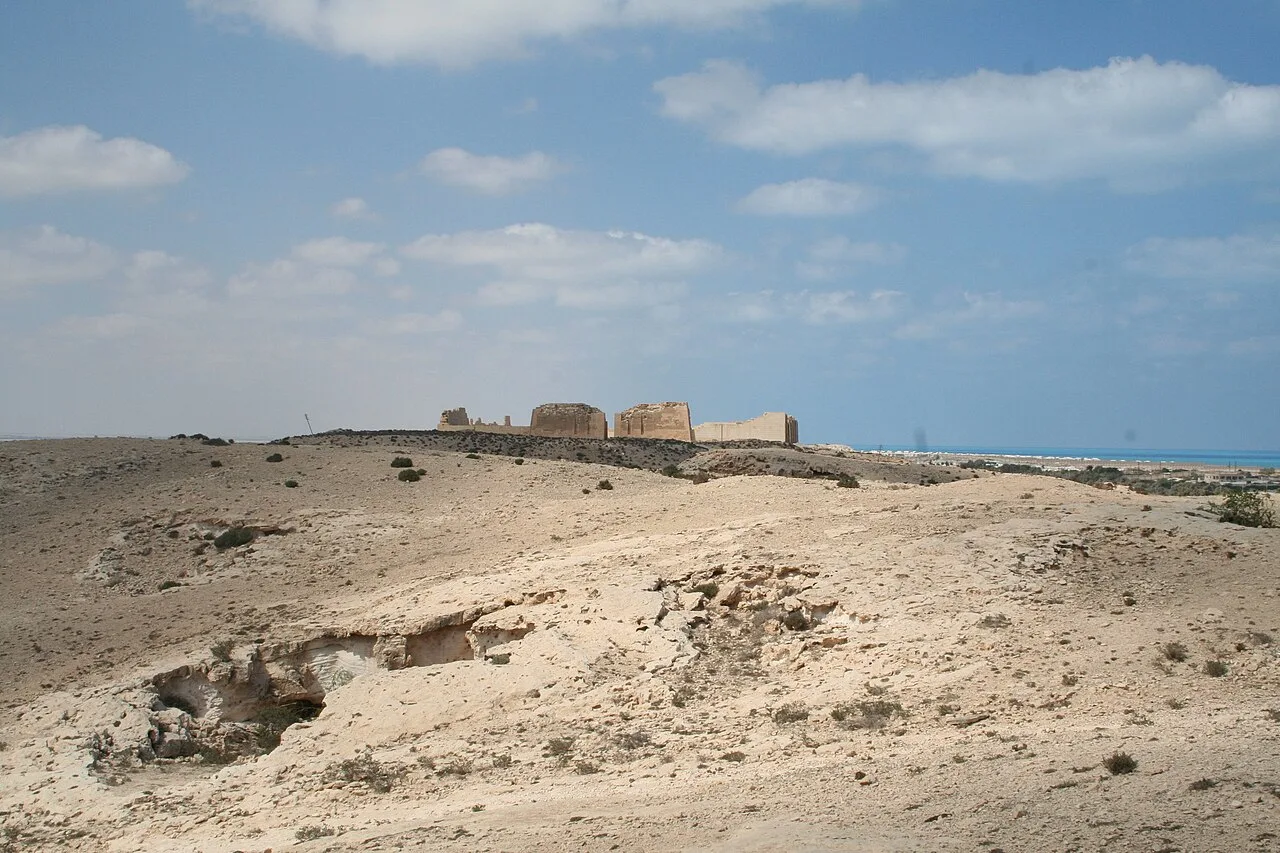
Ruins of ancient Khemenu, cult centre of the god Thoth, at El Ashmunein, with two colossal baboon statues of Amenhotep III.
Hermopolis (or Hermopolis Magna) was a major city in antiquity, located near the boundary between Lower and Upper Egypt. Its Egyptian name Khemenu derives from the eight deities (the Ogdoad) said to reside in the city.
A provincial capital since the Old Kingdom of Egypt, Hermopolis developed into a major city of Roman Egypt, and an early Christian center from the third century. It was abandoned after the Muslim conquest of Egypt but was restored as both a Latin Catholic (meanwhile suppressed) and a Coptic Orthodox titular see.
Its remains are located near the modern town of el-Ashmunein (from the Coptic name) in Mallawi, Minya Governorate, Egypt.
Name
The common English name is Hermopolis (Ancient Greek: Ἑρμούπολις Hermoúpolis "the City of Hermes", also Hermopolis Magna, Ἑρμοῦ πόλις μεγάλη Hermoû pólis megálẽ, Ancient Egyptian: ḫmnw, lit. 'Eight' /χaˈmaːnaw/ (reconstructed pronunciation), Egyptological pronunciation: "Khemenu"; Coptic: Ϣⲙⲟⲩⲛ Shmūn, and thus Arabic: الأشمونين, romanized: al-Ashmunayn, lit. 'The Two Shmun').
Khemenu (Ḫmnw), the Egyptian language name of the city, means "Eight-Town", after the Ogdoad, a group of eight "primordial" deities whose cult was situated there. The name survived as Coptic Ϣⲙⲟⲩⲛ Shmun, from which the modern name el Ashmunein (Arabic: الأشمونين) is derived.
In Koine Greek, the city was called "The City of Hermes" since the Greeks identified Hermes with Thoth, because the city was the main cult centre of Thoth, the Pharaonic god of magic, healing, and wisdom and the patron of scribes. Thoth was associated in the same way with the Phoenician deity Eshmun. Inscriptions at the temple call the god "The Lord of Eshmun".
History
The city was the capital of the Hare nome (the fifteenth nome of Upper Egypt) in the Heptanomis. Hermopolis stood on the borders of Upper and Lower Egypt, and, for many ages, the Thebaid or upper country extended much further to the north than in more recent periods. As the border town, Hermopolis was a place of great resort and opulence, ranking second to Thebes alone. A little to south of the city was the castle of Hermopolis, at which point rivercraft from the Thebaid paid tolls (Ἑρμοπολιτάνη φυλακή, the Bahr Yussef in Arabic). The grottos of Beni Hasan, near Antinoöpolis on the opposite bank of the Nile, were the common cemeteries of the Hermopolitans because although the river divided the city from its necropolis, from the wide curve of the western hills at this point, it was easier to ferry the dead over the water than to transport them by land to the hills.
Hermopolis became a significant city in the Roman province of Thebais Prima in the administrative diocese of Egypt.
The principal Egyptian deities worshipped at Hermopolis were Typhon (Set) and Thoth. Typhon was represented by a hippopotamus, on which sat a hawk fighting with a serpent. Thoth, whom the ancient Greeks associated with Hermes because they were both gods of magic and writing, was represented by the ibis.
Source: Wikipedia · text available under CC BY-SA 4.0
- Location
- Minya, Egypt
- Coordinates
- 27.7814, 30.8039
- Category
- Ancient Sites
Source: Wikipedia · Factual information about the real landmark; unrelated to virtual ownership.
Price & ownership history
Landmarks near Hermopolis (El Ashmunein)
Map → Available
📖 31 K reads
Available
📖 31 K reads
 Available
📖 639 reads
Available
📖 639 reads
 Available
📖 5 K reads
Available
📖 5 K reads
 Available
📖 8 K reads
Available
📖 8 K reads