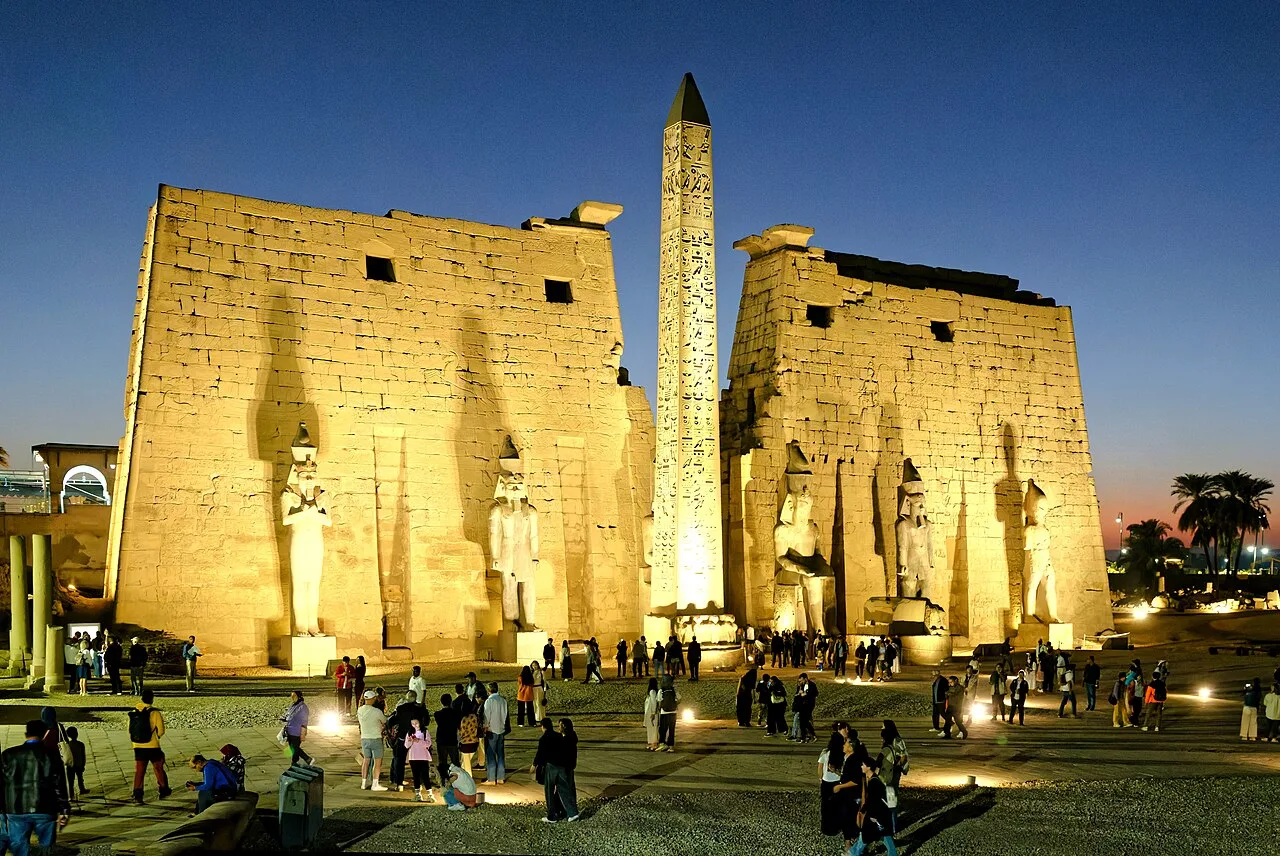
Luxor Temple
Virtual asset linked to this landmark
- Virtual owner
- The platform
- Times sold
- 0
- Fame on Wikipedia
- 100,878 article reads in 12 months
- Searches (30 days)
- 0
- Watching
- 0
Virtual ownership only. It gives no legal, financial or physical right in the real landmark. Prices are set by the market and may fall.
About Luxor Temple and its history
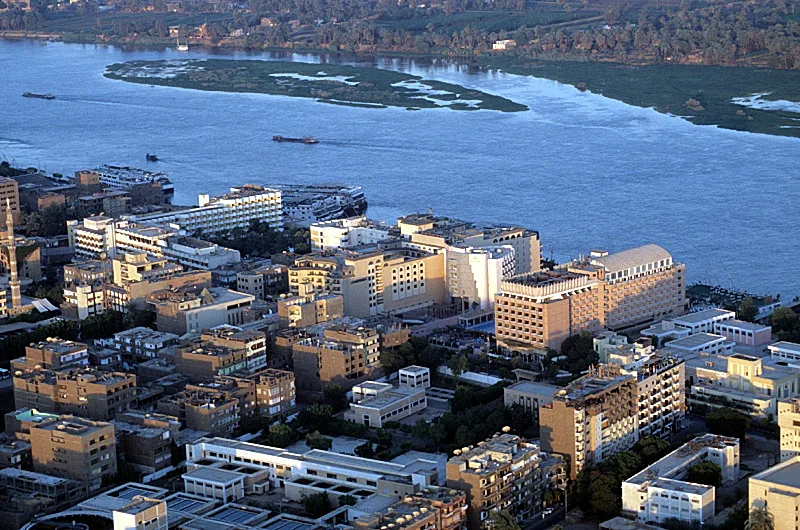
A temple on the east bank of the Nile built mainly by Amenhotep III and Ramesses II.
The Luxor Temple (Arabic: معبد الأقصر) is a large Ancient Egyptian temple complex located on the east bank of the Nile River in the city of Luxor (ancient Thebes) and was constructed around 1400 BC. In Egyptian it was known as ipet resyt, "the southern sanctuary". It was one of the two primary temples on the east bank, the other being Karnak.
Unlike the other temples in Thebes, Luxor temple is not dedicated to a cult god or a deified version of the pharaoh in death. Instead, Luxor temple is dedicated to the rejuvenation of kingship; it may have been where many of the pharaohs of Egypt were crowned in reality or conceptually (as in the case of Alexander the Great, who claimed he was crowned at Luxor but may never have traveled south of Memphis, near modern Cairo).
To the rear of the temple are chapels built by Amenhotep III of the 18th Dynasty, and Alexander. Other parts of the temple were built by Tutankhamun and Ramesses II. During the Roman era, the temple and its surroundings were a legionary fortress and the home of the Roman government in the area. During the Roman period a chapel inside the Luxor Temple originally dedicated to the goddess Mut was transformed into a Tetrarchy cult chapel and later into a church.
Along with the other archaeological sites in Thebes, the Luxor Temple was inscribed on the UNESCO World Heritage List in 1979.
Construction
The Luxor Temple was built with sandstone from the Gebel el-Silsila area, which is located in South-Western Egypt. This sandstone is referred to as Nubian sandstone. It was used for the construction of monuments in Upper Egypt as well as in the course of past and current restoration works.
Like other Egyptian structures, a common technique used was symbolism, or illusionism. For example, to the Egyptian, a sanctuary shaped like an Anubis jackal was really Anubis. At the Luxor Temple, the two obelisks (the smaller one closer to the west is now at the Place de la Concorde in Paris) flanking the entrance were not the same height, but they created the illusion that they were. With the layout of the temple they appear to be of equal height, but using illusionism, it enhances the relative distances hence making them look the same size to the wall behind it. Symbolically, it is a visual and spatial effect to emphasize the heights and distance from the wall, enhancing the already existing pathway.
Source: Wikipedia · text available under CC BY-SA 4.0
- Built / established
- c. 1400 BC
- Location
- Luxor, Egypt
- Coordinates
- 25.6995, 32.6391
- Category
- Ancient Sites
Key facts
- It is linked to Karnak by the Avenue of Sphinxes.
Source: Wikipedia · Factual information about the real landmark; unrelated to virtual ownership.
Price & ownership history
Landmarks near Luxor Temple
Map → Available
 Available
 Owned · buyable
 Available