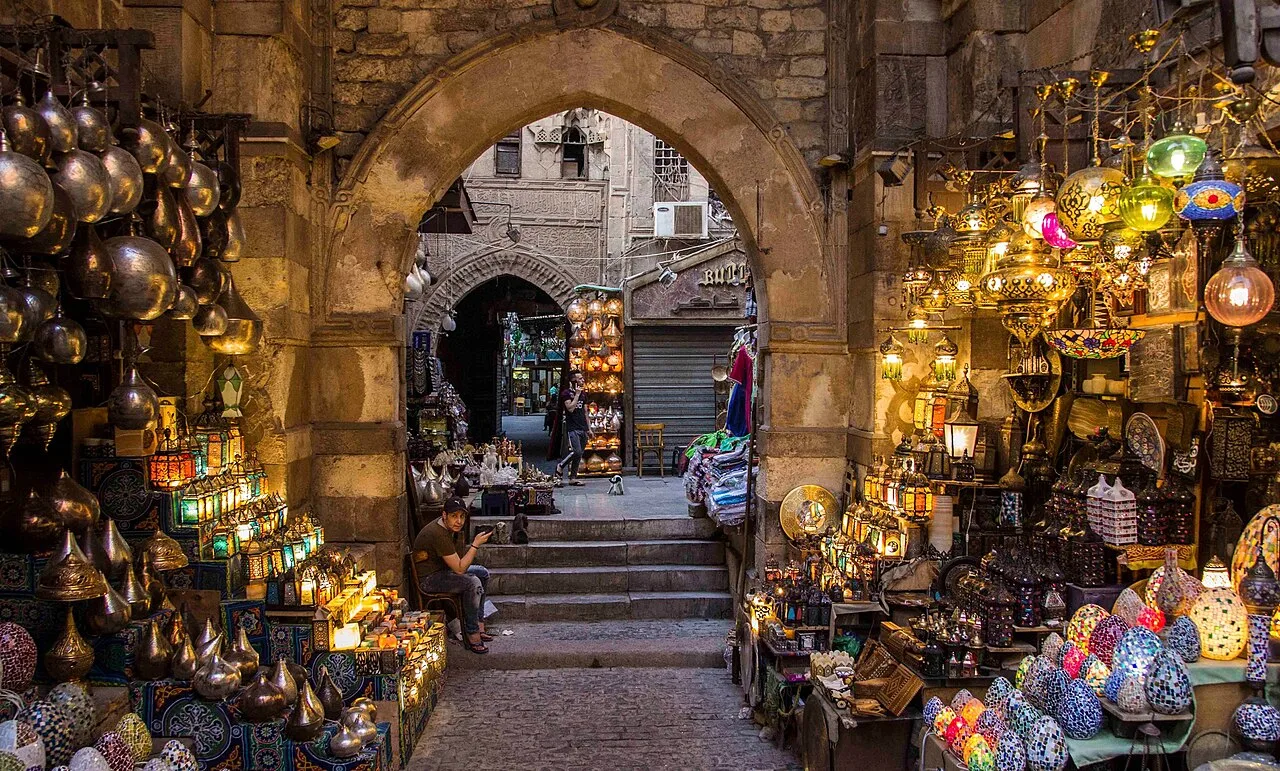
Khan el-Khalili
Virtual asset linked to this landmark

- Virtual owner
- The platform
- Times sold
- 0
- Fame on Wikipedia
- 43,011 article reads in 12 months
- Searches (30 days)
- 0
- Watching
- 0
Virtual ownership only. It gives no legal, financial or physical right in the real landmark. Prices are set by the market and may fall.
About Khan el-Khalili and its history
A historic bazaar in the heart of old Cairo, known for handicrafts and traditional coffeehouses.
Khan el-Khalili (Arabic: خان الخليلي) is a famous bazaar in the historic center of Cairo, Egypt. Established as a center of trade in the Mamluk era and named for one of its several historic caravanserais, the bazaar district has since become one of Cairo's main attractions for tourists and Egyptians alike. It is also home to many Egyptian artisans and workshops involved in the production of traditional crafts and souvenirs. The name Khan el-Khalili historically referred to a single building in the area; today it refers to the entire shopping district.
Cairo was originally founded in 969 CE as a capital for the Fatimid Caliphate, an empire which by then covered much of North Africa and parts of the Levant and the Hijaz. Jawhar al-Siqilli, the general who conquered Egypt for the Fatimids, was ordered to construct a great palace complex to house the caliphs, their household, and the state's institutions. Two palaces were eventually completed: an eastern one (the larger of the two) and a western one, between which was a plaza known as Bayn al-Qasrayn (lit. 'Between the Two Palaces'). The site of Khan el-Khalili today was originally the southern end of the eastern Fatimid palace as well as the location of the burial site of the Fatimid caliphs: a mausoleum known as Turbat az-Za'faraan ('the Saffron Tomb'). Also located here was a lesser palace known as al-Qasr al-Nafi'i (today the site of the 19th-century Wikala of Sulayman Agha al-Silahdar).
Under the Fatimids, Cairo was a palace-city which was closed to the common people and inhabited only by the Caliph's family, state officials, army regiments, and other people necessary to the operation of the regime and its city. The first attempts to open the city to merchants and other outsiders took place in the later Fatimid period, on the initiative of powerful viziers. Between 1087 and 1092, Badr al-Jamali, the vizier under Caliph al-Mustansir, undertook the task of enlarging the city and building the stone walls and gates that still partly exist today. At the same time, he also opened the city to the common people, but the decision was quickly reversed. Between 1121 and 1125, al-Ma'mun al-Bata'ihi, vizier under Caliph al-Amir, undertook many reforms and construction projects, including the creation of a mint, known as the Dar al-Darb, and of a customs house for foreign merchants, known as the Dar al-Wikala. These were placed in a central location not far from the current site of the 15th-century Madrasa of al-Ashraf Barsbay. This introduced foreign trade into the heart of the city for the first time.
Cairo was only definitively opened to all people under the rule of Saladin, who dismantled the Fatimid Caliphate in 1171 and embarked on the construction of a new fortified Citadel further south, outside the walled city, which would house Egypt's rulers and state administration. The old Fatimid palaces in the city were opened up to redevelopment.
Source: Wikipedia · text available under CC BY-SA 4.0
- Built / established
- Origins in the 14th century
- Location
- Cairo, Egypt
- Coordinates
- 30.0477, 31.2622
- Category
- Districts, Streets & Markets
Source: Wikipedia · Factual information about the real landmark; unrelated to virtual ownership.
Price & ownership history
Landmarks near Khan el-Khalili
Map → Available
📖 84 K reads
Available
📖 84 K reads
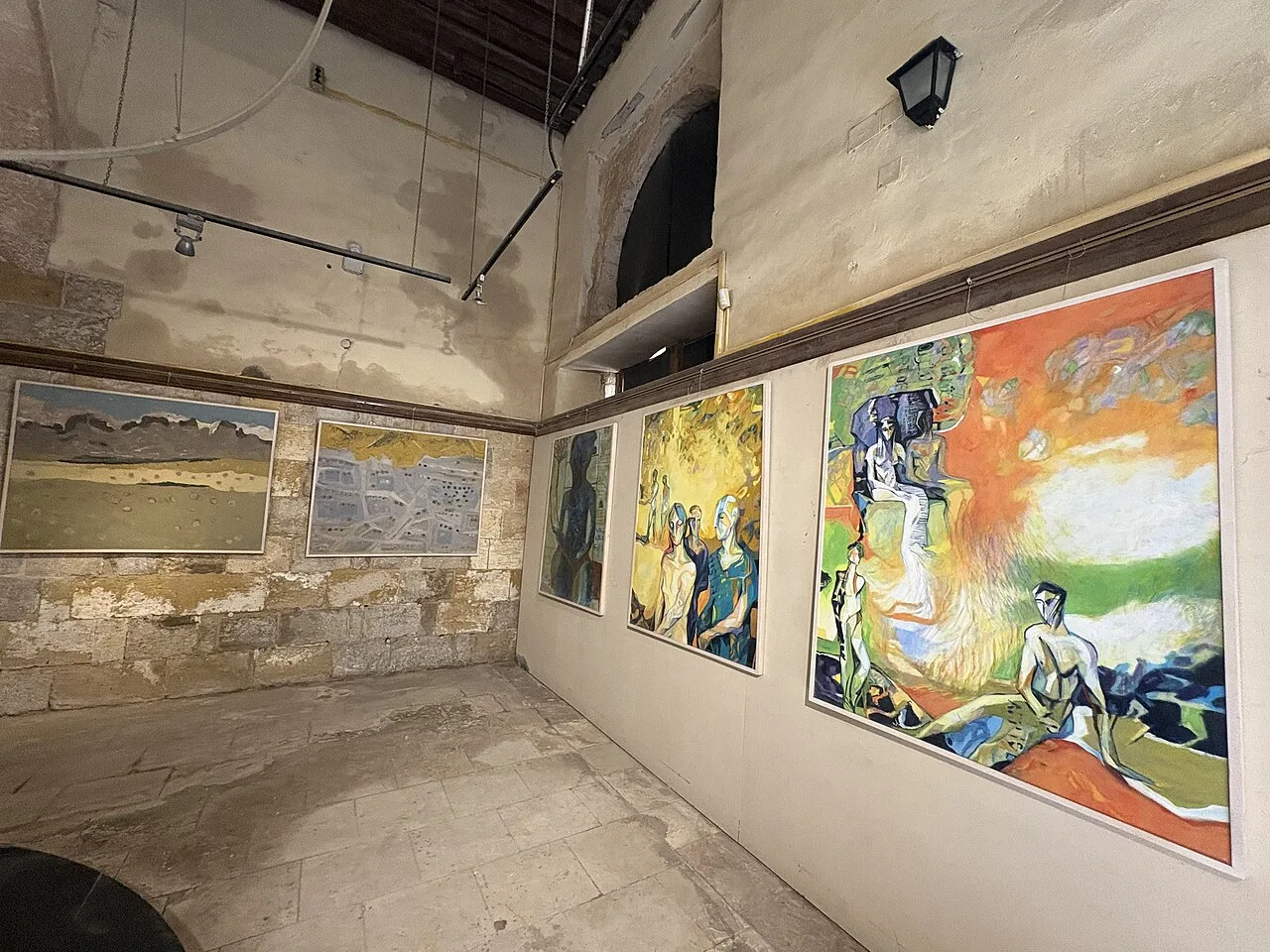 Available
📖 1 K reads
Available
📖 1 K reads
 Available
📖 7 K reads
Available
📖 7 K reads
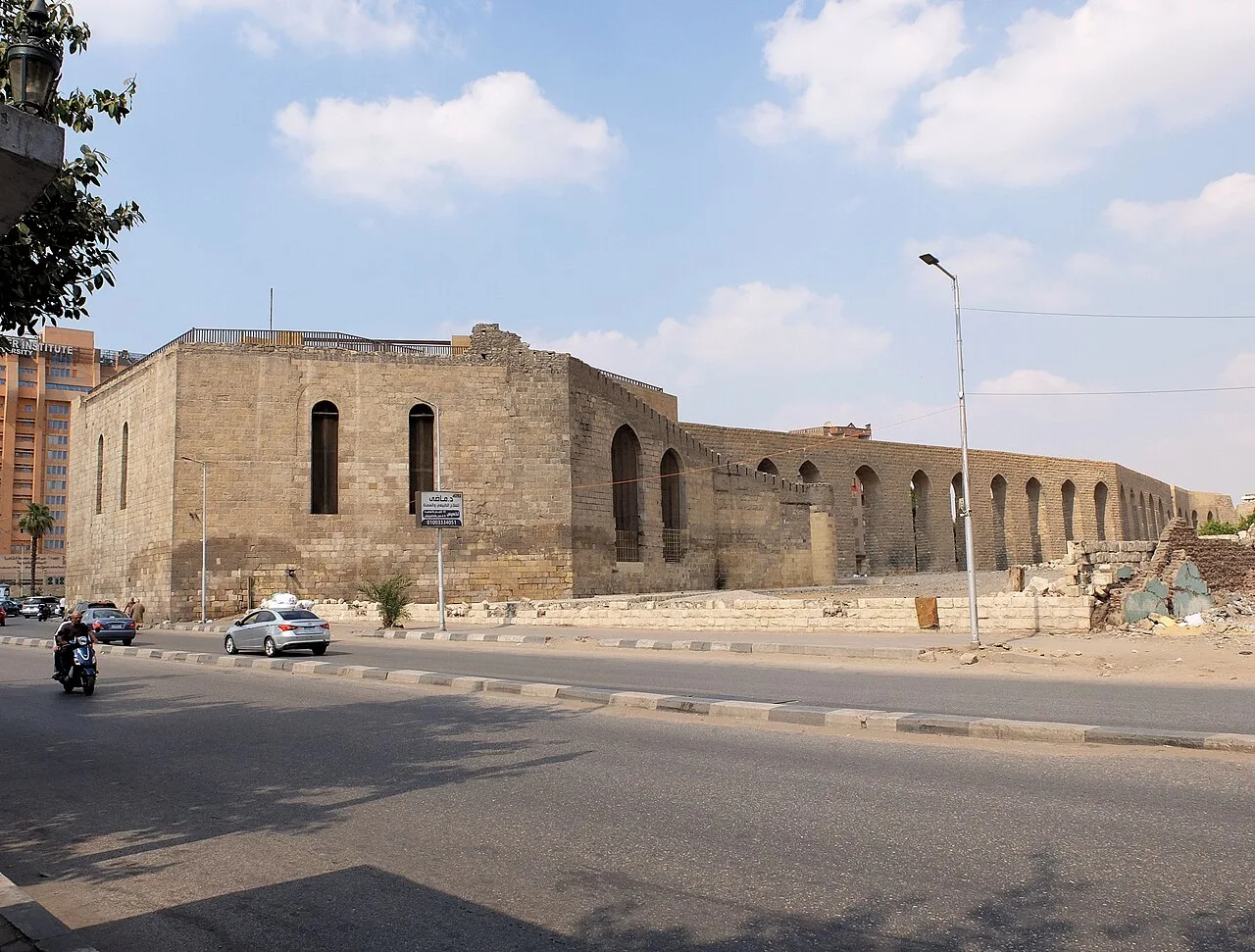 Available
📖 5 K reads
Available
📖 5 K reads