Temple of Beit el-Wali
Virtual asset linked to this landmark
- Virtual owner
- The platform
- Times sold
- 0
- Fame on Wikipedia
- 3,479 article reads in 12 months
- Searches (30 days)
- 0
- Watching
- 0
Virtual ownership only. It gives no legal, financial or physical right in the real landmark. Prices are set by the market and may fall.
About Temple of Beit el-Wali and its history
A rock-cut temple of Ramesses II, moved from its original Nubian site to New Kalabsha near the Aswan High Dam.
The Temple of Beit el-Wali is a rock-cut ancient Egyptian temple in Nubia which was built by Pharaoh Ramesses II and dedicated to the deities of Amun-Re, Re-Horakhti, Khnum and Anuket. It was the first in a series of temples built by Ramesses II in this region; its name Beit el-Wali means 'House of the Holy Man' and may indicate its previous use by a Christian hermit at some point in time. The temple was relocated during the 1960s as part of the International Campaign to Save the Monuments of Nubia as a result of the Aswan High Dam project and moved towards higher ground along with the Temple of Kalabsha. This move was coordinated with a team of Polish archaeologists financed jointly by a Swiss and Chicago institute respectively. The temple was located 50 kilometres south of Aswan.
History
The Nubian temples of Ramesses II (i.e. Wadi es-Sebua, Beit el-Wali and Abu Simbel), were part of a state sponsored policy designed to maintain Egyptian control over this area. During the New Kingdom period of Egypt, Nubia was not only ruled by Egyptian officials but also subject to:
a deliberate policy of acculturation, the intention of which was to break down Nubian identity. Many leading Nubians were educated in Egypt and adopted Egyptian dress, burial customs and religion. They spoke the Egyptian language and even changed their names to Egyptian ones. the decoration of the temples was to some extent royal propaganda intended to intimidate the [local] population.
Temple architecture and decorations
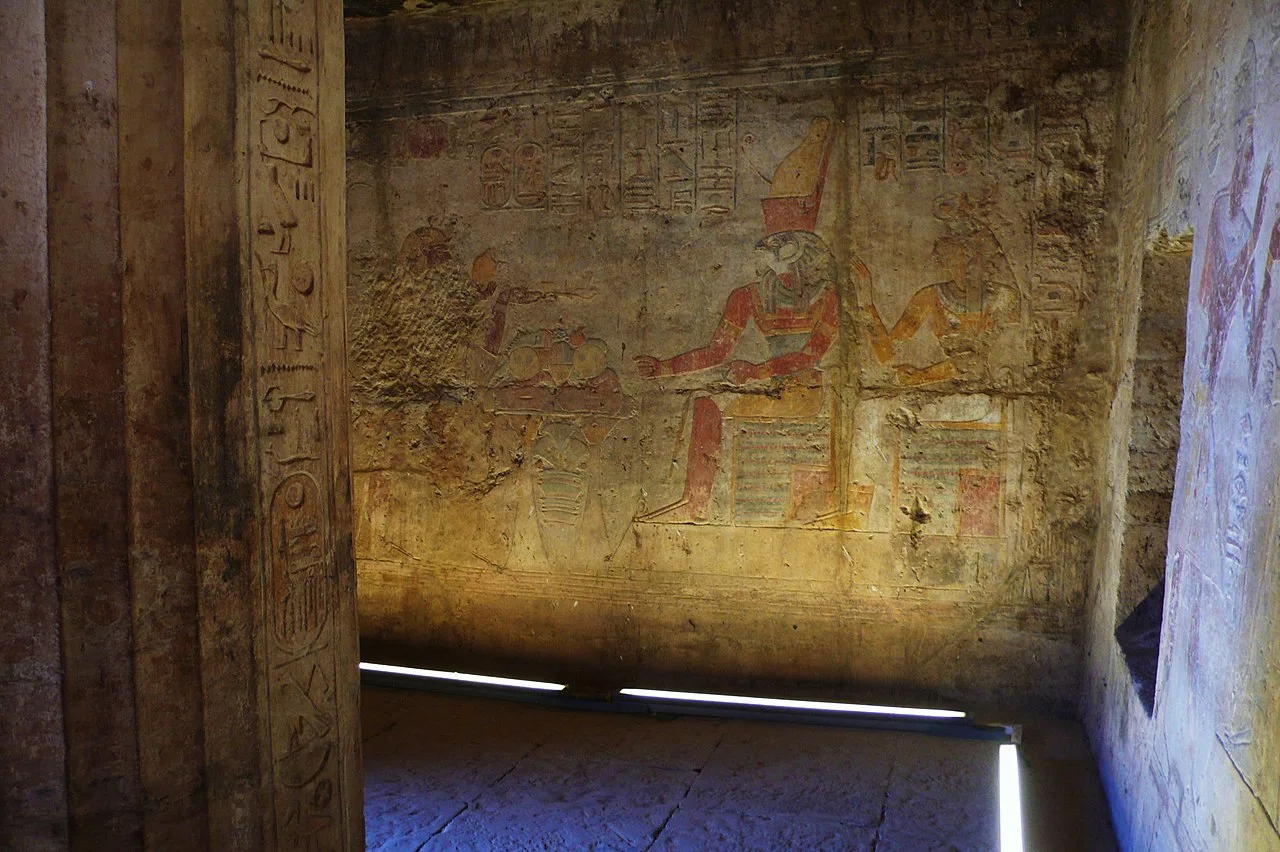
There is a large amount of original colour remaining in the inner part of this temple though the paint has disappeared from the historical scenes on its Forecourt. Near the middle of the south wall of the temple, Ramesses II is depicted charging into battle against the Nubians while his two young sons Amun-her-khepsef and Khaemwaset are shown being present in this relief scene. In the next relief scene,
Ramesses [is] enthroned, receiving the tribute of Nubia. In the upper register, Ramesses' eldest son and the viceroy Amenemope present the tribute procession. The viceroy is rewarded for his efforts with gold collars.
Source: Wikipedia · text available under CC BY-SA 4.0
- Location
- Aswan, Egypt
- Coordinates
- 23.9617, 32.8664
- Category
- Ancient Sites
Source: Wikipedia · Factual information about the real landmark; unrelated to virtual ownership.
Price & ownership history
Landmarks near Temple of Beit el-Wali
Map → Available
 Available
 Available
 Available