Shuwaymis Rock Art
Virtual asset linked to this landmark
- Virtual owner
- The platform
- Times sold
- 0
- Fame on Wikipedia
- 2,952 article reads in 12 months
- Searches (30 days)
- 0
- Watching
- 0
Virtual ownership only. It gives no legal, financial or physical right in the real landmark. Prices are set by the market and may fall.
About Shuwaymis Rock Art and its history
An ancient rock art site south of Hail, part of the Hail-region rock art World Heritage Site.
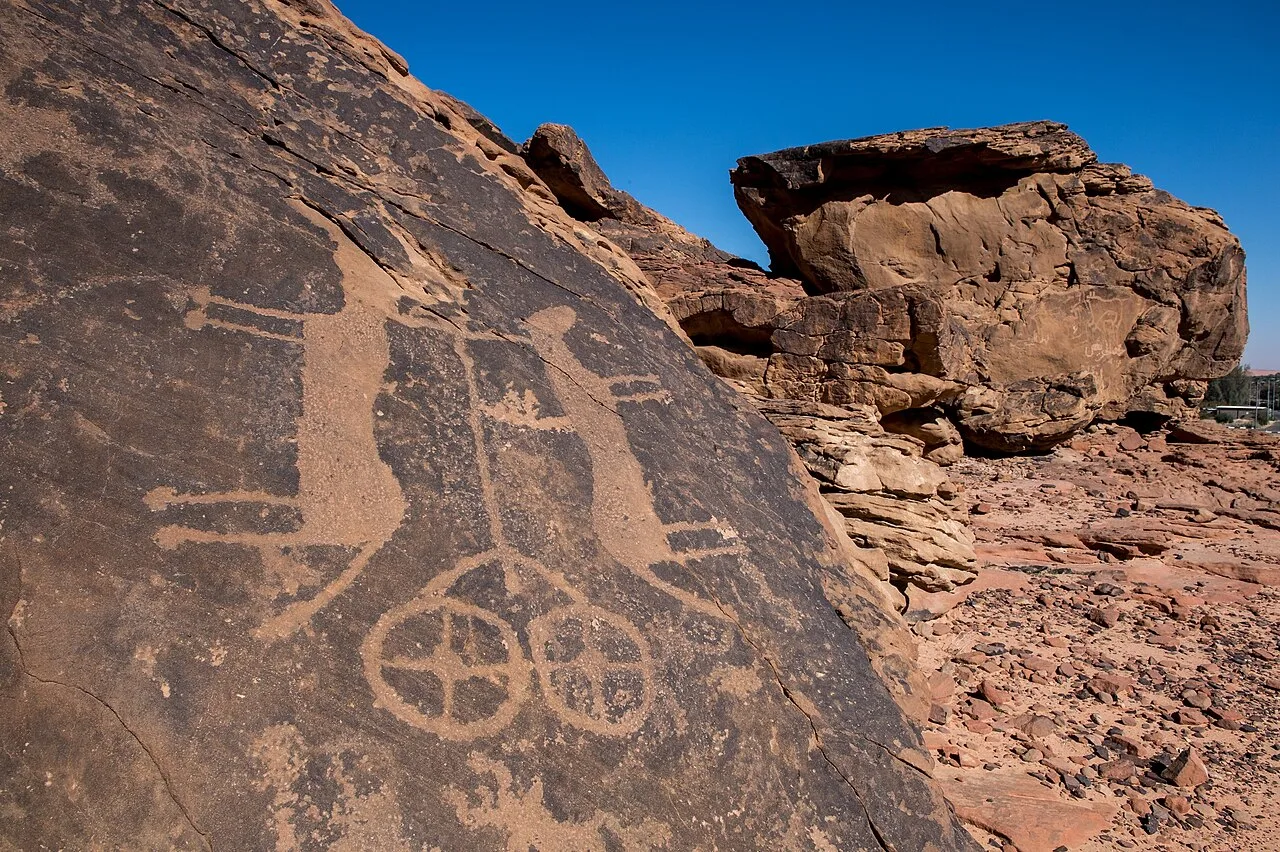
Rock Art in the Ha'il Region (Arabic: الفنون الصخرية في منطقة حائل) is the fourth site in Saudi Arabia to be inscribed on the UNESCO List of World Heritage Sites. The rock art consists of two sites with petroglyphs and inscriptions situated in the desert of the Ha'il Region:
Jabel Umm mountain (Arabic: جبل أم سنمان) at the city of Jubbah 90 km northwest of Ha'il within the Nafud desert.
Jabal Al-Manjor (Arabic: جبل المنجور) and jabal Raat (Arabic: جبل راطا) at Al-Shuwaymis 250 km southwest of Ha'il on the border between the provinces of Ha’il and Medina.
On both sites an ancient population left traces of their passings in petroglyphs on the rock's surface, holding 8,000 years of history.
Inscription criteria
In its 39th session in 2015 the committee added both sites to the UNESCO World Heritage List. Criteria for the inscription are the exceptionally large number of petroglyphs, containing stunning expressions of the human creative genius. The petroglyphs provide an exceptional testimony to the challenges of past societies in response to environmental catastrophes. The Saudi Commission for Tourism has sought to further protect the cultural site. These efforts include increasing the buffer zone, repainting and refurnishing the petroglyphs and developing a monitoring system.
Description
The petroglyphs of Jubbah are located at the eastern flanks of jabal Umm Sinman. The hills, rising to a height of 1264 m above sea level and almost 450 m above the surrounding Nafud desert, once overlooked a paleolake, up to 20 km long and 5 km wide. The panels feature different rock art traditions over the last 10,000 years and reflect major economic and cultural adjustments to climate change. The oldest petroglyphs display animals such as the ibex, which was revered by early Neolithic. As cattle and horses were domesticated, they were added to the art. With increased desiccation and the drying up of lakes 3000 years ago, camels became essential and are illustrated in abundance alongside Thamudic and Arabic script.
Jabals al-Manjor and Raat are rock escarpments in a now sand-covered wadi at Shuwaymis. The petroglyphs include figures of men, animals, palm trees and feet impressions.
Source: Wikipedia · text available under CC BY-SA 4.0
- Location
- Hail, Saudi Arabia
- Coordinates
- 26.1500, 39.9000
- Category
- Ancient Sites
Source: Wikipedia · Factual information about the real landmark; unrelated to virtual ownership.
Price & ownership history
Landmarks near Shuwaymis Rock Art
Map → Available
 Available
 Available
 Available