Harrat Khaybar
Virtual asset linked to this landmark

- Virtual owner
- The platform
- Times sold
- 0
- Fame on Wikipedia
- 12,436 article reads in 12 months
- Searches (30 days)
- 0
- Watching
- 0
Virtual ownership only. It gives no legal, financial or physical right in the real landmark. Prices are set by the market and may fall.
About Harrat Khaybar and its history
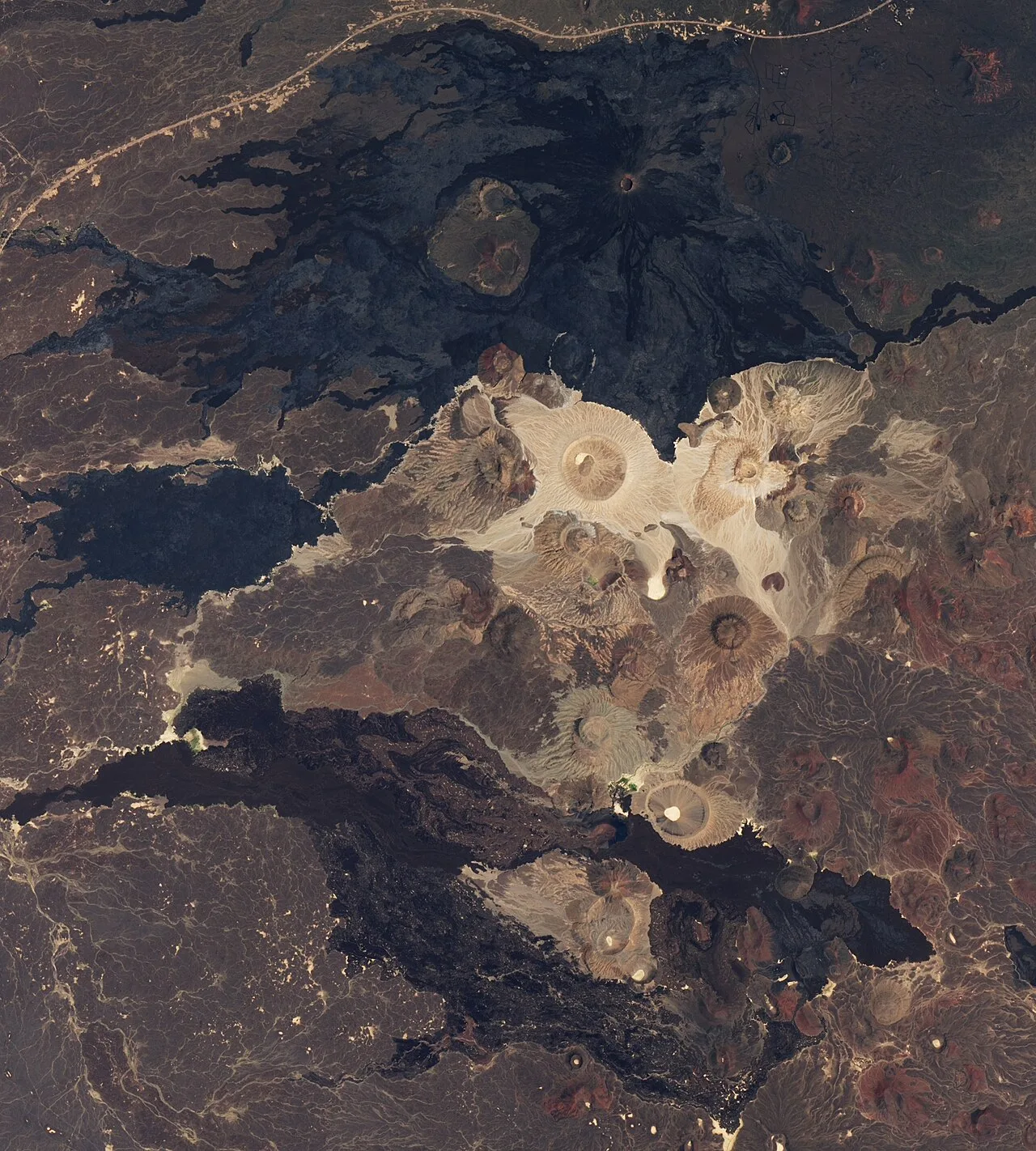
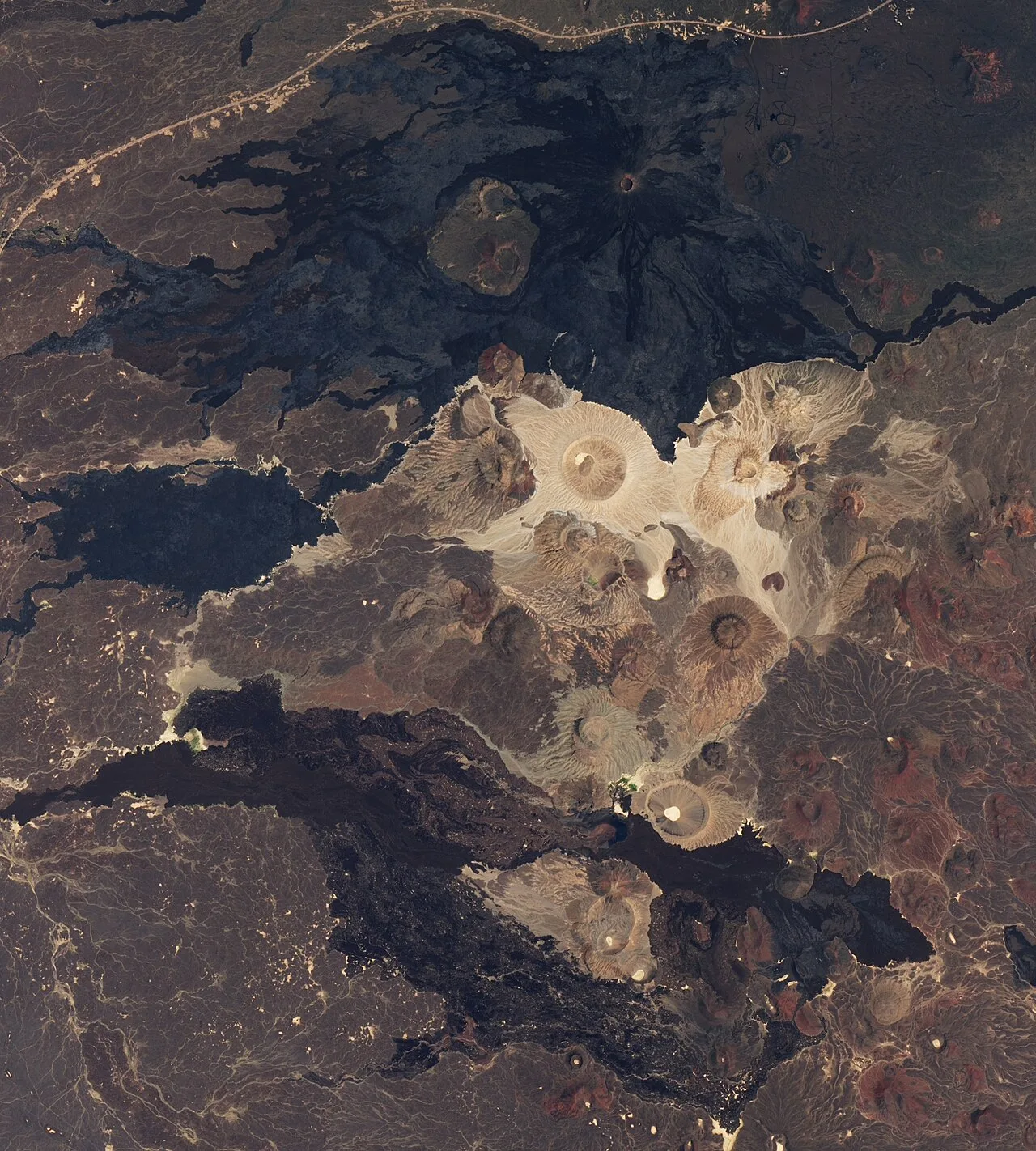
A vast volcanic field with white and black volcanoes.
Ḥarrat Khaybar (Arabic: حَرَّة خَيْبَر) is a volcanic field located north of Medina in the Hejaz, Saudi Arabia. It covers an area approximately 12,000 km2 (4,600 sq mi). The most recent eruption occurred between 600 and 700 AD. Man-made stone structures dating to the Neolithic period have been studied in Harrat Khaybar.
Geography
The basaltic lava fields of Harrat Khaybar were formed by a series of eruptions over the course of 5 million years. These eruptions took place along a series of volcanic vents stretching over a 100-kilometer (62 mile) north-south linear vent system. The fields cover an area of approximately 12,000 km2. The most recent volcanic eruption took place between 600 and 700 AD.
The White Mountains of Harrat Khaybar, Jabal Abyad and Jabal Bayda, derive their light appearance from comendite. Jabal Abyad, at an elevation of 2,093 metres (6,867 ft), is the tallest volcano in Saudi Arabia. These mountains contrast with the darker appearance of the hawaiite lava flows and domes which dominate the lava fields, such as Jabal Qidr.
In respect of it being 'the largest historic basaltic volcanic cone in intracontinental settings within a Pleistocene rhyolitic tuff ring and lava dome field', the International Union of Geological Sciences (IUGS) included 'The historic scoria cone of the Jabal Qidr' in its assemblage of 100 'geological heritage sites' around the world in a listing published in October 2022. The organisation defines an IUGS Geological Heritage Site as 'a key place with geological elements and/or processes of international scientific relevance, used as a reference, and/or with a substantial contribution to the development of geological sciences through history.'
Human activity
Evidence of early human habitation has been found in the lava fields of Harrat Khaybar. The remains of Neolithic human communities have been studied there, including habitations, fences, and funerary structures built out of volcanic stones. The structures are believed to have been constructed by pastoral tribes who lived in the area. Similar Neolithic structures have been studied throughout Arabia, Syria, and Jordan, and are collectively referred to as "The Works of the Old Men". These structures were first observed by Royal Air Force pilots in the 1920s, although they did not gain much academic or media attention at the time. The Neolithic inhabitants also mined the volcanic field for obsidian
Sandstone mustatils associated with early cattle cults have also been studied in Harrat Khaybar. Because the uneven lava plains are poorly suited to the construction of mustatils, many were built resting against volcanic vents. Pendant shaped tower tombs or cairns in Harrat Khaybar have been dated back to the third millennium BCE.
Similar funerary structures dating to the Middle Holocene are found within a range spanning across northwestern Arabia, although a particularly high density have been found in Harrat Khaybar.
Source: Wikipedia · text available under CC BY-SA 4.0
- Location
- Khaybar, Saudi Arabia
- Coordinates
- 25.7000, 39.9000
- Category
- Nature & Parks
Source: Wikipedia · Factual information about the real landmark; unrelated to virtual ownership.
Price & ownership history
Landmarks near Harrat Khaybar
Map →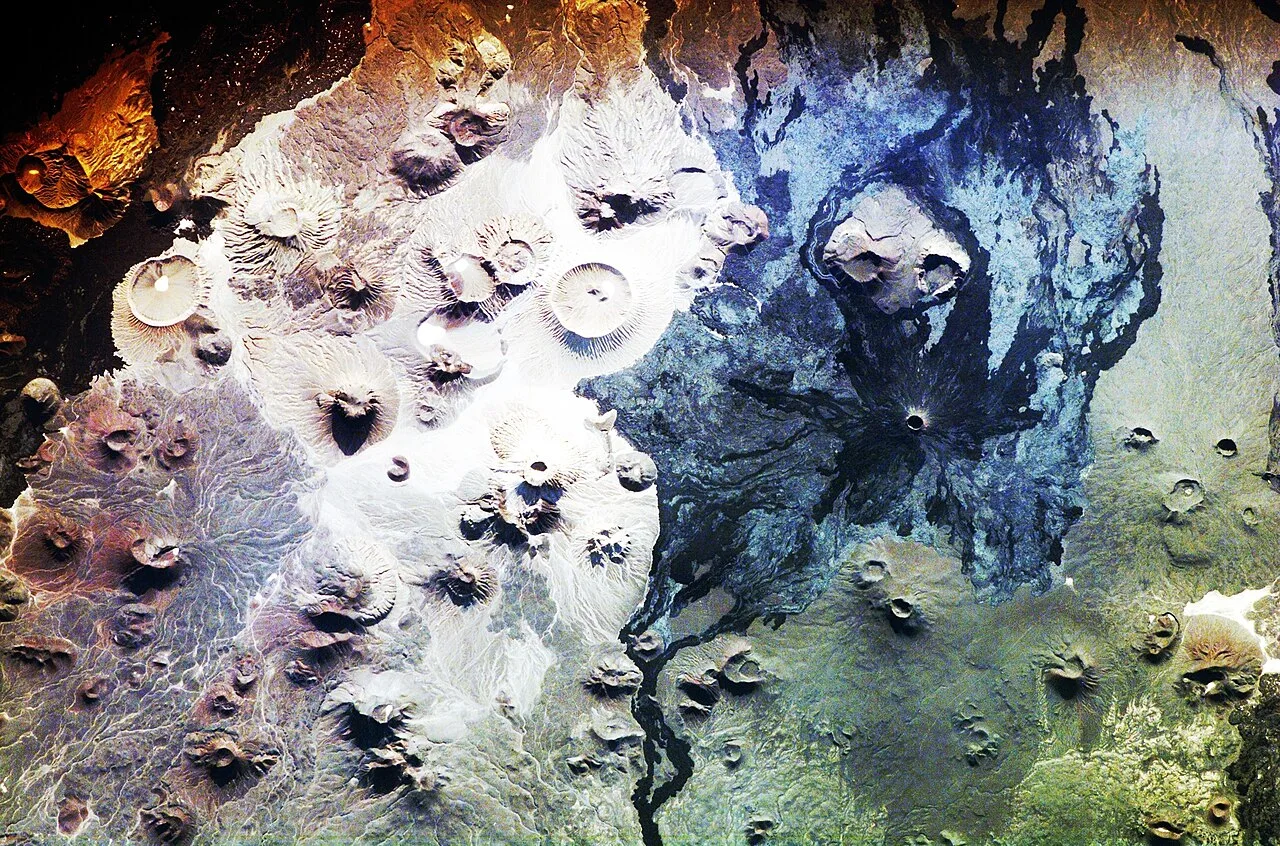 Available
 Available
📖 12 K reads
Available
📖 12 K reads
 Available
 Available
📖 3 K reads
Available
📖 3 K reads