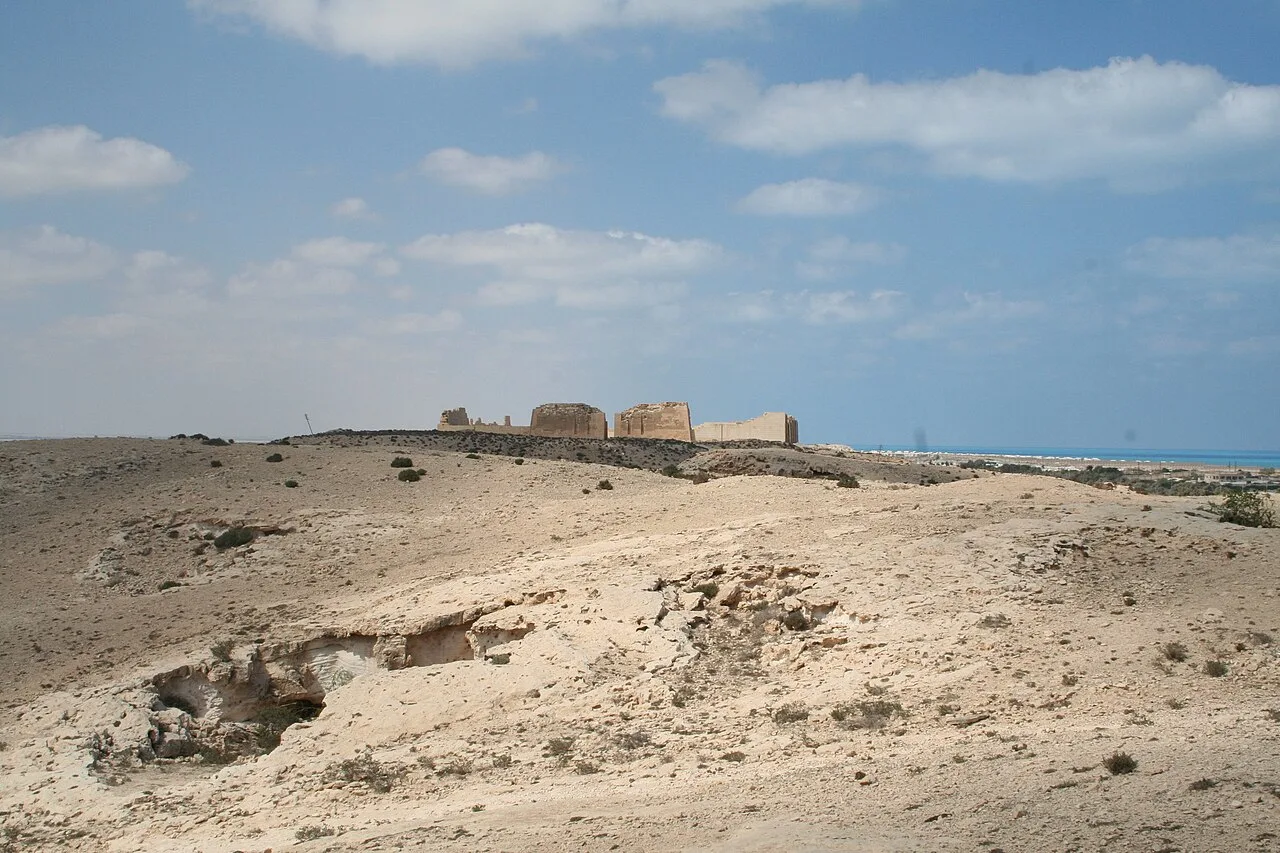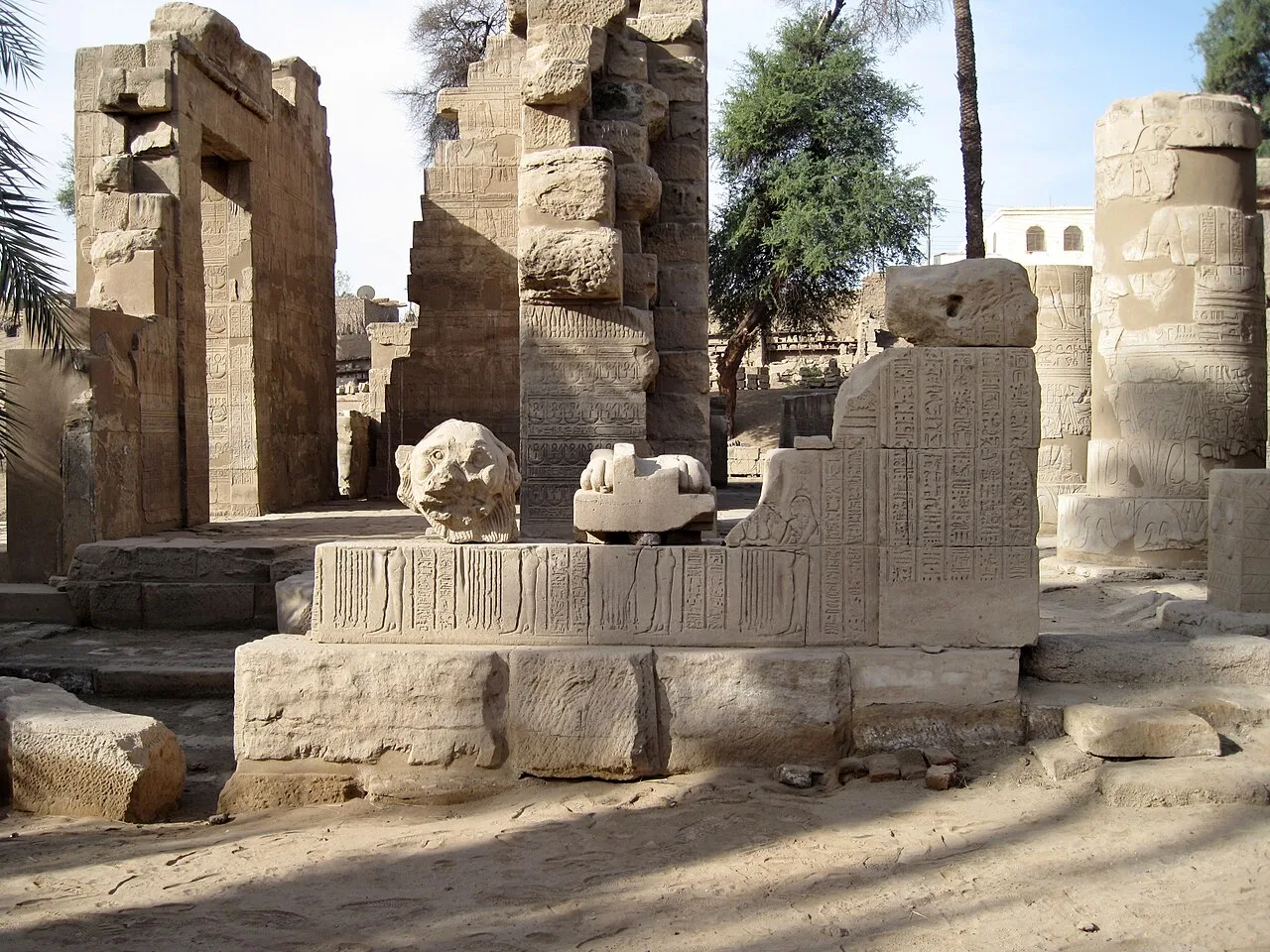
Temple of Tod
Virtual asset linked to this landmark

- Virtual owner
- The platform
- Times sold
- 0
- Fame on Wikipedia
- 3,224 article reads in 12 months
- Searches (30 days)
- 0
- Watching
- 0
Virtual ownership only. It gives no legal, financial or physical right in the real landmark. Prices are set by the market and may fall.
About Temple of Tod and its history
A temple dedicated to the god Montu, south of Luxor.
El-Tod (Arabic: طود aṭ-Ṭūd, from Coptic: ⲧⲟⲟⲩⲧ or ⲧⲁⲩⲧ, Ancient Egyptian: Ḏrty, lit. 'falcon', Ancient Greek: Τουφιον, Latin: Tuphium) was the site of an ancient Egyptian town and a temple to the Egyptian god Montu. It is located 20 kilometres (12 mi) southwest of Luxor, Egypt, near the settlement of Hermonthis. A modern village now surrounds the site.
History
The history of the site can be traced to the Old Kingdom period of Egyptian history. A granite pillar of the Fifth dynasty pharaoh, Userkaf, is the oldest object found at El-Tod. It was this same pharaoh who ordered that the temple to Montu be enlarged. Evidence of Eleventh dynasty building is shown in the discovery of blocks bearing the names of Mentuhotep II and Mentuhotep III. Under Senwosret I, these buildings were replaced with a new temple. Further additions to this temple were made under Ptolemy VIII.
Aside from Montu, to whom a temple was dedicated, the Egyptian goddess Iunit was of local importance. According to Flinders Petrie, the god of Tuphium was Hemen. As part of the Thebaid, the area also saw the worship of Sebak (Sobek), the Egyptian crocodile god.
Remains
On 7 March we visited the ruins of the ancient Tuphium, now Taoud situated on the right bank of the river but in the vicinity of the Arabic chain and very near to Hermonthis which is on the opposite bank. Here there are two or three little apartments of a temple, inhabited by Fellahs or their cattle. In the largest there are still some bas-reliefs, which informed me that the triad worshipped in the temple consisted of Mandou, the goddess Ritho, and their son Harphré, the same as in the temple of Hermonthis, the capital of the nome (district) to which Tuphium belonged.
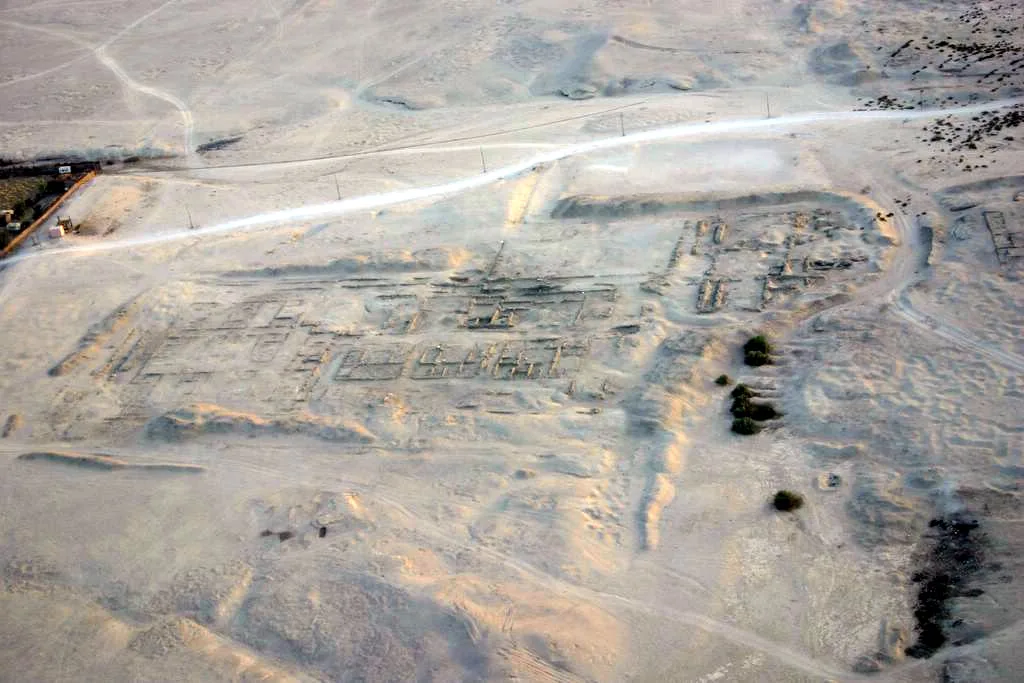
The archaeological site contains the ruins of a number of structures; including the main Ptolemaic period temple extension, Barque Shrine of Thutmose III, a dromos, part of the later north entrance, as well as an open air lapidarium.
In 1936, archaeologists discovered in the support structures under the ruined temple building a number of metallic and lapis lazuli artifacts. Most of the metallic objects were made of silver. They were earmarked for some authorities of unknown origin and epoch, who are believed to have been of non-Egyptian origin. Nevertheless, the style of the objects resemble artifacts that were excavated in Knossos, which date to c. 1900–1700 BC. Yet, at Knossos such objects were made of clay, possibly imitating metal.
The initial discovery of four chests (inscribed with the name of Pharaoh Amenemhat II) made of copper and containing the objects had been made by F. Bisson de la Roque. Some sources posit that the treasure is of Asiatic origin and that some of it, in fact, was manufactured in Iran (the latter as claimed by Roger Moorey). Some gold artifacts are also part of the Treasure, and they may have originated from Anatolia.
Source: Wikipedia · text available under CC BY-SA 4.0
- Location
- Luxor, Egypt
- Coordinates
- 25.5830, 32.5330
- Category
- Ancient Sites
Source: Wikipedia · Factual information about the real landmark; unrelated to virtual ownership.
Price & ownership history
Landmarks near Temple of Tod
Map → Available
 Available
📖 13 K reads
Available
📖 13 K reads
 Available
📖 47 K reads
Available
📖 47 K reads
 Available