Korba, Heliopolis
Virtual asset linked to this landmark

- Virtual owner
- The platform
- Times sold
- 0
- Fame on Wikipedia
- 33,586 article reads in 12 months
- Searches (30 days)
- 0
- Watching
- 0
Virtual ownership only. It gives no legal, financial or physical right in the real landmark. Prices are set by the market and may fall.
About Korba, Heliopolis and its history
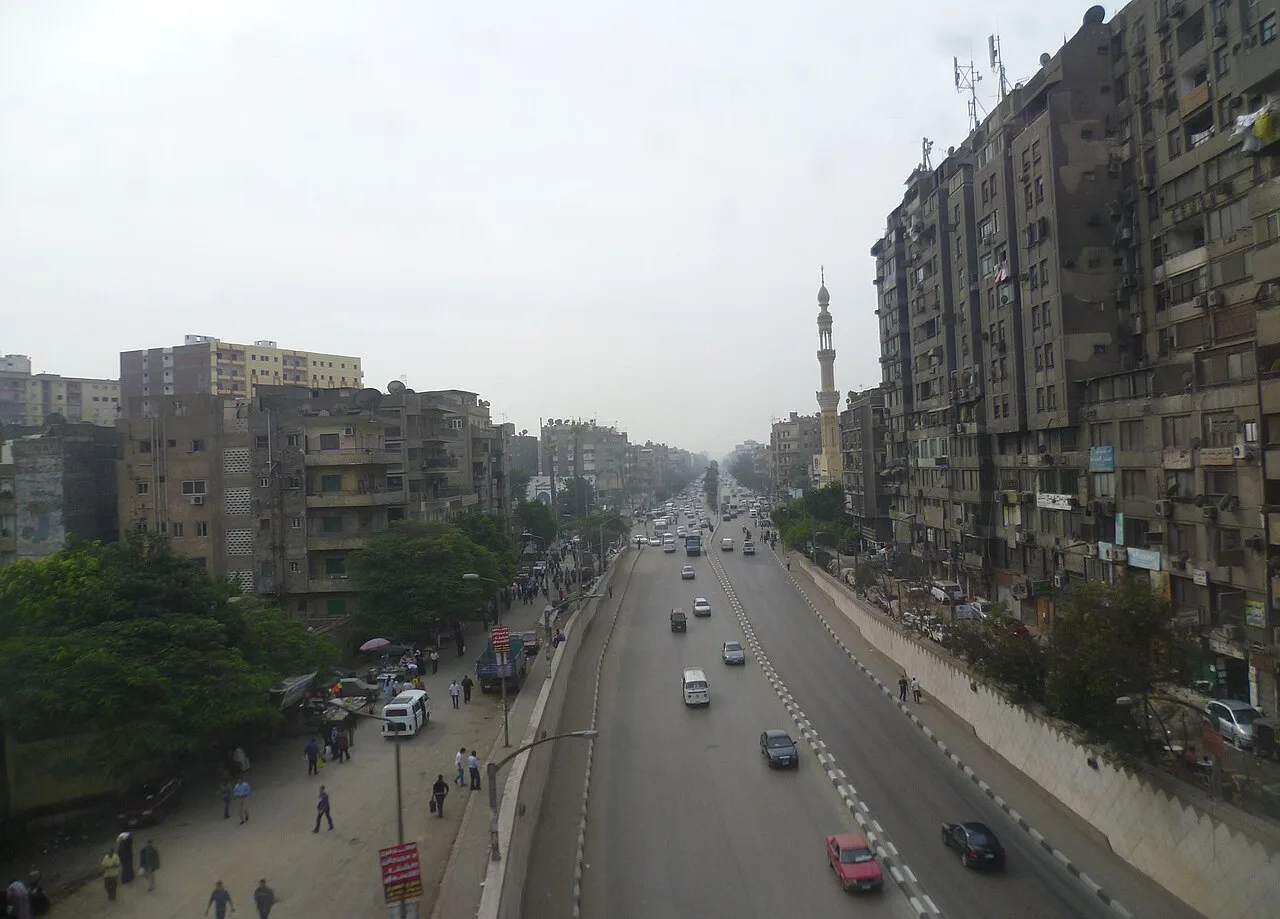
An area of Heliopolis known for its arcaded architecture.
Heliopolis (Arabic: مصر الجديدة, romanized: Miṣr al-Jadīda, Egyptian Arabic pronunciation: [ˈmɑsˤɾ el ɡɪˈdiːdæ, -eɡ-], lit. "New Egypt") was an early 20th-century suburb outside Cairo, Egypt, which has since merged with Cairo and is administratively divided into the districts of Masr El Gedida and El Nozha in the Eastern Area.
Named after the ancient Egyptian city of Heliopolis, whose ruins have been found in nearby Ain Shams, modern Heliopolis was established in 1905 by the Heliopolis Oasis Company headed by the Belgian industrialist Édouard Empain and by Boghos Nubar, son of the Egyptian Prime Minister Nubar Pasha.
The population in January 2022 of Masr El Gedida was estimated to be 142,017; 244,869 in El-Nozha.
History
The rise of real estate prices in Egypt coupled with the increasing numbers of expatriates living in the country inspired the Belgian industrialist Édouard Empain, 1st Baron Empain to build a new suburb of Cairo. In 1905, his company, Chemins de fer de la Basse-Egypte bought 2,500 hectares (6,200 acres) of inexpensive desert 10 kilometres (6.2 mi) to the northeast of Cairo. A year later, he established The Cairo Electric Railways & Heliopolis Oases Company. The former would build a railway line linking Mansourah (on the Nile) to Matariya (on the far side of Lake Manzala from Port Said).
Initially, Heliopolis was designed to be an oasis in the desert, a "city of luxury and leisure", with 8% of its area reserved for public gardens, parks, and playgrounds. In the first design, it was to be composed of two separate oases connected to the center of Cairo by a tramline. The oasis nearest to Cairo would be a tourist area, with the Heliopolis Palace Hotel surrounded by luxurious homes. The other oasis would be factories and workers’ homes.
In 1907, Empain experienced financial difficulties. British financier Ernest Cassel stepped in and the city was redesigned. In the new design, Heliopolis was planned as a Garden City. Landmarks were connected by broad avenues, a la Paris, and entertainment facilities like Luna Amusement Park, golf courses and the Heliopolis Sporting Club were built to attract Europeans. It naturally had water, drains and electricity, and there was rental housing in a range of innovative designs targeting specific social classes with detached and terraced villas, apartment buildings, tenement blocks with balcony access, and workers' bungalows.
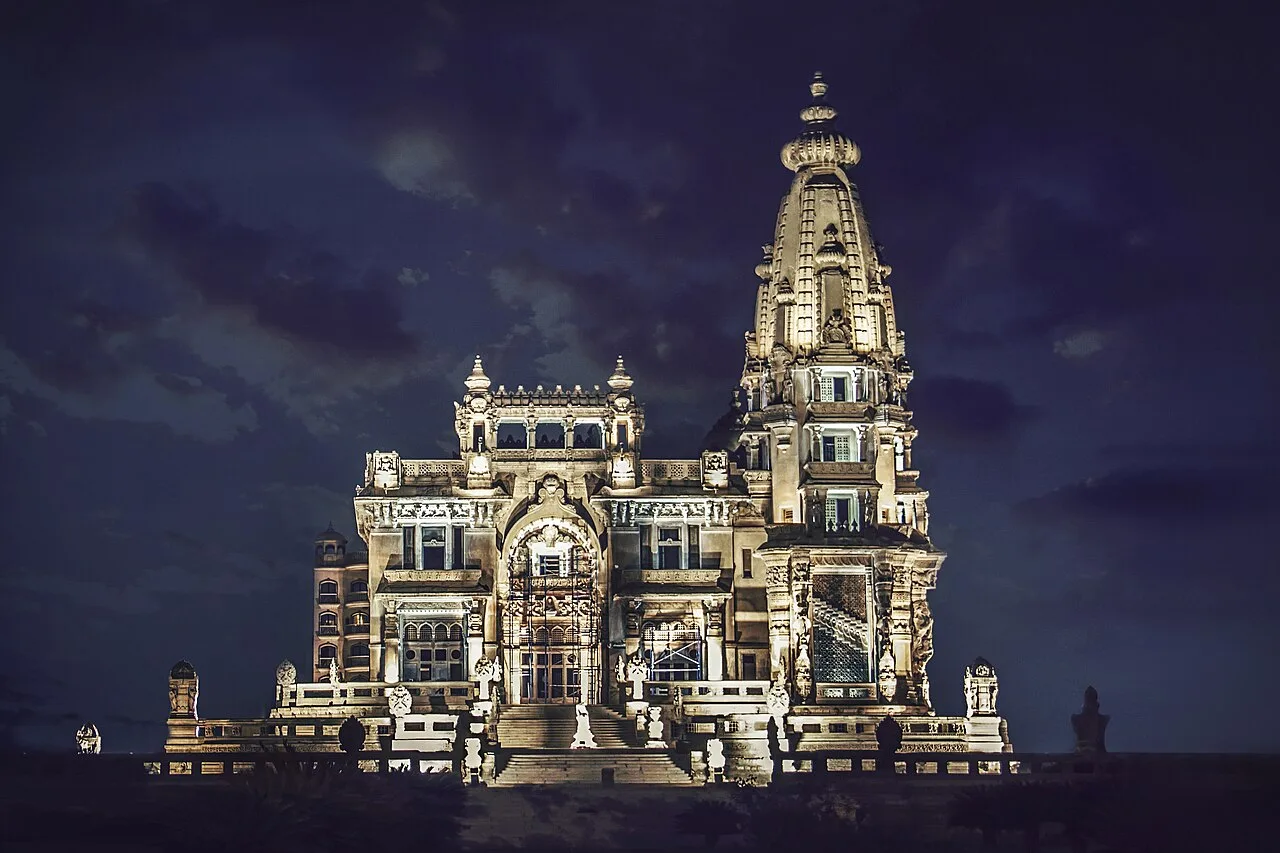
The master plan was created by the Belgian architect Ernest Jaspar, who blended Persian, Moorish and European Neoclassicism to create what is now known as the "Heliopolis style". British influence came through the urban planning concepts of Ebenezer Howard. Jaspar, French architect Alexandre Marcel, and Italian architect and engineer Antonio Lasciac built many grand buildings, including the Sultana Malak Palace, and the Heliopolis Palace. Marcel designed the Baron's palace according to a Neo Hindu style modelled on Angkor Wat in Cambodia and the Hindu temples of Orissa.
Source: Wikipedia · text available under CC BY-SA 4.0
- Built / established
- Heliopolis was founded in 1905
- Location
- Cairo, Egypt
- Coordinates
- 30.0900, 31.3220
- Category
- Districts, Streets & Markets
Source: Wikipedia · Factual information about the real landmark; unrelated to virtual ownership.
Price & ownership history
Landmarks near Korba, Heliopolis
Map → Available
📖 84 K reads
Available
📖 84 K reads
 Available
📖 17 K reads
Available
📖 17 K reads
 Available
📖 1 K reads
Available
📖 1 K reads
 Available
📖 7 K reads
Available
📖 7 K reads