Heracleopolis Magna
Virtual asset linked to this landmark

- Virtual owner
- The platform
- Times sold
- 0
- Fame on Wikipedia
- 16,087 article reads in 12 months
- Searches (30 days)
- 0
- Watching
- 0
Virtual ownership only. It gives no legal, financial or physical right in the real landmark. Prices are set by the market and may fall.
About Heracleopolis Magna and its history
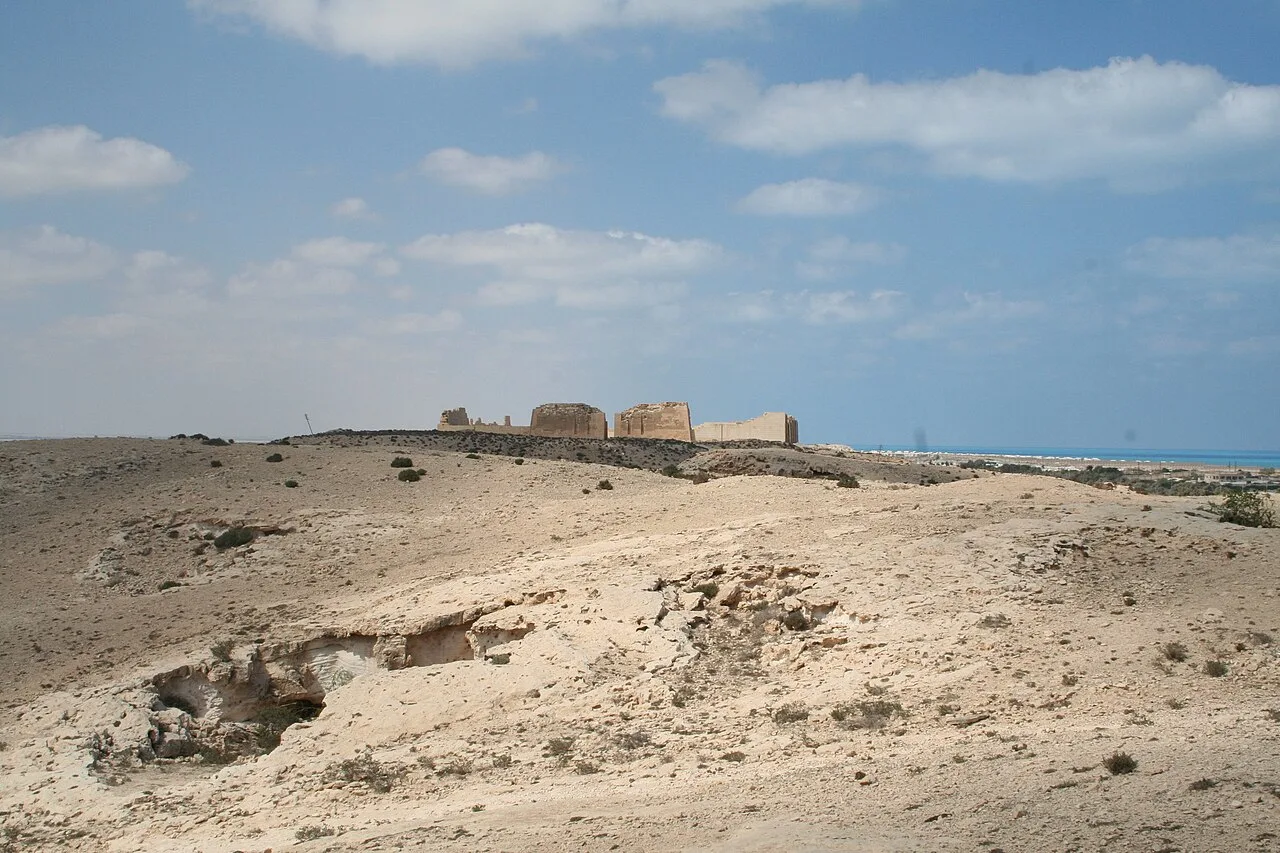
Ruins of the capital of Egypt under the Ninth and Tenth Dynasties and cult centre of the god Heryshaf, at Ihnasya west of Beni Suef.
Heracleopolis Magna (Ancient Greek: Μεγάλη Ἡρακλέους πόλις, Megálē Herakléous pólis), Heracleopolis (Ἡρακλεόπολις, Herakleópolis) or Herakleoupolis (Ἡρακλεούπολις), known in Ancient Egyptian as nn nswt, is the Roman name of the capital of Noret-Khent, the 20th nome of ancient Upper Egypt. The site is located approximately 15 km (9.3 mi) west of the modern city of Beni Suef, in the Beni Suef Governorate of Egypt.
Name
In Ancient Egypt, Heracleopolis Magna was called nn nswt, meaning Child of the King (appearing as hnn nswt or hwt nn nswt; also transcribed Henen-Nesut or Hut-Nen-Nesut). This later developed into Hnes Coptic: Ϩⲛⲏⲥ or ϩⲛⲉⲥ (/ǝhnes/), which was borrowed into early Egyptian Arabic: اهناس Ahnās. The site is now known as Ihnasiyyah Umm al-Kimam "Ihnasiyyah, Mother of the Shards" and as Ihnasiyyah al-Madinah "The City of Ihnasiyyah".
The Greek name meant "City of Heracles", with the epithet "great" being added to distinguish it from other towns with that name. The Greek form became more common during the Ptolemaic Kingdom, which came to power after the death of Alexander the Great. The Roman Empire used a Latinised form of the Greek name.
Some Egyptologists and Biblical scholars connect the biblical city of Hanes (Hebrew: חָנֵס Ḥānês) mentioned in Isaiah 30:4 with Heracleopolis Magna.
The date of the earliest settlements on the site of Herakleopolis is not known, but an entry on the Palermo Stone reporting king Den's visit to the sacred lake of Heryshef at Nenj-neswt, the ancient name of the city, suggests that it was already in existence by the mid First Dynasty, c. 2970 BC.
Herakleopolis first came to prominence and reached its apogee of power during the First Intermediate Period, between 2181 and 2055 BC. Eventually after the collapse of the Old Kingdom, Egypt was divided into Upper and Lower Egypt. Herakleopolis became the principal city of Lower Egypt and was able to exercise its control over much of the region. Herakleopolis exerted such great control over Lower Egypt during this time that Egyptologists and Egyptian archaeologists sometimes refer to the period between the 9th and 10th Dynasties (2160–2025 BC) as the Herakleopolitan Period. During this period, Herakleopolis often found itself in conflict with the de facto capital of Upper Egypt, ancient Thebes.
Between the latter part of the First Intermediate Period and the early Middle Kingdom, the city became the religious center of the cult of Heryshaf, and the Temple of Heryshaf was constructed. Heracleopolis Magna and its dynasty was defeated by Mentuhotep II in c. 2055–2004 BC, which ushered in the Middle Kingdom period.
Pharaoh Horemheb is believed to have originally come from Herakleopolis, since his coronation text formally credits the god Horus of Hnes (Herakleopolis) for establishing him on the throne.
By the time of the Third Intermediate Period (1069–664 BC), Herakleopolis again rose in importance.
Source: Wikipedia · text available under CC BY-SA 4.0
- Location
- Beni Suef, Egypt
- Coordinates
- 29.0853, 30.9344
- Category
- Ancient Sites
Source: Wikipedia · Factual information about the real landmark; unrelated to virtual ownership.
Price & ownership history
Landmarks near Heracleopolis Magna
Map → Available
📖 7 K reads
Available
📖 7 K reads
 Available
📖 25 K reads
Available
📖 25 K reads
 Available
 Available
📖 3 K reads
Available
📖 3 K reads