Medinet Madi
Virtual asset linked to this landmark
- Virtual owner
- The platform
- Times sold
- 0
- Fame on Wikipedia
- 3,293 article reads in 12 months
- Searches (30 days)
- 0
- Watching
- 0
Virtual ownership only. It gives no legal, financial or physical right in the real landmark. Prices are set by the market and may fall.
About Medinet Madi and its history
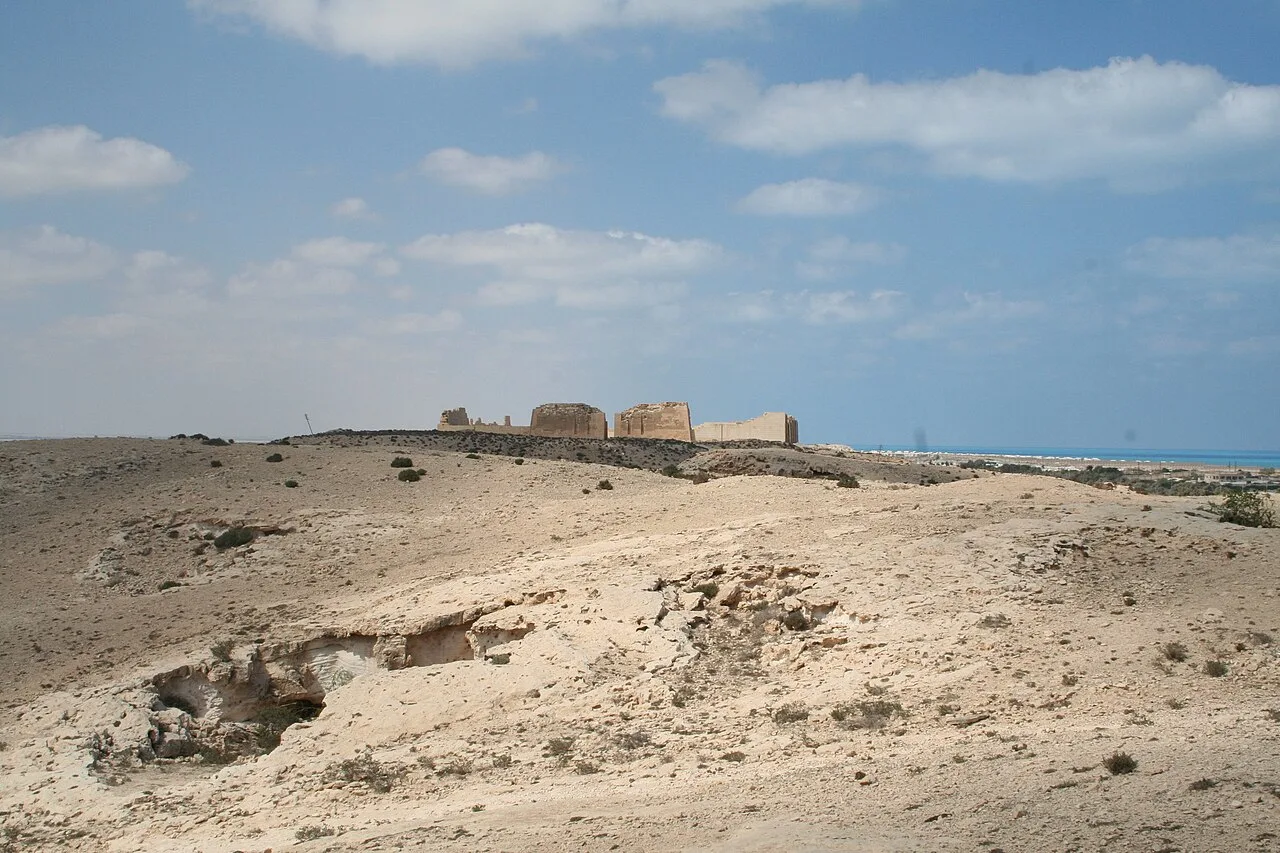
An archaeological site in south-west Fayoum with a temple of Amenemhat III and IV to the goddess Renenutet, enlarged in Ptolemaic times.
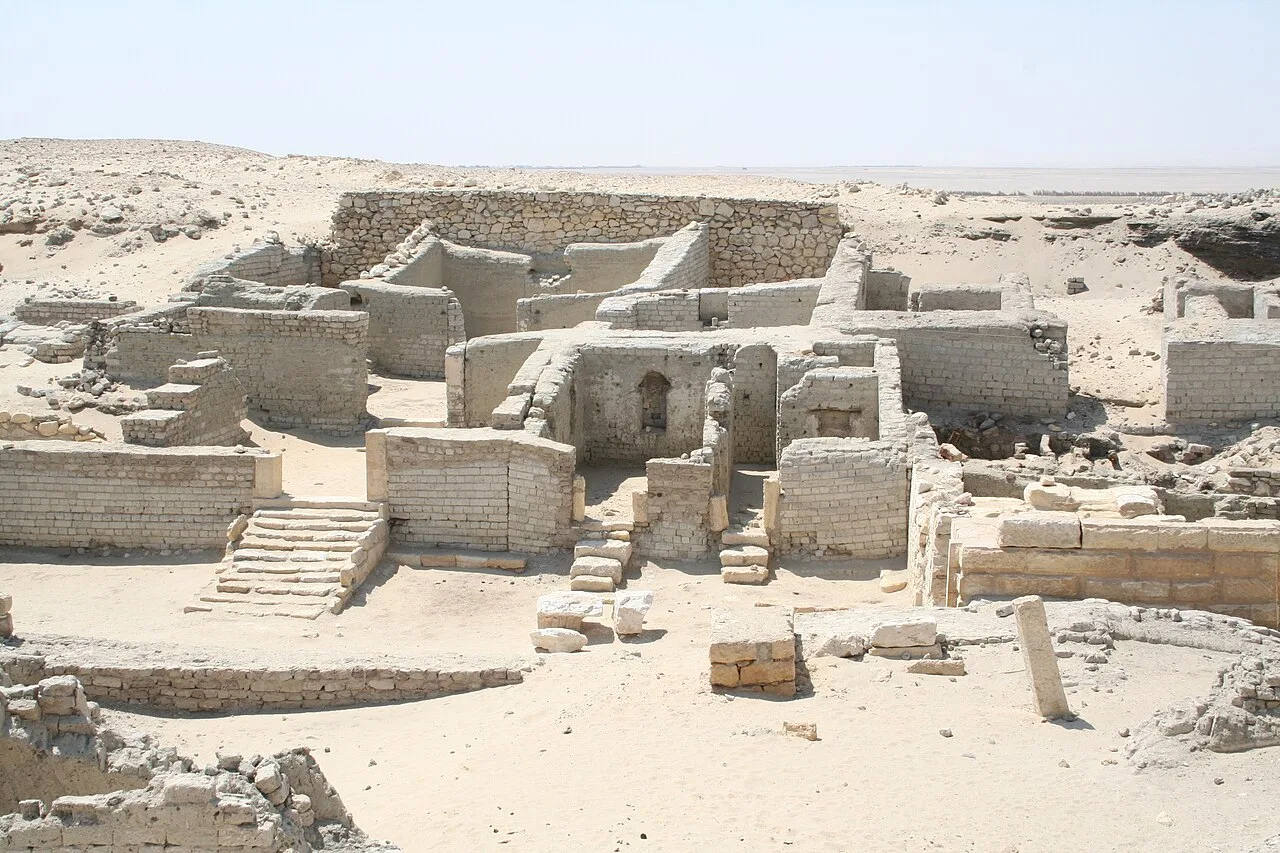
Medinet Madi (Arabic: مدينة ماضي), also known simply as Madi or Maadi (ماضي) in Arabic, is a site in the southwestern Faiyum region of Egypt with the remains of a Greco-Roman town where a temple of the cobra-goddess Renenutet (a harvest deity) was founded during the reigns of Amenemhat III and Amenemhat IV (1855–1799 BC). It was later expanded and embellished during the Greco-Roman period. In the Middle Kingdom the town was called Dja, later the town was known as Narmouti (Coptic: ⲛⲁⲣⲙⲟⲩϯ, ⲛⲁⲣⲙⲟⲩⲧⲉ, lit. 'the ones of Renenutet'), Narmouthis (Ancient Greek: Ναρμουθις) and Narmuda (Arabic: نرموده).
The town
In the Middle Kingdom the town was called Dja, but not much is known about the town in this period apart from the well preserved temple. The temple still functioned in the New Kingdom. King Merenptah placed a statue of himself into the temple. After the New Kingdom the place was abandoned. People settled here again in Ptolemaic times. The Ptolemaic town was laid out on a grid pattern and is about 1000 × 600 m big. The main temples are in the Western part of the town. There is a long processional way going north to South. The town never had walls. However under emperor Diocletian there was built a castrum north east of the town. The fortress (50 × 50 m) is square with the main entrance in the South. At each corner there was a tower. Here was stationed the Cohors IV Numidarum. In Byzantine Times the population moved to the southern part of the town. Several churches were erected. The town was still occupied after the Muslim conquest of Egypt, but was abandoned after the ninth century.
The Renenutet temple (temple A)
The dark sandstone inner part of the temple consists of a small papyrus-columned hall leading to a sanctuary comprising three chapels, each containing statues of deities. One column bears the name of Amenemhat III, the other with the name of Amenemhat IV. Both name also Renenutet. The central chapel incorporated a large statue of Renenutet, with Amenemhat III and Amenemhat IV standing on either side of her. In the inscriptions, the temple is simply called temple of Renenutet. Renenutet is called The living Renenutet of Dja.
The reliefs in the first hall are not well preserved, but they include a scene showing a king and the goddess Seshat, founding the temple. Behind the entrance room there follows another one, that is also all around decorated with reliefs. On the South side there is a scene showing Amenemhat III in front of Renenutet. The latter is depicted as standing woman with a snake head. Between both is shown in a much smaller scale the king's daughter Neferuptah. At the back of this room, on the North side, there are the three chapels. The first one, on the West side, is dedicated to Renenutet. She appears as the main deity at the back of the chapel. On the side walls are shown on the West side Sobek, and on the East side Renenutet. The second chapel was dedicated to Renenutet and Sobek.
Source: Wikipedia · text available under CC BY-SA 4.0
- Location
- Fayoum, Egypt
- Coordinates
- 29.1936, 30.6417
- Category
- Ancient Sites
Source: Wikipedia · Factual information about the real landmark; unrelated to virtual ownership.
Price & ownership history
Landmarks near Medinet Madi
Map → Available
 Available
 Available
 Available