Wadi es-Sebua
Virtual asset linked to this landmark

- Virtual owner
- The platform
- Times sold
- 0
- Fame on Wikipedia
- 1,772 article reads in 12 months
- Searches (30 days)
- 0
- Watching
- 0
Virtual ownership only. It gives no legal, financial or physical right in the real landmark. Prices are set by the market and may fall.
About Wadi es-Sebua and its history
A Nubian temple of Ramesses II, moved to higher ground after the High Dam was built.
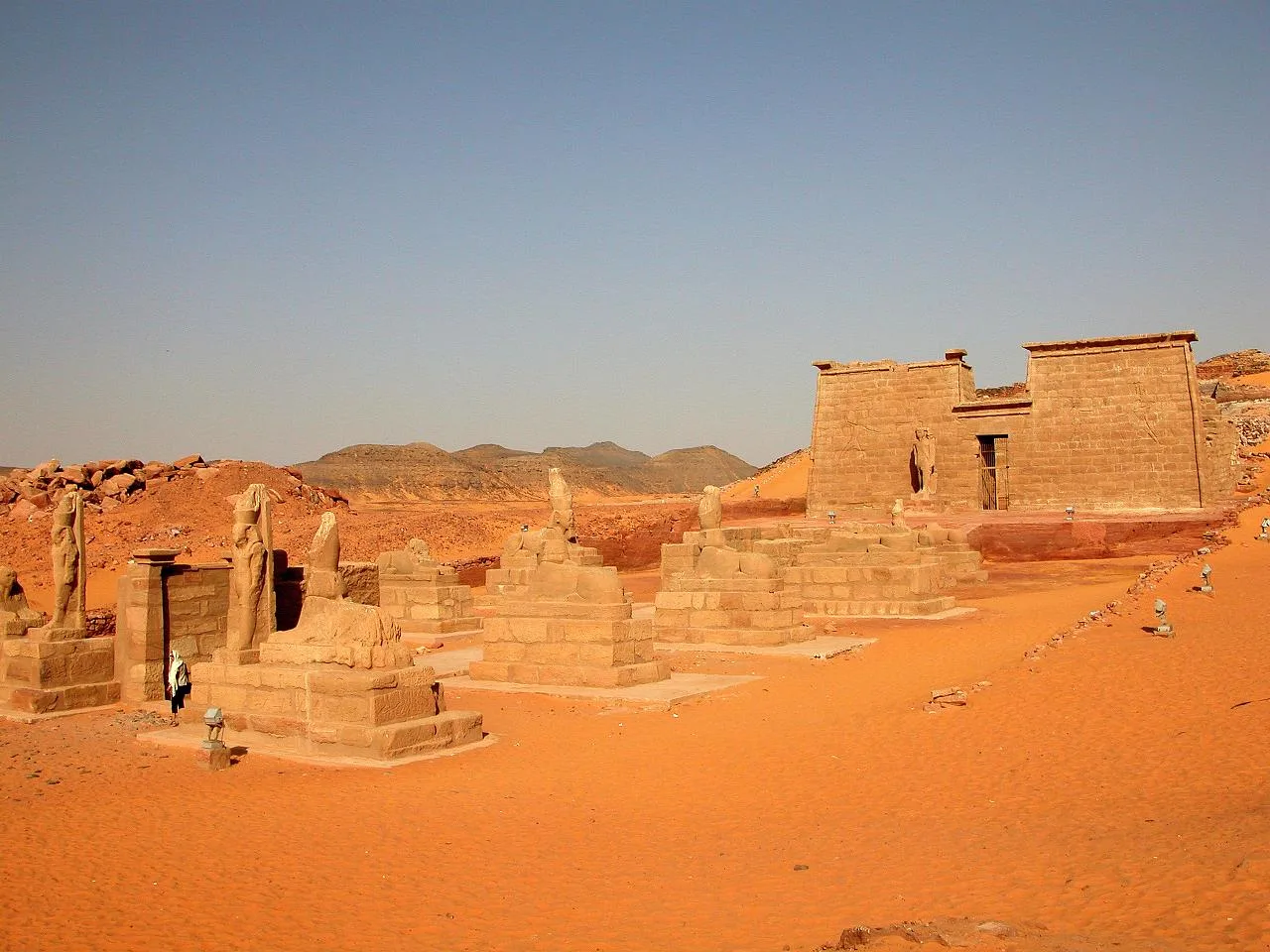
The temples of Wadi es-Sebua (Arabic: وادى السبوع, lit. 'Valley of the Lions', so-called because of the sphinx-lined approach to the temple forecourts), is a pair of New Kingdom Egyptian temples, including one speos temple constructed by the 19th Dynasty Pharaoh Ramesses II, in Lower Nubia.
As part of the International Campaign to Save the Monuments of Nubia, along with Abu Simbel, Philae, Amada, and other Nubian archaeological sites, the temples at Wadi es-Sebua were relocated in the 1960s and inscribed on the UNESCO World Heritage List in 1979.
First Temple of Amenhotep III
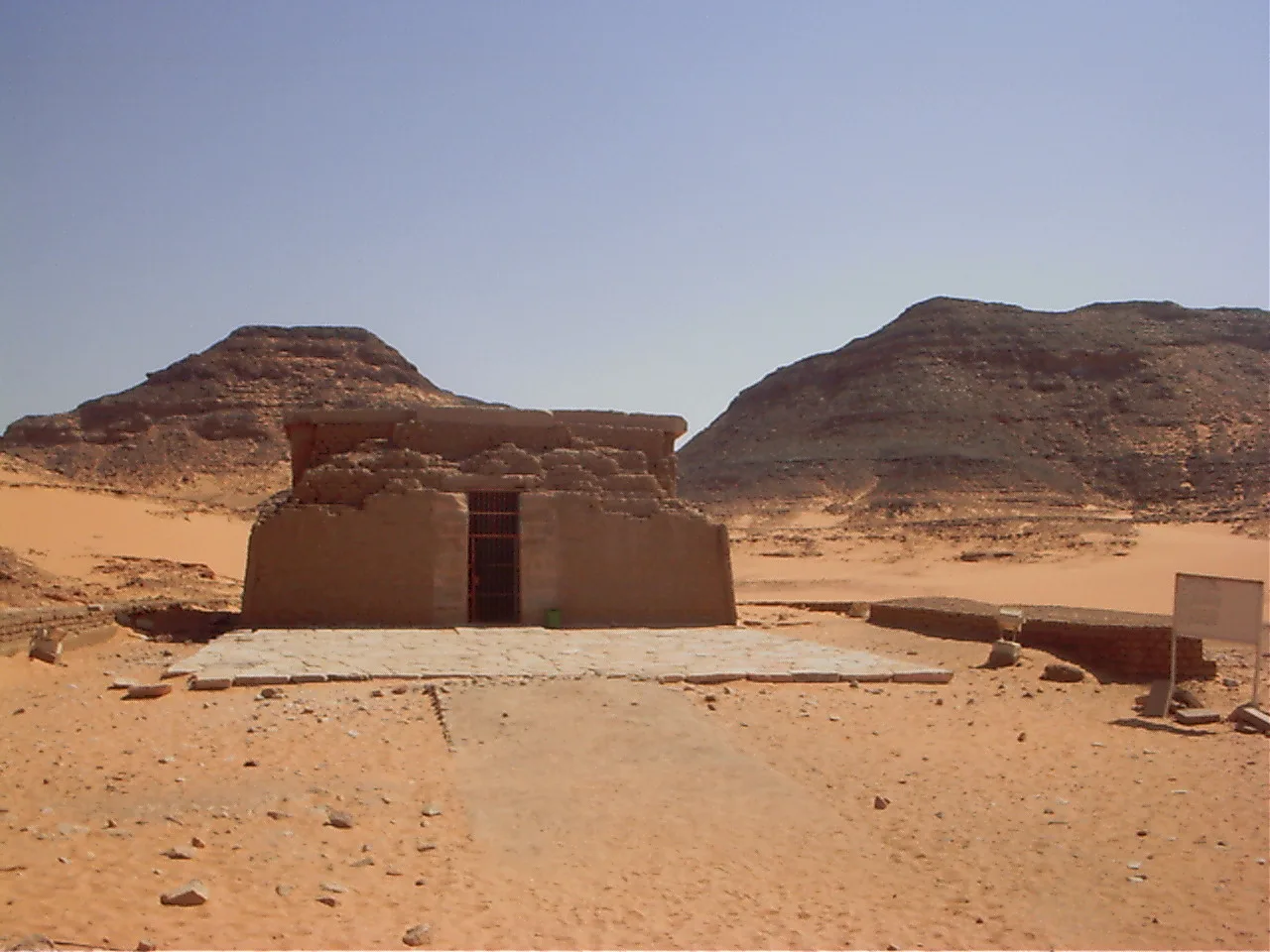
The first temple was built by the 18th Dynasty Pharaoh Amenhotep III and subsequently restored by Ramesses II. In its first stage, this temple "consisted of a rock-cut sanctuary (about 3 m by 2 m) fronted by a brick-built pylon, a court and a hall, partly painted with wall paintings." The temple was perhaps dedicated to one of the local Nubian forms of Horus, but his representations were altered to Amun at a later point in time. During the Amarna Period, images of Amun were attacked and the decorations deteriorated but Ramesses II later restored and extended Amenhotep III's temple by building structures in front of the pylon.
The temple of Amun of Ramesses II
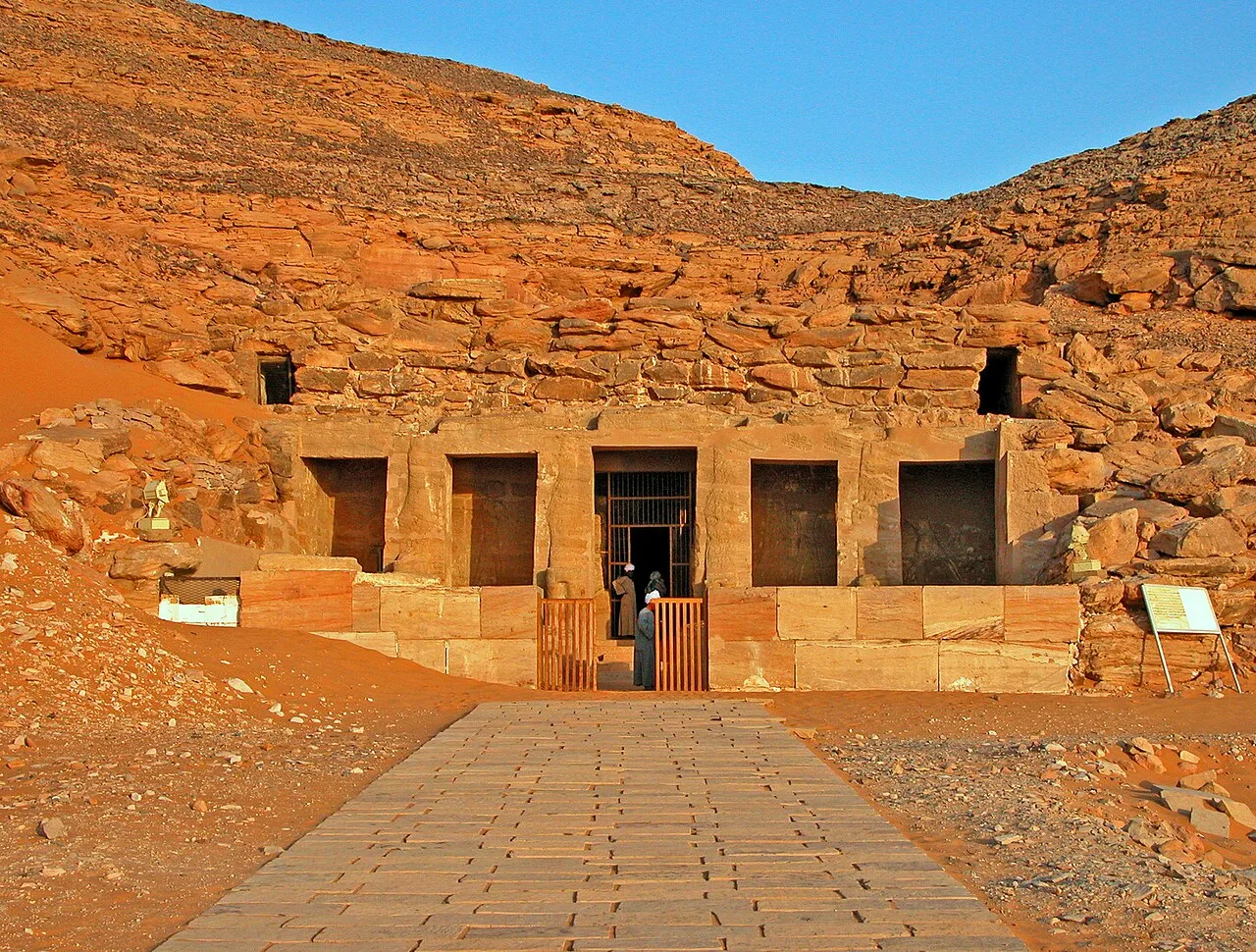
The second larger temple which was built at el-Sebua was known as "The Temple of Ri'amesse-meryamun [Ramesses II] in the Domain of Amun" and constructed roughly 150 m northeast of Amenhotep III's temple. Contemporary monuments and representations of the viceroy of Kush, Setau, indicate that this temple was set up between Years 35 and Year 50 of Ramesses II. Setau is known to have served as the Viceroy of Kush or Nubia between Year 38 to 63 of this pharaoh's reign and was responsible for Ramesses' later Nubian temples. The temple of Wadi es-Sebua was the third sanctuary or chapel constructed from rock with a forecourt built with stones that Ramesses II erected in Nubia. Located at approximately a hundred and fifty kilometers south of Aswan, on the western bank of the Nile, the temple owed its importance to the fact that during the Ramesside period, the city was built at the outlet of the caravan roads, was used as the place of residence for the viceroy of Kush and because it was located at a difficult stretch of the Nile which was difficult for boats to traverse up against the current. Ramesses II entrusted the management of his work projects here to the viceroy of Nubia Setau which, if one judges by the poor quality of the Osiride style and statues of the court, was forced to settle on an "untrained work force, many of whom were snatched from the Libyan oases" and by "inferior raw materials."
The temple of "Ramesses beloved of Amon in the field of Amun" was used as a quay or resting place for boats during its descent of the Nile river. The local Arabs, inspired by the stone sculptures of sphinxes which lined the entrance to the first temple, baptized the place as 'Wadi es-Sebua' or the Valley of the lions.
Source: Wikipedia · text available under CC BY-SA 4.0
- Location
- Aswan, Egypt
- Coordinates
- 22.7930, 32.5450
- Category
- Ancient Sites
Source: Wikipedia · Factual information about the real landmark; unrelated to virtual ownership.
Price & ownership history
Landmarks near Wadi es-Sebua
Map → Available
📖 58 K reads
Available
📖 58 K reads
 Available
📖 5 K reads
Available
📖 5 K reads
 Available
📖 3 K reads
Available
📖 3 K reads
 Available
📖 10 K reads
Available
📖 10 K reads