Thaj
Virtual asset linked to this landmark

- Virtual owner
- The platform
- Times sold
- 0
- Searches (30 days)
- 0
- Watching
- 0
Virtual ownership only. It gives no legal, financial or physical right in the real landmark. Prices are set by the market and may fall.
About Thaj and its history
The archaeological site of a walled Hellenistic-period city west of Jubail, dating from around the 3rd century BC.
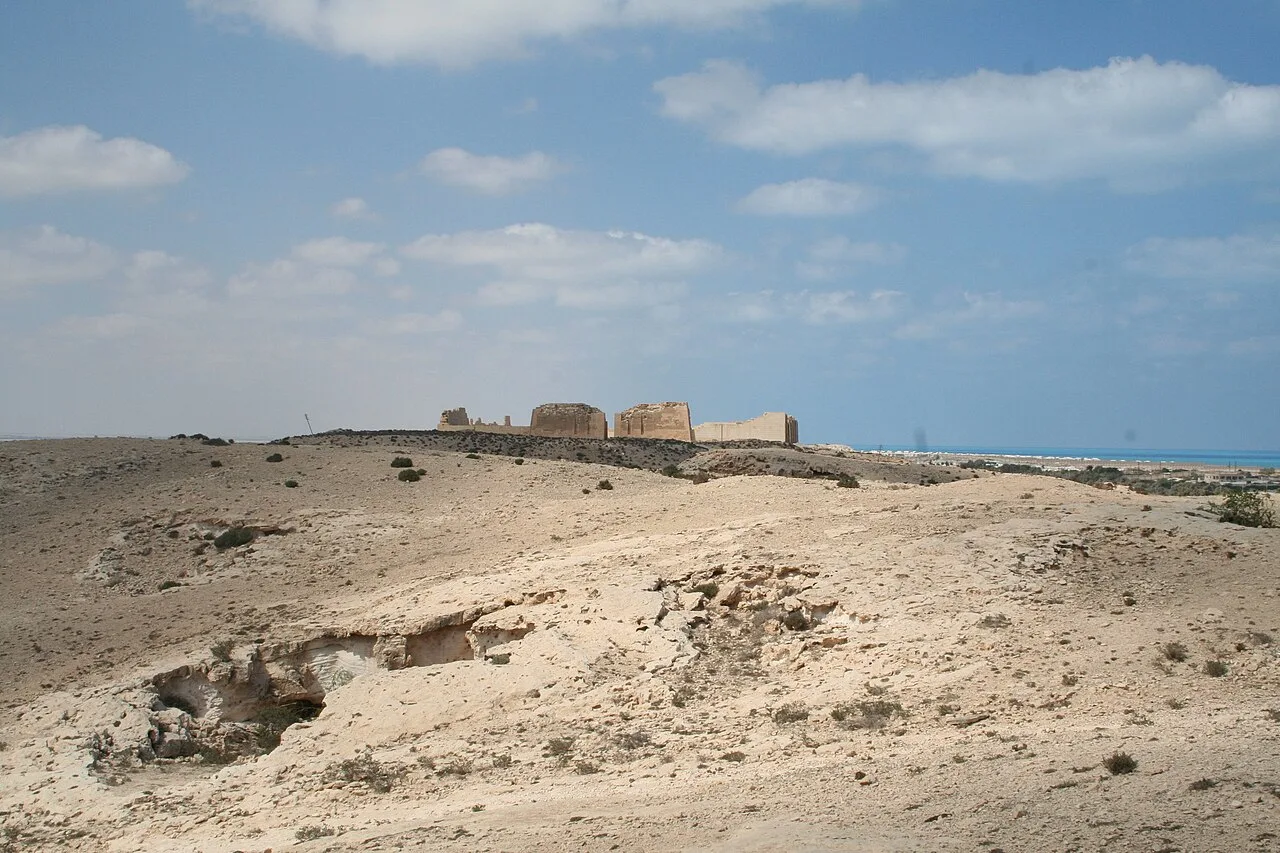
Thāj (Arabic: ثَاج, romanized: Ṯāj) is an archaeological site and ancient town located west of Jubail in the Eastern Province, Saudi Arabia, located approximately 95 km from the coast of the Arabian Gulf. It is associated with the Hellenistic era. Many artifacts including pottery and jewellery have been discovered at Thāj, some of which are currently held in the British Museum. The site is noted for its potential identification with the lost ancient city of Gerrha.
Location
The archaeological site of Thāj can be found around 90 kilometres west of Jubail at the border of a small village known as Sabkha, all within the Eastern Province of Saudi Arabia.
The city of Thāj generally dates back to the 3rd century BCE, during the Hellenistic period. The city was also an important urban centre in at least the 1st millennium BCE. During the 7th century CE, some of the remaining inhabitants accepted the call of Islam which was slowly spreading at the time.
Thaj has been identified in various historical sources spanning from the pre-Islamic era to the early Islamic period. It's mentioned as the location of a castle built by Rāshid ibn Shihāb al-Yashkurī in the late sixth century AD, suggesting it was a well-known and influential location for the Bakr ibn Wā‘il tribe before 600 AD.
During the Umayyad period, poets such as Dhū al-Rummah and al-Farazdaq referenced Thaj, indicating it was still a recognized and functioning city. It was also mentioned in 691 AD as a refuge for Mālik ibn Misma’ after a battle against ‘Abd al-Mālik ibn Marwān.
Arab geographers in the 10th and 11th centuries, including al-Hamdānī and al-Bakrī, described Thaj as a watering place and a village in the region of al-Bahrayn. By the 13th century, Yāqūt referred to it as a spring and village several days' journey from al-Baḥrayn. During this time, it primarily served as a caravan city, supplying water to travelers on the trade routes. Some scholars have suggested that Thaj may be the city of Phigeia, which appears on Ptolemy's map from the second century AD, based on its location and linguistic similarities in the local dialect.
The name Thaj entered European records in the 18th century following a confrontation between the forces of Sa‘ud ibn ‘Abd al-Aziz and Ali Pasha of Baghdad. In 1823, it was mentioned by Mengin as a village in Najd. In 1865, British official Lewis Pelly described Thaj based on local accounts as a major town of al-Ahsa, built of white stone and measuring approximately one mile in length by half a mile in breadth.
The first European to visit the site was Capt. W.H. Shakespeare. He discovered two South Arabian grave inscriptions, the first of their kind found in northern Arabia. Another inscription was found by H.R. Dickson, who visited the site in 1942 and published notes about it.
Two inscribed amphoras discovered in relation to burials outside the city.
Source: Wikipedia · text available under CC BY-SA 4.0
- Location
- Jubail, Saudi Arabia
- Coordinates
- 26.8767, 48.7167
- Category
- Ancient Sites
Source: Wikipedia · Factual information about the real landmark; unrelated to virtual ownership.