Dendera Temple Complex
Virtual asset linked to this landmark
- Virtual owner
- The platform
- Times sold
- 0
- Fame on Wikipedia
- 60,482 article reads in 12 months
- Searches (30 days)
- 0
- Watching
- 0
Virtual ownership only. It gives no legal, financial or physical right in the real landmark. Prices are set by the market and may fall.
About Dendera Temple Complex and its history
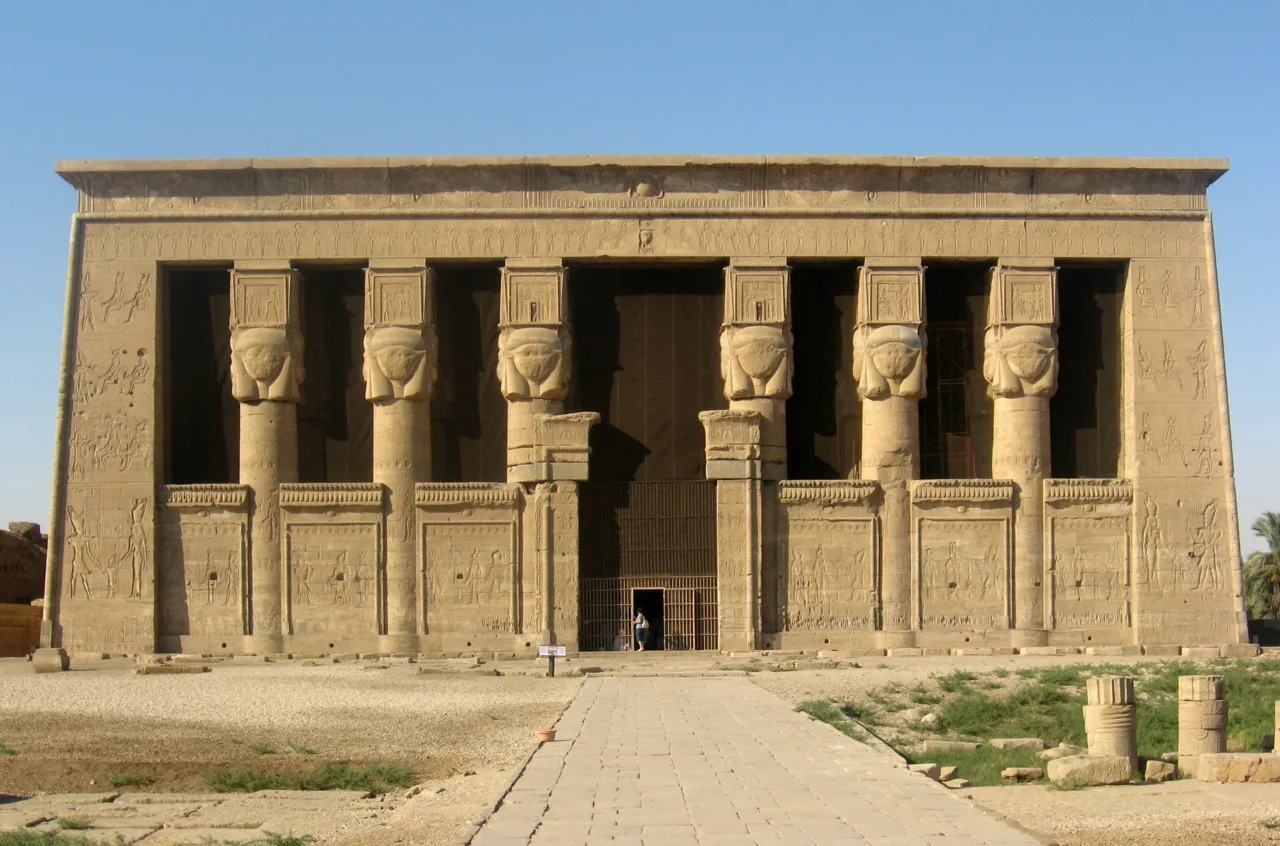
A temple complex near Qena centred on the Temple of Hathor, among the best preserved in Egypt.
The Dendera temple complex (Ancient Egyptian: Iunet or Tantere; the 19th-century English spelling in most sources, including Belzoni, was Tentyra; also spelled Denderah) is located about 2.5 kilometres (1.6 miles) south-east of Dendera, Egypt. It is one of the best-preserved temple complexes of ancient Egypt. The area was used as the sixth nome of Upper Egypt, south of Abydos.
Description
The entirety of the complex is surrounded by a sizable mudbrick wall. Dendera, an oasis on the banks of the Nile, was inhabited by thousands at its peak. Due to its massive size, the structures throughout the complex were constructed over many eras, such as the Middle Kingdom, the Ptolemaic Era, and the period characterized by Roman provincial rule. There is evidence that there was an even earlier building on this site, circa 2250 B.C.E., which could have begun during the reign of Pepi I and completed during the reign of his son, Merenre Nemtyemsaf I. Evidence also exists of a temple in the Eighteenth Dynasty (ca. 1500 BC). The earliest extant (surviving) building in the compound today is the mammisi raised by Nectanebo II – last of the native pharaohs (360–343 BC).
The features in the complex include:
Hathor temple (the main temple)
Temple of the birth of Isis
Sacred Lake (source of water for sacred rituals and for everyday use)
Sanatorium
This would have functioned similarly to a Roman bathhouse, but strictly for bathing and an overnight stay to manifest healing dreams. The waters at Dendera were sacred and were often used to bless the inscriptions on statues so that they could cure diseases.
Mammisi of Nectanebo II
Basilica
Roman Mammisi
a Barque shrine
(Def.: Boat; French, “barque”/ Late Latin “barca”)
Used as a resting place for the statues of the gods when outside of the temple during festivals
Gateways of Domitian and Trajan
the Roman Kiosk
The Dendera Temple is not to be confused with the Dendera Necropolis, which consists of a series of tombs. The Dendera Necropolis dates back to the Early Dynastic Period and up to the First Intermediate Period, which pre-dates the Middle Kingdom construction of the Temple of Hathor. The necropolis runs across the eastern edge of the western hill and over the northern plain.
Source: Wikipedia · text available under CC BY-SA 4.0
- Built / established
- Mostly Ptolemaic and Roman periods
- Location
- Qena, Egypt
- Coordinates
- 26.1419, 32.6702
- Category
- Ancient Sites
Source: Wikipedia · Factual information about the real landmark; unrelated to virtual ownership.
Price & ownership history
Landmarks near Dendera Temple Complex
Map → Available
 Available
 Available
 Available