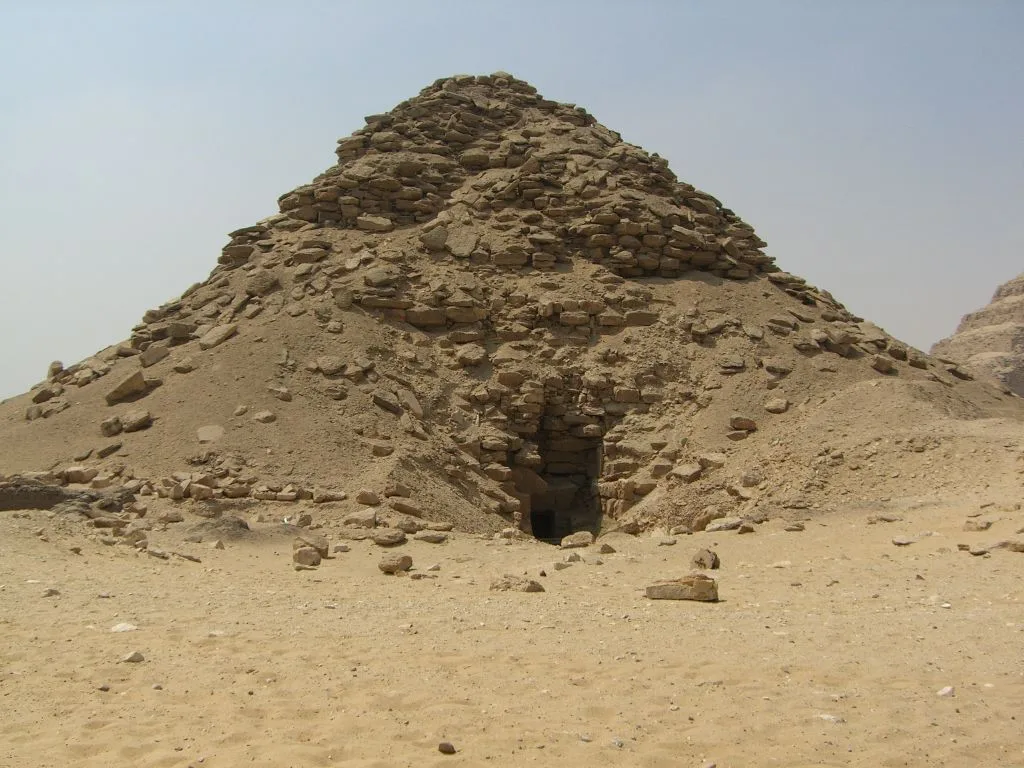
Pyramid of Unas
Virtual asset linked to this landmark

- Virtual owner
- The platform
- Times sold
- 0
- Fame on Wikipedia
- 24,356 article reads in 12 months
- Searches (30 days)
- 0
- Watching
- 0
Virtual ownership only. It gives no legal, financial or physical right in the real landmark. Prices are set by the market and may fall.
About Pyramid of Unas and its history
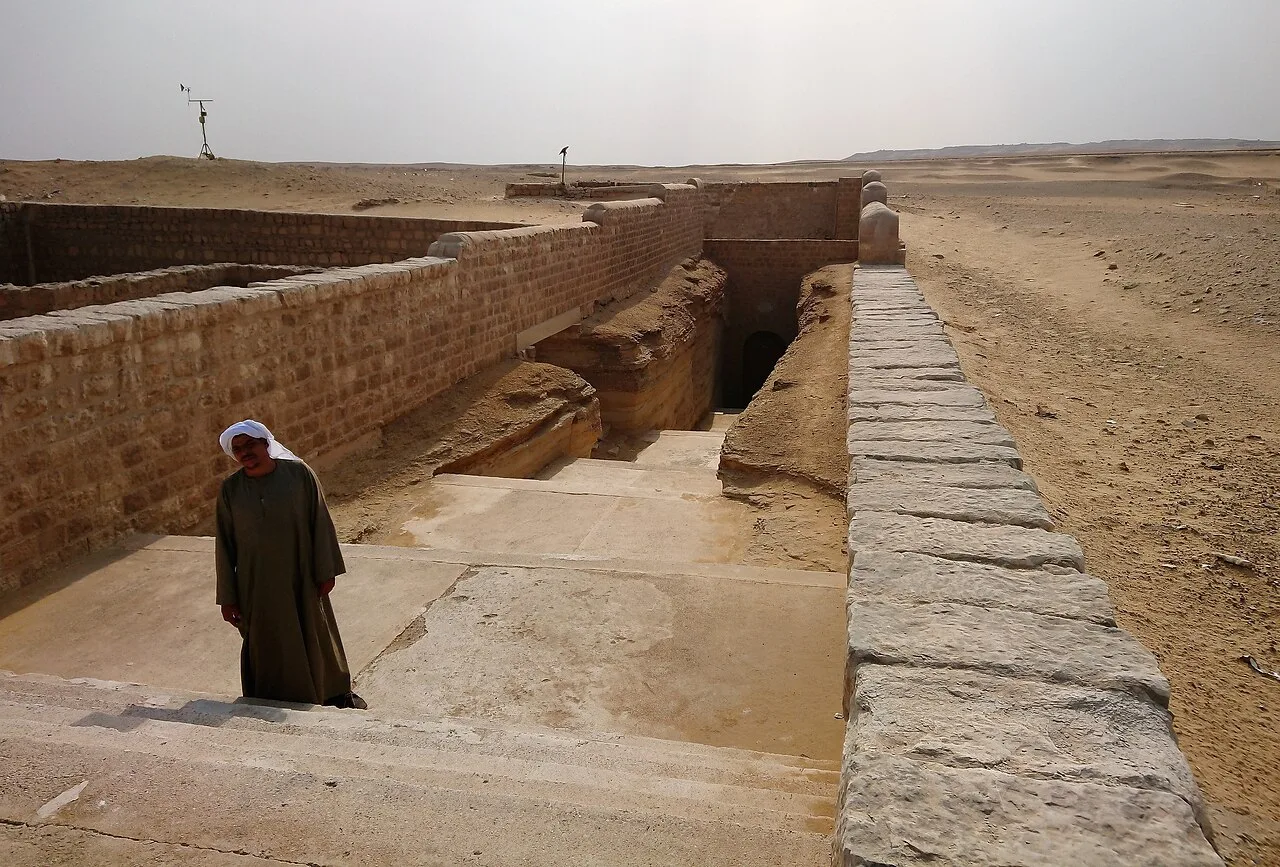
A Fifth Dynasty pyramid at Saqqara, the earliest to have the Pyramid Texts inscribed on its inner walls.
The pyramid of Unas (Egyptian: Nfr swt Wnjs, lit. 'Beautiful are the places of Unas') is the funerary monument built for the Egyptian pharaoh Unas, the ninth and final king of the Fifth Dynasty, in the 24th century BC. It is the smallest Old Kingdom pyramid, but significant due to the discovery of Pyramid Texts – spells for the king's afterlife – incised into the walls of its subterranean chambers. Inscribed for the first time in Unas's pyramid, the tradition of these funerary texts carried on in the pyramids of subsequent rulers through to the end of the Old Kingdom, and into the Middle Kingdom through the Coffin Texts that form the basis of the Book of the Dead.
Unas built his pyramid between the complexes of Sekhemket and Djoser, in North Saqqara. Anchored to the valley temple at a nearby lake, a long causeway was constructed to provide access to the pyramid site. The causeway had elaborately decorated walls covered with a roof which had a slit in one section allowing light to enter, illuminating the images. A long wadi was used as a pathway. The terrain was difficult to negotiate and contained old buildings and tomb superstructures. These were torn down and repurposed as underlay for the causeway. A significant stretch of Djoser's causeway was reused for embankments. Tombs that were on the path had their superstructures demolished and were paved over, preserving their decorations. Two Second Dynasty tombs, presumed to belong to Hotepsekhemwy, Nebra, and Ninetjer, from seals found inside, are among those that lie under the causeway. The site was later used for numerous burials of Fifth Dynasty officials, private individuals from the Eighteenth to Twentieth Dynasties, and a collection of Late Period monuments known as the "Persian tombs".
The causeway joined the temple in the harbour with the mortuary temple on the east face of the pyramid. The mortuary temple was entered on its east side through a large granite doorway, seemingly constructed by Unas's successor, Teti. Just south of the upper causeway are two long boat pits. These may have contained two wooden boats: the solar barques of Ra, the sun god. The temple was laid out in a similar manner to Djedkare Isesi's. A transverse corridor separates the outer from the inner temple. The entry chapel of the inner temple has been completely destroyed, though it once contained five statues in niches. A feature of the inner temple was a single quartzite column that was contained in the antichambre carrée. The room is otherwise ruined. Quartzite is an atypical material to use in architectural projects, though examples of it being used sparingly in the Old Kingdom exist. The material is associated with the sun cult due to its sun-like coloration.
The underground chambers remained unexplored until 1881, when Gaston Maspero, who had recently discovered inscribed texts in the pyramids of Pepi I and Merenre I, gained entry.
Source: Wikipedia · text available under CC BY-SA 4.0
- Location
- Giza, Egypt
- Coordinates
- 29.8683, 31.2150
- Category
- Pyramids
Source: Wikipedia · Factual information about the real landmark; unrelated to virtual ownership.
Price & ownership history
Landmarks near Pyramid of Unas
Map → Available
📖 17 K reads
Available
📖 17 K reads
 Available
📖 177 K reads
Available
📖 177 K reads
 Available
📖 9 K reads
Available
📖 9 K reads
 Available
📖 61 K reads
Available
📖 61 K reads