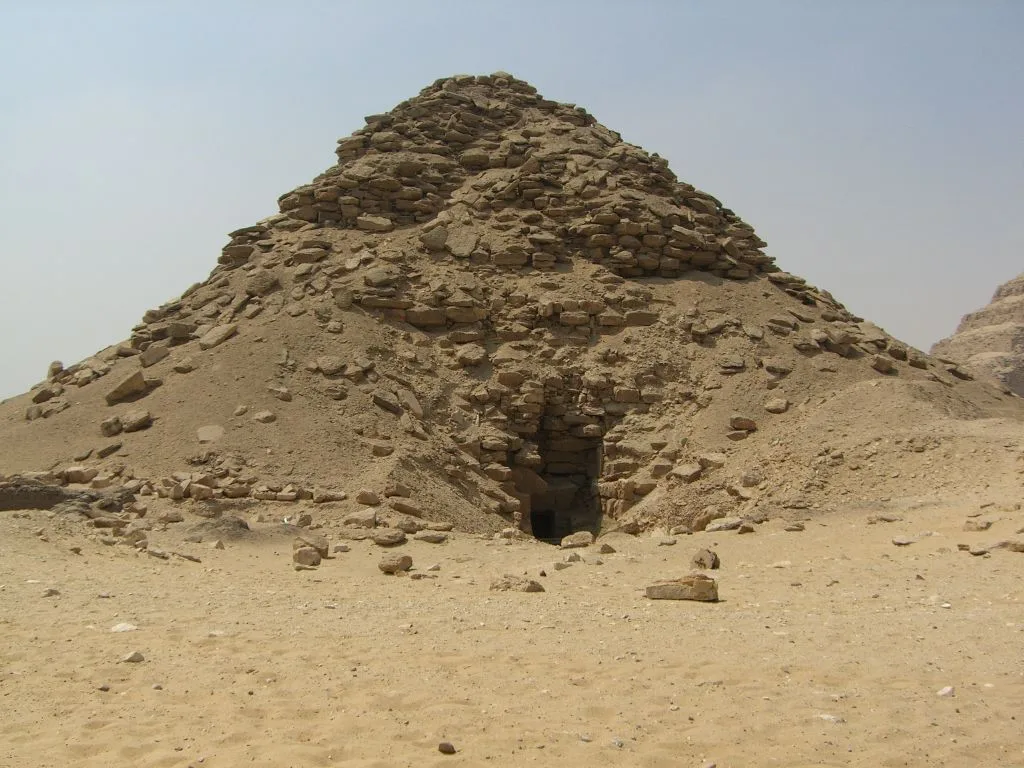
Pyramid of Teti
Virtual asset linked to this landmark
- Virtual owner
- The platform
- Times sold
- 0
- Fame on Wikipedia
- 11,880 article reads in 12 months
- Searches (30 days)
- 0
- Watching
- 0
Virtual ownership only. It gives no legal, financial or physical right in the real landmark. Prices are set by the market and may fall.
About Pyramid of Teti and its history
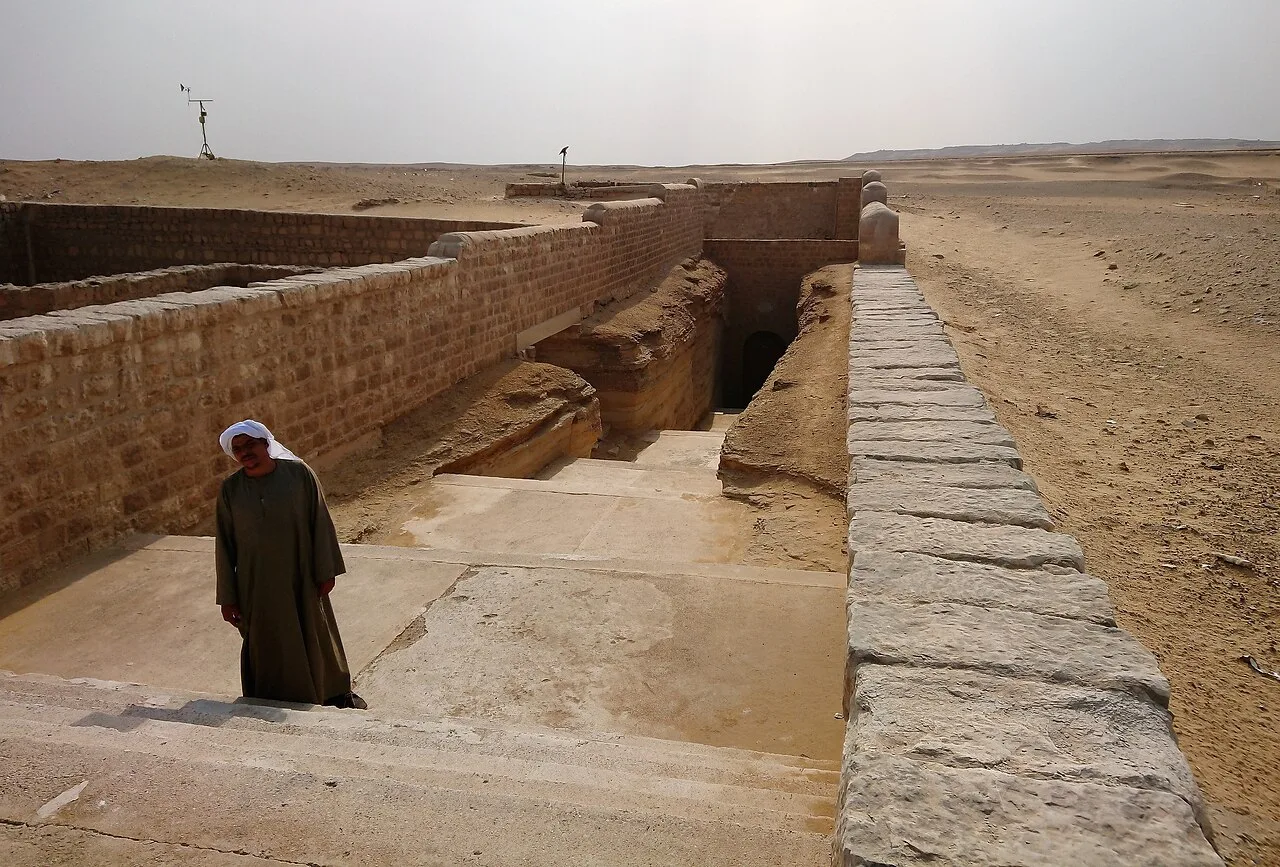
The pyramid of King Teti, founder of the Sixth Dynasty, in the Saqqara necropolis.
The pyramid of Teti is a smooth-sided pyramid situated in the pyramid field at Saqqara in Egypt which belonged to Teti, founder of the sixth dynasty of Egypt. It is the second known pyramid containing Pyramid Texts. Excavations have revealed a satellite pyramid, two pyramids of queens accompanied by cult structures, and a funerary temple. The pyramid was opened by Gaston Maspero in 1882 and the complex explored during several campaigns ranging from 1907 to 1965. It was originally called Teti's Places Are Enduring. The preservation above ground is very poor, and it now resembles a small hill. Below ground the chambers and corridors are very well preserved.
The funerary complex
The pyramid complex of Teti follows a model established during the reign of Djedkare Isesi, the arrangement of which is inherited from the funerary complexes of Abusir.
A valley temple, now lost, was probably destroyed in antiquity due to the placing of an Old Kingdom temple dedicated to Anubis there. A better known funerary temple, revealed by James Quibell in 1906, is connected to the valley temple by a causeway. The plan of the temple of Teti is also comparable to that of Unas, its immediate predecessor. Teti's temple has a somewhat special plan, however, due to a deviation of the floor which traditionally should have been located in the axis of the temple but here is moved south. It then accesses the temple through a hallway of the north–south facade joining the east–west axis of the monument. Followed in this main axis is a second hall. The thickness of the walls suggests a vaulted cover. It was probably the "Room of the Greats", on the walls of which the royal family and influential members of the court were to be represented assisting and accompanying the eternal journey of their sovereign.
This hall opened into an open courtyard surrounded on all four sides by colonnades whose main purpose was the presentation of daily offerings and ritual libations. The only way out is centered to the west and provides access to the innermost part the sanctuary.
Included in the Peribolos, a sacred part of the royal pyramid reserved for priests of the king, was a chapel containing the five Naos, housing five statues of the King appearing in the aspect of the five principal deities of the realm. This part also included a private room containing the false door stela of the King, a veritable object of funeral worship, and a double row of stores on both sides of the axis of the temple. The first row frames the party host and is accessible by a long corridor along the entire width of the building that leads to the south and north within the peribolos of the pyramid. The second set frames the sanctuary and the hall of statues of gods and was only accessible from the latter.
Source: Wikipedia · text available under CC BY-SA 4.0
- Location
- Giza, Egypt
- Coordinates
- 29.8750, 31.2217
- Category
- Pyramids
Source: Wikipedia · Factual information about the real landmark; unrelated to virtual ownership.
Price & ownership history
Landmarks near Pyramid of Teti
Map →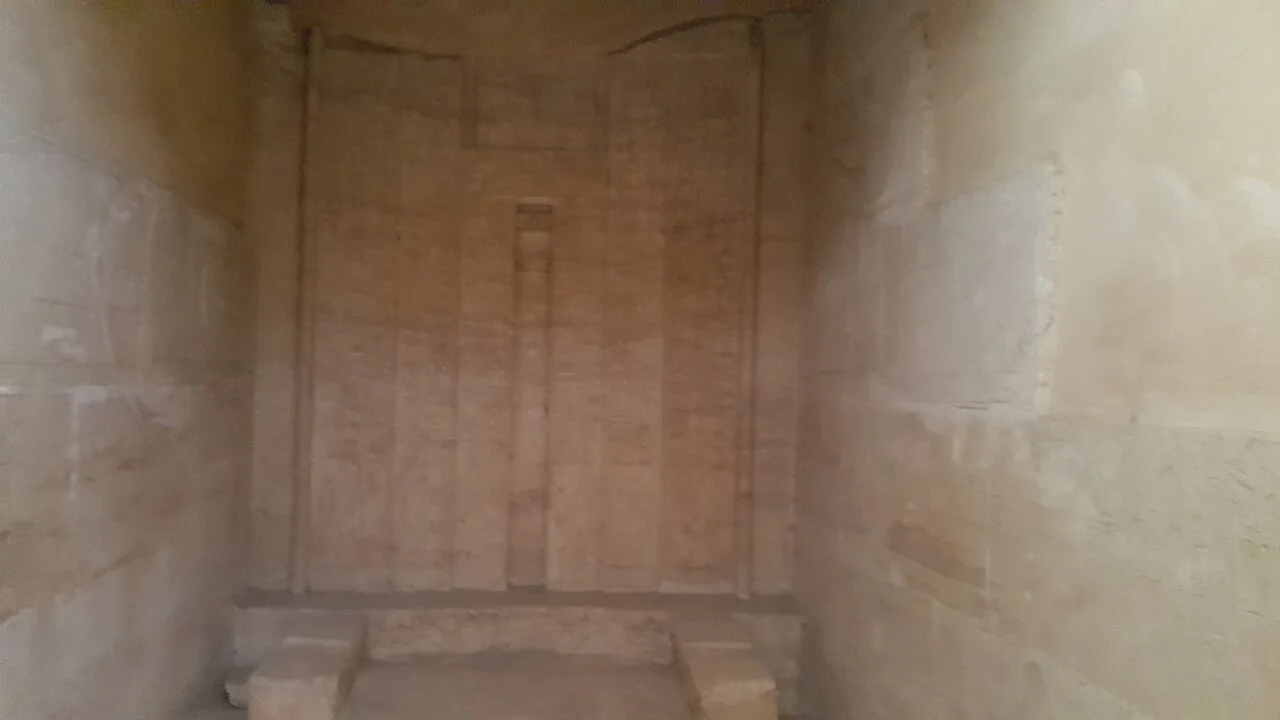 Available
 Available
 Available
 Available