Meidum Pyramid
Virtual asset linked to this landmark
- Virtual owner
- The platform
- Times sold
- 0
- Fame on Wikipedia
- 42,314 article reads in 12 months
- Searches (30 days)
- 0
- Watching
- 0
Virtual ownership only. It gives no legal, financial or physical right in the real landmark. Prices are set by the market and may fall.
About Meidum Pyramid and its history
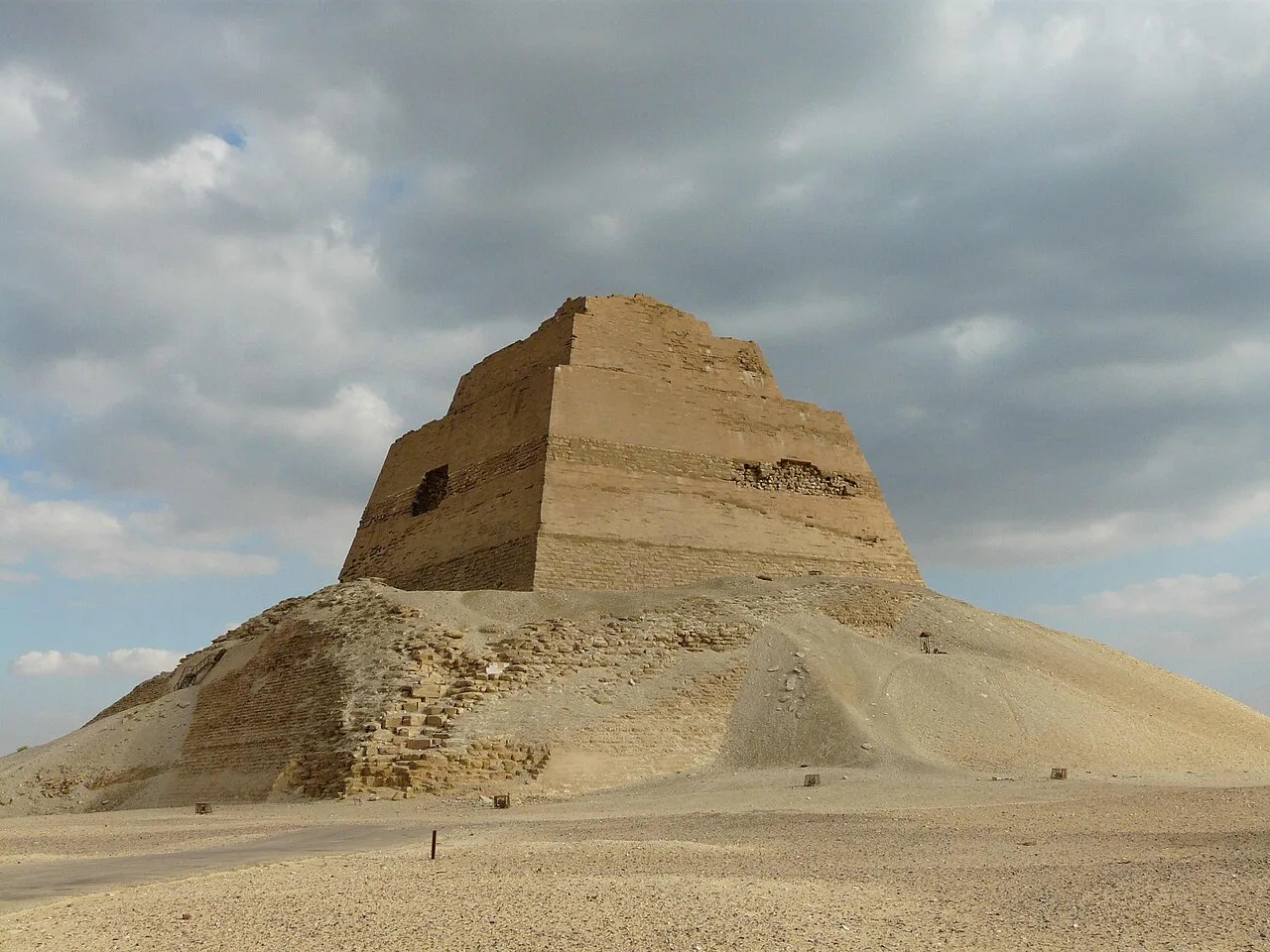
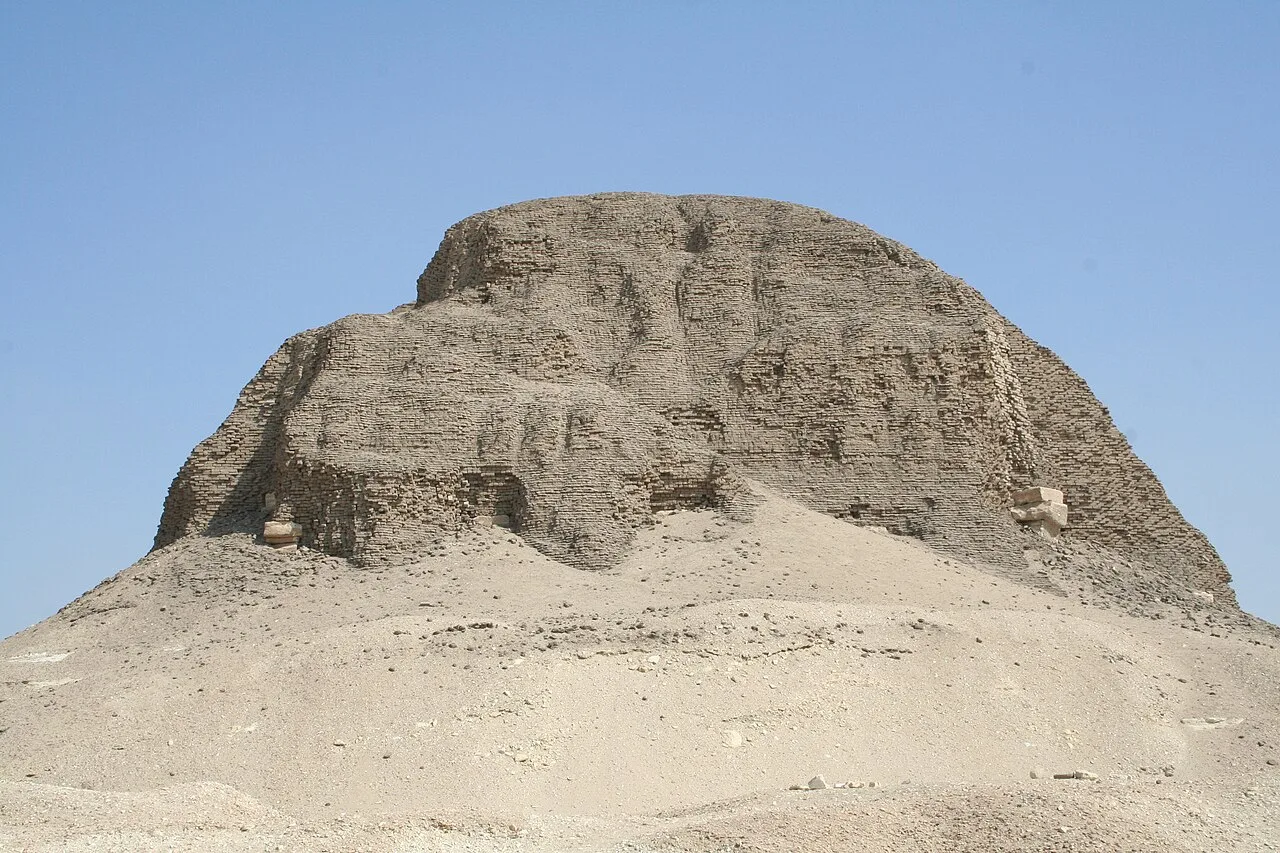
A pyramid with a collapsed outer casing, attributed to King Sneferu, that now looks like a stepped tower, in Beni Suef Governorate.
Meidum, Maydum or Maidum (Arabic: ميدوم, Ancient Egyptian: Mr(y)-Jtmw, lit. 'beloved of Atum', Ancient Greek: Μοι(ε)θυμις) is an archaeological site in Lower Egypt. It contains a large pyramid and several mudbrick mastabas. The pyramid was Egypt's first straight-sided one, but it partially collapsed in ancient times. The area is located around 72 kilometres (45 mi) south of modern Cairo.
Pyramid
The pyramid at Meidum is thought to be the first of three main pyramids built by Sneferu. It has been argued construction began under the reign of Huni, the last pharaoh of the Third Dynasty, and merely continued by Sneferu. Because of its unusual appearance, the pyramid is called el-heram el-kaddaab (false pyramid) in Egyptian Arabic.
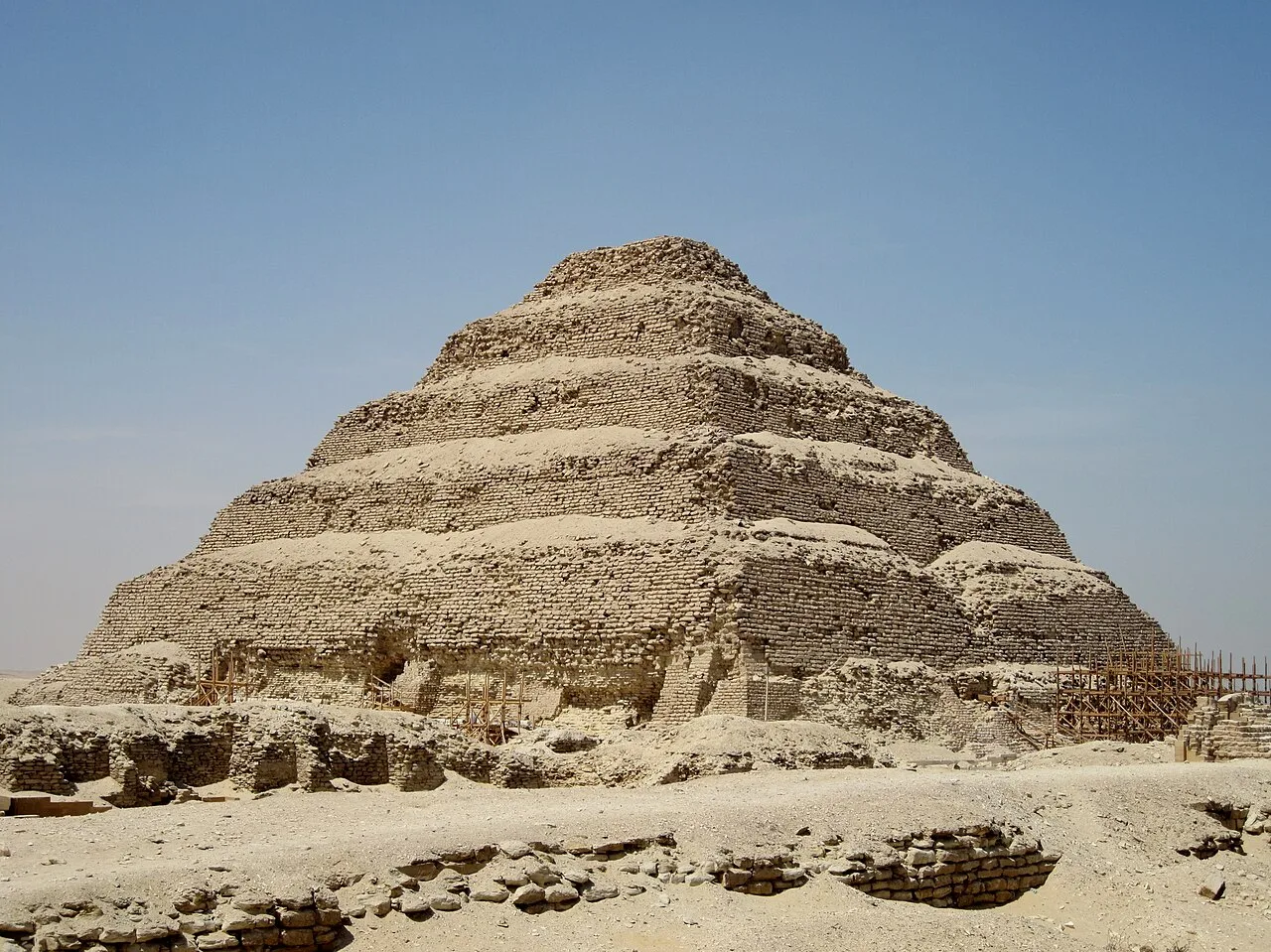
The pyramid was erected in three phases, numbered E1, E2 and E3 by the archaeologist Borchardt. E1 was a step pyramid similar to the Djoser Pyramid. E2 was an extension around the previous building of roughly 5 m width or 10 cubits, raising the number of steps from 5 to 7.
The second extension, E3, turned the original step pyramid design into a true pyramid by filling in the steps with limestone encasing. While this approach is consistent with the design of the other true pyramids, Meidum was affected by construction errors. Firstly, the outer layer was founded on sand and not on rock, like the inner layers. Secondly, the inner step pyramids had been designed as the final stage. Thus, the outer surface was polished and the platforms of the steps were not horizontal, but fell off to the outside. This severely compromised the stability and is likely to have caused the collapse of the Meidum Pyramid in a downpour while the building was still under construction.
Franck Monnier and others believe the pyramid did not collapse until the New Kingdom, but there are a number of facts contradicting this theory. The Meidum Pyramid seems never to have been completed. Beginning with Sneferu and to the 12th Dynasty, all pyramids had a valley temple, which is missing at Meidum. The mortuary temple, which was found under the rubble at the base of the pyramid, apparently never was finished. Walls were only partly polished. Two stelas inside, usually bearing the names of the pharaoh, are missing inscriptions. The burial chamber inside the pyramid itself is uncompleted, with raw walls and wooden supports still in place which are usually removed after construction. Affiliated mastabas were never used or completed and none of the usual burials have been found. Finally, the first examinations of the Meidum Pyramid found everything below the surface of the rubble mound fully intact. Stones from the outer cover were stolen only after they were exposed by the excavations. This makes a catastrophic collapse more probable than a gradual one. The collapse of this pyramid during the reign of Sneferu is the likely reason for the change from 54 to 43 degrees of his second pyramid at Dahshur, the Bent Pyramid.
Source: Wikipedia · text available under CC BY-SA 4.0
- Location
- Beni Suef, Egypt
- Coordinates
- 29.3883, 31.1569
- Category
- Pyramids
Source: Wikipedia · Factual information about the real landmark; unrelated to virtual ownership.
Price & ownership history
Landmarks near Meidum Pyramid
Map → Available
 Available
 Available
 Available