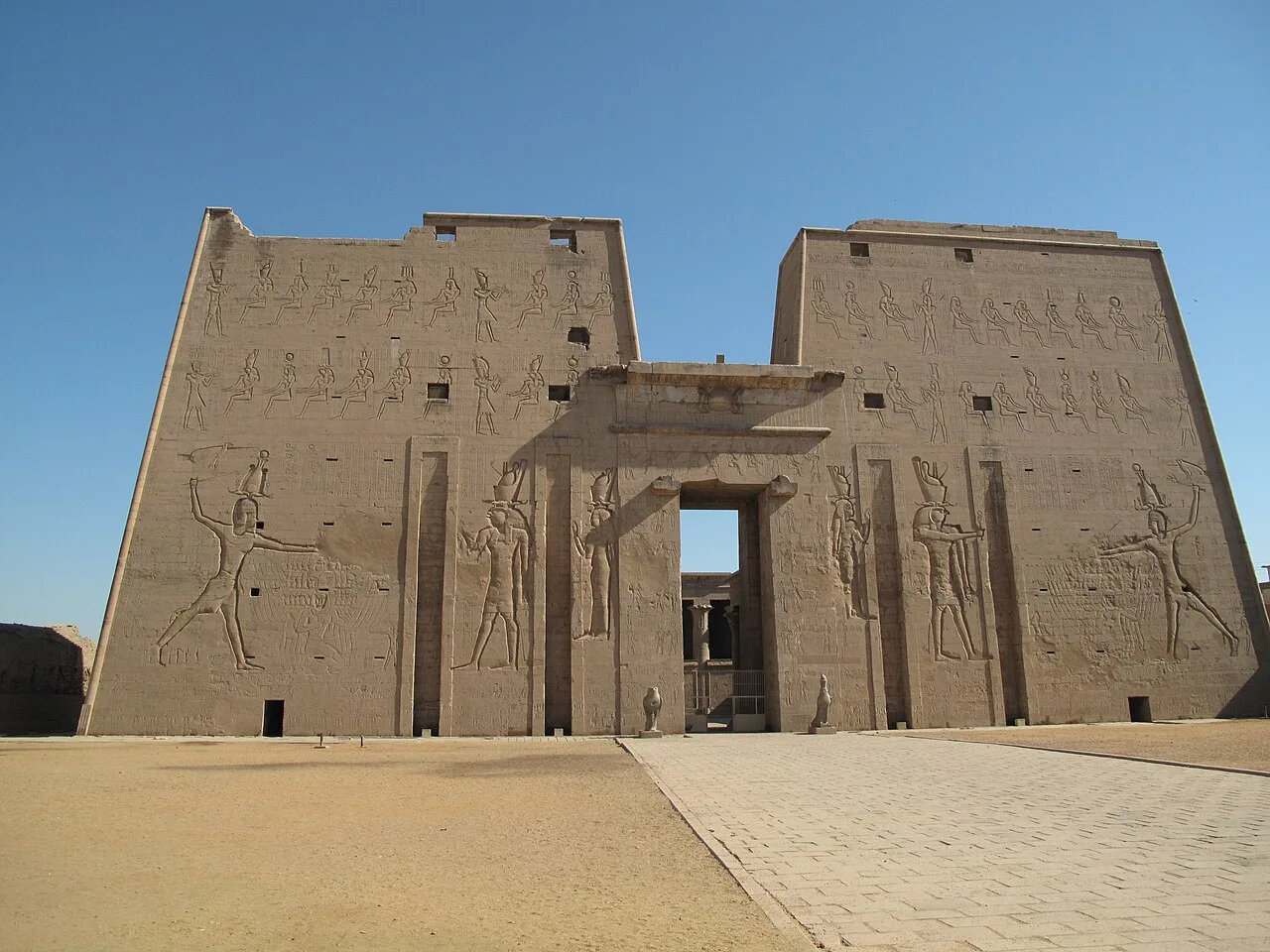
Temple of Edfu
Virtual asset linked to this landmark

- Virtual owner
- The platform
- Times sold
- 0
- Fame on Wikipedia
- 46,633 article reads in 12 months
- Searches (30 days)
- 0
- Watching
- 0
Virtual ownership only. It gives no legal, financial or physical right in the real landmark. Prices are set by the market and may fall.
About Temple of Edfu and its history
A Ptolemaic temple dedicated to Horus and one of the best-preserved temples in Egypt.
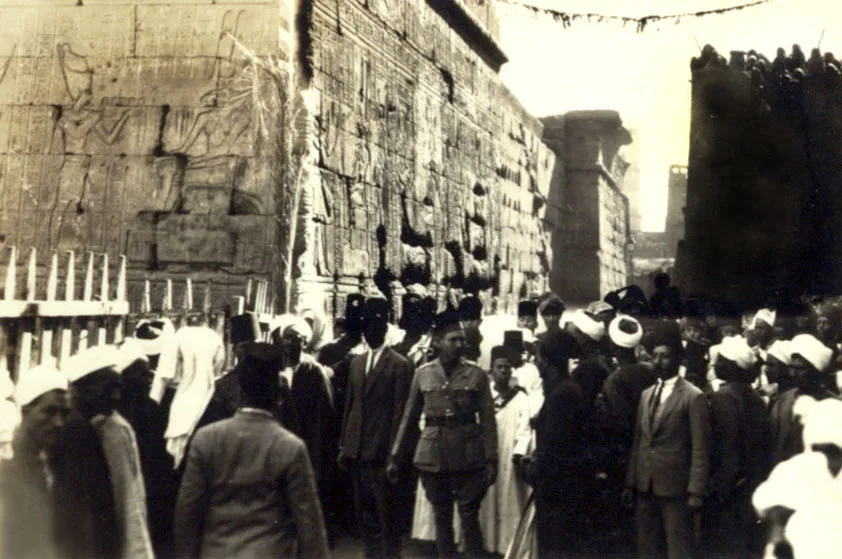
The Temple of Edfu is an Egyptian temple located on the west bank of the Nile in Edfu, Upper Egypt. The city was known in the Hellenistic period in Koine Greek as Ἀπόλλωνος πόλις and in Latin as Apollonopolis Magna, after the chief god Horus, who was identified as Apollo under the interpretatio graeca. It is one of the best preserved shrines in Egypt. The temple was built in the Ptolemaic Kingdom between 237 and 57 BC. The inscriptions on its walls provide important information on language, myth and religion during the Hellenistic period in Egypt. In particular, the Temple's inscribed building texts "provide details of its construction, and also preserve information about the mythical interpretation of this and all other temples as the Island of Creation." There are also "important scenes and inscriptions of the Sacred Drama which related the age-old conflict between Horus and Seth." They are translated by the Edfu-Project.
History
Edfu was one of several temples built during the Ptolemaic Kingdom, including the Dendera Temple complex, Esna, the Temple of Kom Ombo, and Philae. Its size reflects the relative prosperity of the time. The present temple, which was begun "on 23 August 237 BC, initially consisted of a pillared hall, two transverse halls, and a barque sanctuary surrounded by chapels." The building was started during the reign of Ptolemy III Euergetes and completed in 57 BC under Ptolemy XII Auletes. It was built on the site of an earlier, smaller temple also dedicated to Horus, although the previous structure was oriented east–west rather than north–south as in the present site. A ruined pylon lies just to the east of the current temple; inscriptional evidence has been found indicating a building program under the New Kingdom rulers Ramesses I, Seti I and Ramesses II.
A naos of Nectanebo II, a relic from an earlier building, is preserved in the inner sanctuary, which stands alone while the temple's barque sanctuary is surrounded by nine chapels.
Over the centuries, the temple became buried to a depth of 12 metres (39 ft) beneath drifting desert sand and layers of river silt deposited by the Nile. Local inhabitants built homes directly over the former temple grounds. Only the upper reaches of the temple pylons were visible by 1798, when the temple was identified by a French expedition. In 1860 Auguste Mariette, a French Egyptologist, began the work of freeing Edfu temple from the sands.
The Temple of Edfu is nearly intact and a good example of an ancient Egyptian temple. Its archaeological significance and high state of preservation have made it a center for tourism in Egypt and a frequent stop for the many riverboats that cruise the Nile. In 2005, access to the temple was revamped with the addition of a visitor center and paved carpark. A lighting system was added in late 2006 to allow night visits.
Source: Wikipedia · text available under CC BY-SA 4.0
- Built / established
- Built between 237 and 57 BC
- Location
- Aswan, Egypt
- Coordinates
- 24.9779, 32.8734
- Category
- Ancient Sites
Source: Wikipedia · Factual information about the real landmark; unrelated to virtual ownership.
Price & ownership history
Landmarks near Temple of Edfu
Map → Available
📖 14 K reads
Available
📖 14 K reads
 Available
📖 2 K reads
Available
📖 2 K reads
 Available
📖 8 K reads
Available
📖 8 K reads
 Available