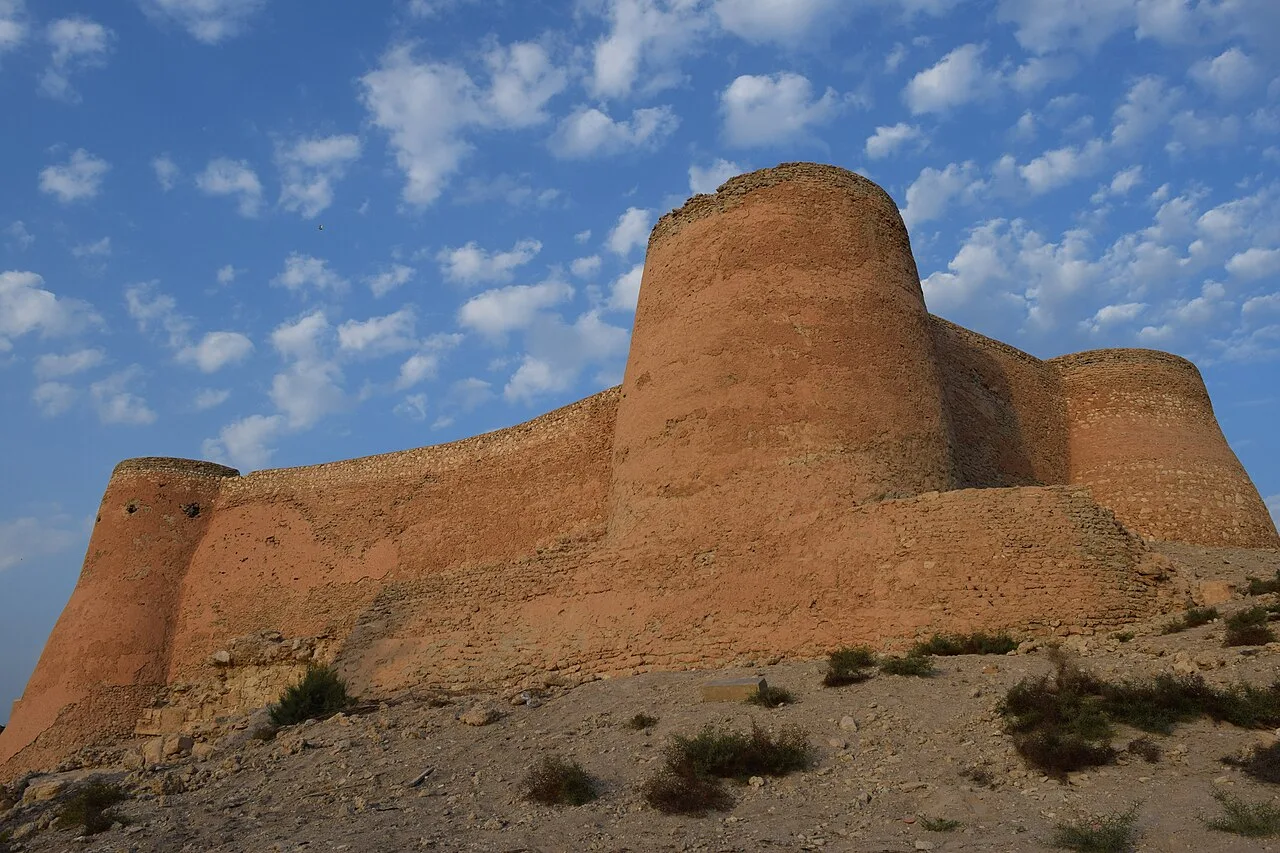
Tarout Castle
Virtual asset linked to this landmark
- Virtual owner
- The platform
- Times sold
- 0
- Fame on Wikipedia
- 6,940 article reads in 12 months
- Searches (30 days)
- 0
- Watching
- 0
Virtual ownership only. It gives no legal, financial or physical right in the real landmark. Prices are set by the market and may fall.
About Tarout Castle and its history
An old fort on an archaeological mound on Tarout Island.
Tarout Castle (Arabic: قلعة تاروت, romanized: Qalʿat Tārūt), also known as Tarut Palace, Tarut Fort, Portuguese Fort, is an archaeological site in Qatif, Saudi Arabia. It is situated on a hill in the center of Tarut Island, located southwest of Deira, in the eastern part of Qatif Governorate, Saudi Arabia. The hill, known as Tall Tawt, is estimated to be 5,000 years old. The castle itself is believed to date back to the time of the Uyuni state and was later used as a Portuguese defensive point.
The Portuguese renovated the castle in the 16th century, specifically on 29 March 1544 CE (1 Jumada al-Awwal 951 AH), during their occupation of the Persian Gulf. The fort was constructed on the remains of a temple dedicated to the Phoenician goddess Astarte or Inanna, from whom the name "Tarut Island" is derived. The ruins and foundations of the original temple remain visible beneath the castle.
Several statues and pottery pieces dating back to earlier periods have been discovered within Tarut Castle, including artifacts from the Sumer era, the Fatimid Caliphate, and the Dilmun civilization. However, the castle is currently facing several challenges, the structural cracking of its towers, which poses a risk of collapse. Additionally, the drying up of Ain al-Awda, a spring located within the castle, has been attributed to continuous oil extraction in the area. The castle remains closed to the public and is not officially open for visitors or tourists.
Nevertheless, Tarut Castle continues to attract interest from foreign researchers and expeditions, including the Danish archaeological expedition and the renowned researcher Jeffrey Beebe.
Etymology
The castle is often referred to as the Portuguese Fort due to its association with Portuguese conquerors, but it is also known as Tarut Castle, named after the site on which it was constructed. The name "Tarut" is derived from the Sumerian goddess Inanna, whose earliest appearances date back more than 5,000 years, recorded in cuneiform inscriptions in Sumer, southern Iraq. Inanna was symbolized by the octagram, which was used to represent the planet Venus. Over time, her worship spread from the Sumerians to the Akkadians, who called her Ishtar, and later to the peoples of southern Arabia, who referred to her as Athar or Attar. The Canaanites and Hebrews knew her as Ashra or Astarte.
The exact reason for the name Tarut is unclear. It may be linked to the construction of a temple dedicated to Ishtar on the site or because the region was historically known as Tarut, reflecting a strong connection between the environment and the goddess during that time. The ancient inhabitants of the island believed that the goddess Ishtar played a role in agriculture and water supply. Given the island's fertility and abundance of water, these beliefs likely shaped their view of Ishtar.
Source: Wikipedia · text available under CC BY-SA 4.0
- Location
- Qatif, Saudi Arabia
- Coordinates
- 26.5690, 50.0660
- Category
- Historic Landmarks
Source: Wikipedia · Factual information about the real landmark; unrelated to virtual ownership.
Price & ownership history
Landmarks near Tarout Castle
Map → Available
 Available
 Available
 Available