Wabar Craters
Virtual asset linked to this landmark

- Virtual owner
- The platform
- Times sold
- 0
- Fame on Wikipedia
- 12,423 article reads in 12 months
- Searches (30 days)
- 0
- Watching
- 0
Virtual ownership only. It gives no legal, financial or physical right in the real landmark. Prices are set by the market and may fall.
About Wabar Craters and its history
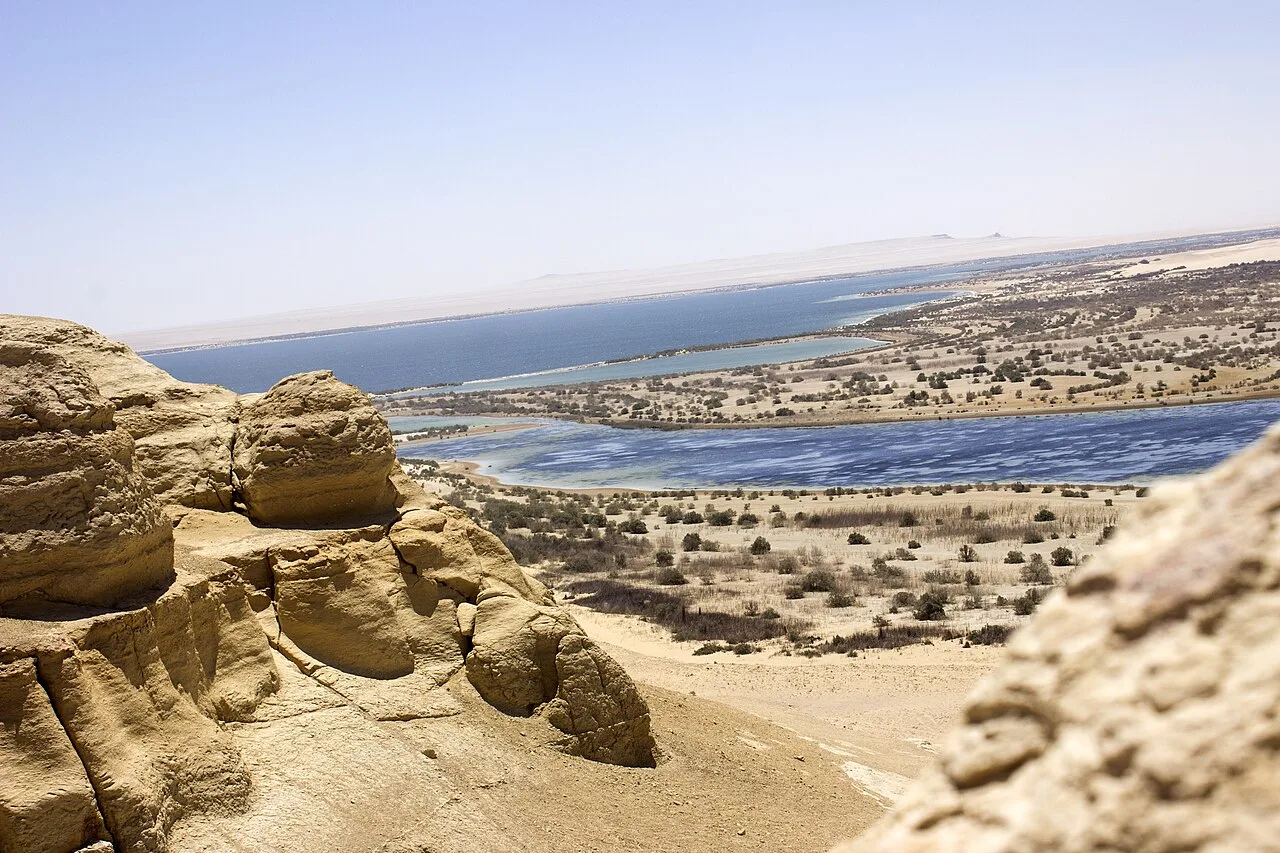
Craters formed by an iron meteorite impact in the sands of the Empty Quarter, described by Philby in 1932; the largest is about 116 metres across.
The Wabar craters are impact craters located in Saudi Arabia first brought to the attention of Western scholars by British Arabist, explorer, writer and Colonial Office intelligence officer St John Philby, who discovered them while searching for the legendary city of Ubar in Arabia's Rub' al Khali ("Empty Quarter") in 1932.
The vast desert wasteland of southern Saudi Arabia known as the Empty Quarter, or Rub' al Khali in Arabic, is one of the most desolate places on Earth. In 1932, Harry St John "Jack" Philby was hunting for a city named Ubar, that the Quran describes as having been destroyed by God for defying the Prophet Hud. Philby transliterated the name of the city as Wabar.
Philby had heard of Bedouin legends of an area called Al Hadida ("place of iron" in Arabic) with ruins of ancient habitations, and also an area where a piece of iron the size of a camel had been found, and so organized an expedition to visit the site. After a month's journey through wastes so harsh that even some of the camels died, on 2 February 1932 Philby arrived at a patch of ground about one-half square kilometre (0.19 mi2) in size, littered with chunks of white sandstone, black glass, and chunks of iron meteorite. Philby identified two large circular depressions partially filled with sand, and three other features that he identified as possible "submerged craters". He also mapped the area where the large iron block was reputed to have been found. Philby thought that the area was a volcano, and it was only after bringing back samples to the UK that the site was identified as that of a meteorite impact by Leonard James Spencer of the British Museum.
A volcano in the midst of the Rub' al Khali! And below me, as I stood on that hill-top transfixed, lay the twin craters, whose black walls stood up gauntly above the encroaching sand like the battlements and bastions of some great castle. These craters were respectively about 100 and 50 yards in diameter, sunken in the middle but half choked with sand, while inside and outside their walls lay what I took to be lava in great circles where it seemed to have flowed out from the fiery furnace. Further examination revealed the fact that there were three similar craters close by, though these were surmounted by hills of sand and recognizable only by reason of the fringe of blackened slag round their edges.
Amongst the samples of iron, cindery material, and silica glass that Philby brought back from the site was a 25-pound (11 kg) chunk of iron. Analysis showed it to be about 90% iron and 5% nickel, with the rest consisting of various elements, including copper, cobalt, and an unusually high concentration of iridium, at 6 ppm. This siderophile element implied that the Wabar site was a meteorite impact area.
In 1937, Aramco geologists T. F. Harriss and Walton Hoag, Jr., also investigated the site, but, like Philby, were unable to locate the large block of iron.
Source: Wikipedia · text available under CC BY-SA 4.0
- Location
- Al-Ahsa, Saudi Arabia
- Coordinates
- 21.5025, 50.4742
- Category
- Nature & Parks
Source: Wikipedia · Factual information about the real landmark; unrelated to virtual ownership.