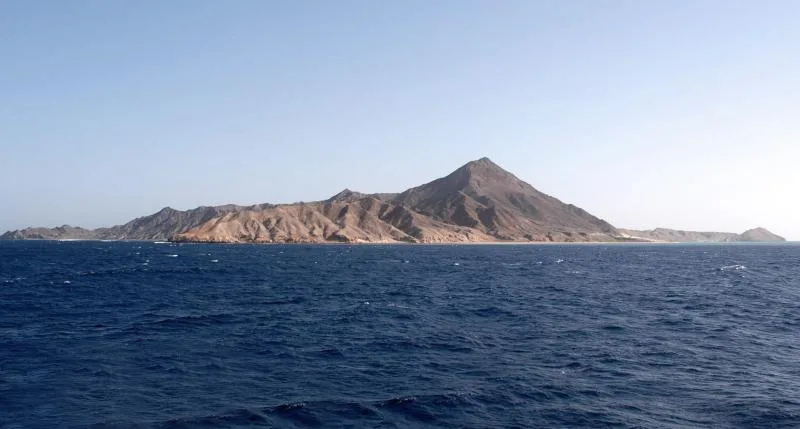
Zabargad Island
Virtual asset linked to this landmark
- Virtual owner
- The platform
- Times sold
- 0
- Fame on Wikipedia
- 6,679 article reads in 12 months
- Searches (30 days)
- 0
- Watching
- 0
Virtual ownership only. It gives no legal, financial or physical right in the real landmark. Prices are set by the market and may fall.
About Zabargad Island and its history
A Red Sea island south-east of Berenice, known since antiquity for its peridot mines and now part of a protected area.
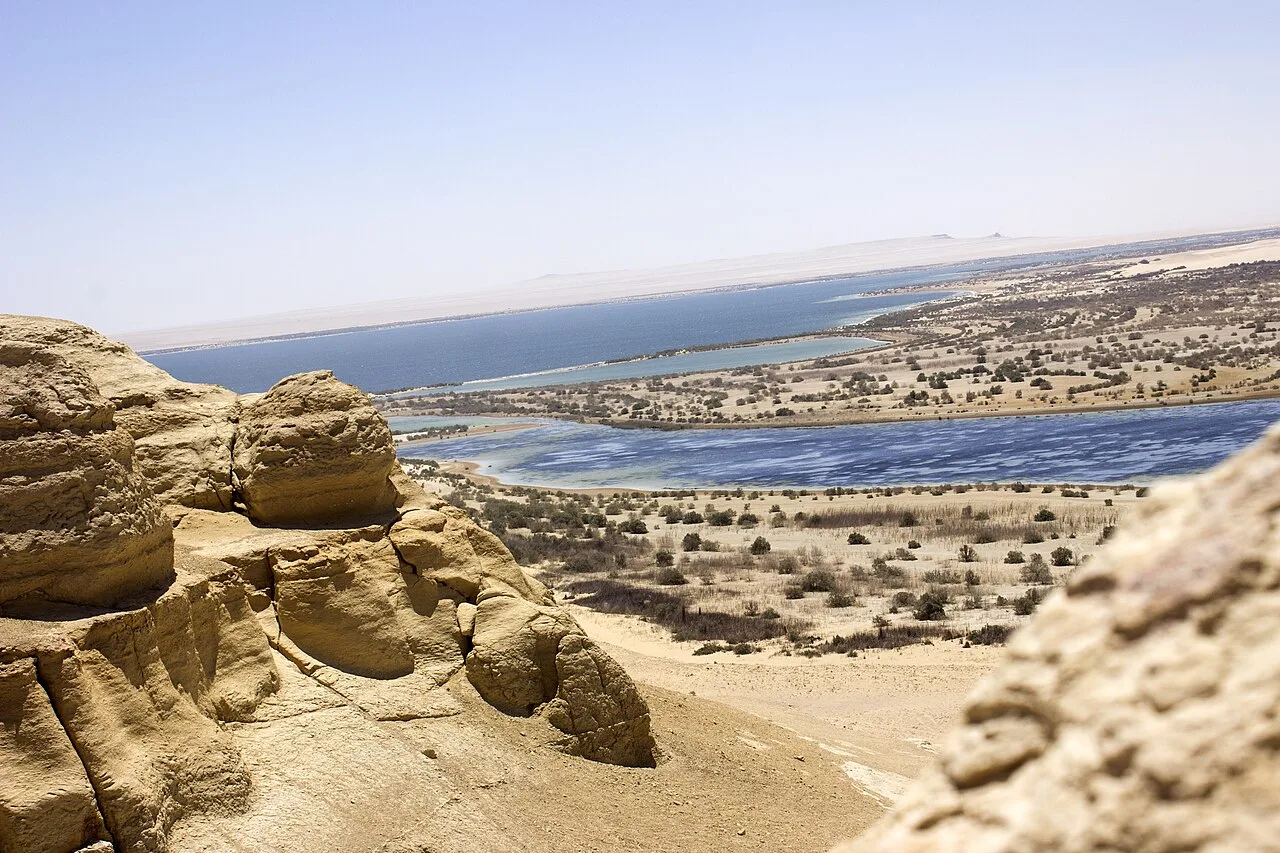
Zabargad Island (Egyptian Arabic: جزيرة الزبرجد Geziret El Zabargad, also known as St. John's Island in English, identified as Topazos during Antiquity, in Ancient Greek Topazos = Τόπαζος, in Latin Topazos), is the largest of a group of islands in Foul Bay, Egypt, in the Red Sea. It covers an area of 4.50 square kilometres (1.74 square miles). It is not a Quaternary volcanic island, but rather is believed to be an upthrust part of upper mantle material. The nearest island is known as "Rocky Island". The island is slightly north of the Tropic of Cancer, and its highest point is 235 metres (771 feet).
History
Before the mid 270s [BCE] Ptolemaic activity along the African coast of the Red Sea had been limited with few significant results other than the discovery of the 'topaz' deposits on the island of Gazirat Zabarjad southeast of Ras Banas. ... 2. Pliny, HN 37, 108 refers to a large topaz that was brought back to Egypt as a gift for Ptolemy I's queen Berenice I.
Geology
The island is considered geologically unique as it is uplifted mantle, a fragment of the sub-Red Sea lithosphere. Rocks on the island are mainly lower crustal igneous rocks. The island became present above sea level after African and Asiatic continental plates converged to cause rocks in the lower crust to be uplifted. The island contains three masses of peridotite, which are rich in the gemstone peridot (olivine). The island is believed to be the first discovered source of peridot, which was called topazios in ancient times, hence the Greek name for the island, Topazos = Τόπαζος (in Latin Topazos). Layers of spinel-lherzolites with anhydrous Al-diopside pyroxenites and hydrous Cr-diopside pyroxenites can be found on the island.
Pliny, XXXV, chap. 22 says that, according to Juba, the island "Topazus in the Red Sea", also had mines producing sandarach (realgar) and ochre, "but neither of them are imported to us from that place."
Source: Wikipedia · text available under CC BY-SA 4.0
- Location
- Marsa Alam, Egypt
- Coordinates
- 23.6097, 36.1958
- Category
- Nature & Parks
Source: Wikipedia · Factual information about the real landmark; unrelated to virtual ownership.